
Reviewed · GETTY & ART MUSEUMS
Demystifying Art at The Getty —Two Hours
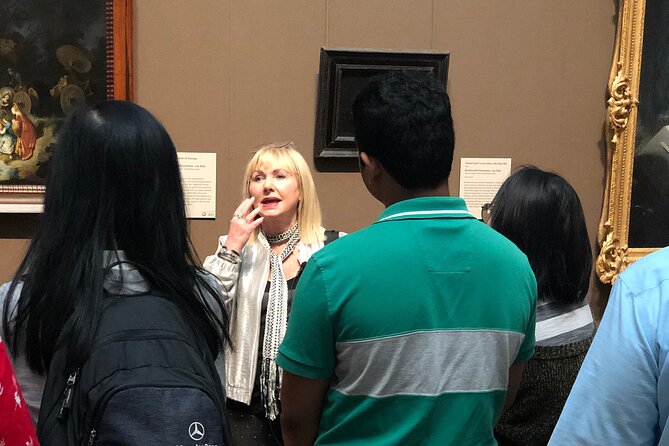
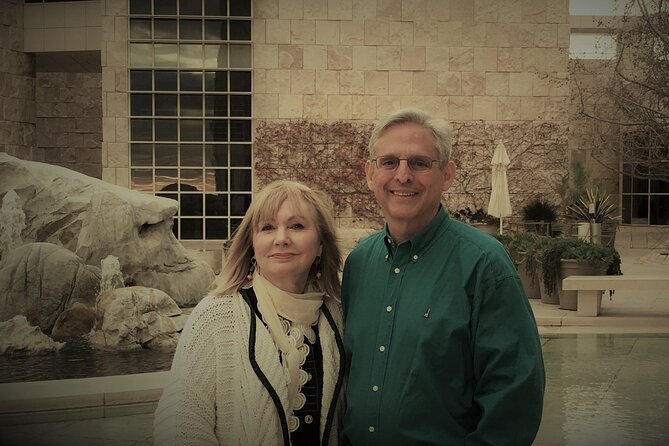
The Getty’s art can look beautiful and baffling at the same time. Why are Renaissance paintings packed with nudes? Why do Dutch still lifes show skulls, dead insects, and fading flowers? This private tour turns those puzzles into useful clues, with guides such as Ellen, Sasha, Alexandra, and Meena bringing art history down to earth.
I like the private format for up to six people, since your guide can adjust the pace and spend time on the works you care about. I also like the timed-entry ticket, which removes one bit of museum-day friction and leaves more of your two hours for art rather than waiting.
The main drawback is the clock. The Getty is large, and two hours is enough for a smart introduction, not a full museum survey. You also pay $275 per group, plus parking and any food, so this makes the most sense when several people share the cost.
In This Review
- Key points to know before you book
- Why two hours at the Getty needs a plan
- The Getty Center: architecture before artwork
- Renaissance art, with the confusing bits explained
- Dutch still lifes and the meaning of decay
- Impressionism without the blurry-painting confusion
- A guide who talks with you, not at you
- What $275 means for your group
- Timing, access, and comfort
- Who will get the most from this Getty tour
- Should you book Demystifying Art at The Getty?
- FAQ
- How long does the Getty art tour last?
- Where does the tour begin?
- Where does the tour end?
- Is admission included?
- How many people can join the private tour?
- Is the tour offered in English?
- Can the itinerary be customized?
- What is the cancellation policy?
Key points to know before you book
- Decode art instead of just looking at it: Learn why Mary wears red and blue, why Dutch painters included decay, and why Impressionist paintings can appear blurry.
- A private group of up to six: The guide can shape the route around your interests, age range, and questions.
- Timed entry is included: Your admission arrangement is handled as part of the experience, though parking is separate.
- The Getty building gets attention too: Guides can explain the architecture, construction, and framed views of the natural setting.
- Good for mixed ages: Past tours have worked well for families with children from 8 to 13, teenagers, adults, and older family members.
- Plan for an English tour: Other languages may be available for an added charge.
Why two hours at the Getty needs a plan
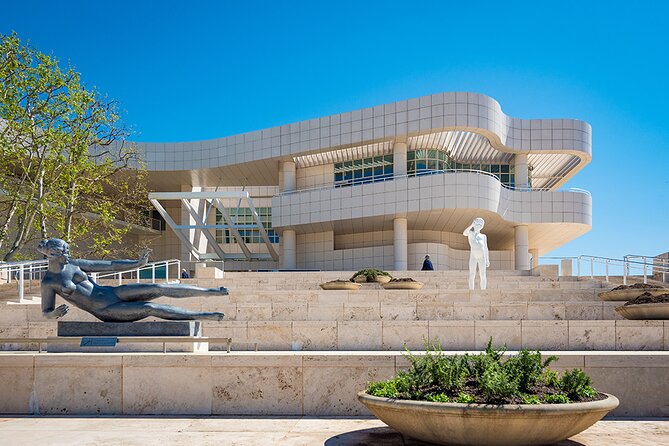
The Getty Center is not a small room with a few famous paintings. It is a broad museum complex, and even a brisk walk through its permanent collection can eat up your visit. A guide gives you a route and a reason for each stop.
The tour begins at The Getty, 1200 Getty Center Drive, and ends there. You meet your guide on site, then spend about two hours exploring the collection. The exact works depend on your interests, the guide, and what is on view, but the standard approach covers major highlights from the permanent collection.
That distinction matters. You are not signing up for a fixed march from one numbered painting to the next. You can ask to focus on a particular period, artist, or special exhibition if one is showing. If your group has a shared interest in Renaissance art, Dutch painting, or Impressionism, say so early.
The private setup also helps with uneven groups. One family included people from age 29 to 85, with one person using a wheelchair. The guide obtained the wheelchair, waited for late arrivals, and kept the group moving at a manageable pace. That does not promise every detail of assistance on every departure, but it shows why a private tour can be easier than a crowded group walk.
More Getty and art museum visits:
- Private Getty Center to Griffith Observatory Guided Tour
★ 5.0 · 185 reviews - Los Angeles: Getty Center Guided Tour
★ 4.9 · 57 reviews - Demystifying Art at The Getty – 90 minutes
★ 5.0 · 31 reviews
The Getty Center: architecture before artwork
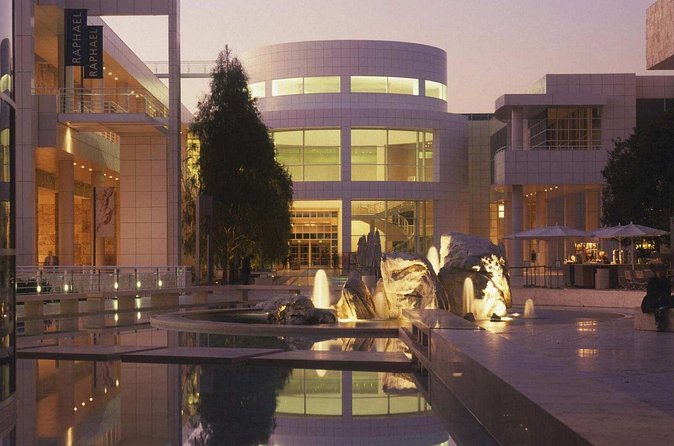
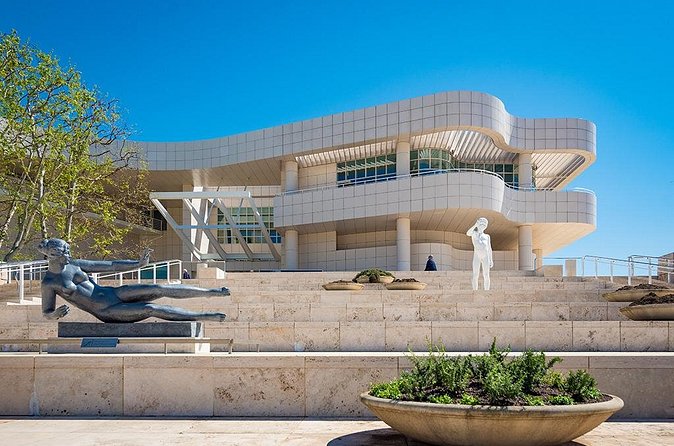
The building deserves more than a quick glance on your way to the galleries. Guides with a background in architecture, including Sasha, can discuss how the museum was built and how its design frames the outside world.
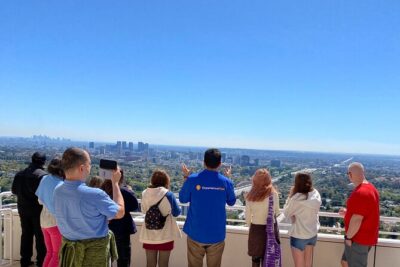
You might walk through openings that deliberately set up views beyond the museum. Those views are part of the experience, not just a backdrop for photographs. The architecture gives you a useful reset between galleries, and it helps explain why the Getty feels different from a plain indoor collection.
This is one of the tour’s strongest extras. Many museum tours treat the building as a container and rush toward the paintings. Here, the structure itself can become part of the conversation. If architecture interests you, mention it when booking or at the start.
The large site also creates the tour’s biggest practical limit. Two hours pass quickly once you combine the building, the collection, and questions from the group. You will see a selection, not every gallery.
Renaissance art, with the confusing bits explained
Renaissance galleries can intimidate people who did not study art history. The titles may be unfamiliar, the religious scenes can seem repetitive, and the idealized bodies may raise more questions than they answer.
This tour uses those questions as a starting point. You can find out why nudes appear so often in Renaissance art, how artists used the human body, and what those choices meant in the period. The point is not to memorize dates. It is to notice why an artist made a particular decision.
The Virgin Mary’s colors offer another clear example. Red, blue, or a combination of both is not random decoration. A guide can explain the symbolism and help you read the painting as people of the period might have read it.
That kind of explanation is useful because it changes how you look at the rest of the gallery. Instead of seeing a blue robe as simply a blue robe, you begin asking what the color, gesture, object, or pose contributes to the scene.
Ellen has used laminated images to add context while talking through works. That is a practical teaching tool, especially when a painting refers to an event, person, or earlier artwork that is not obvious from the canvas itself.
Dutch still lifes and the meaning of decay
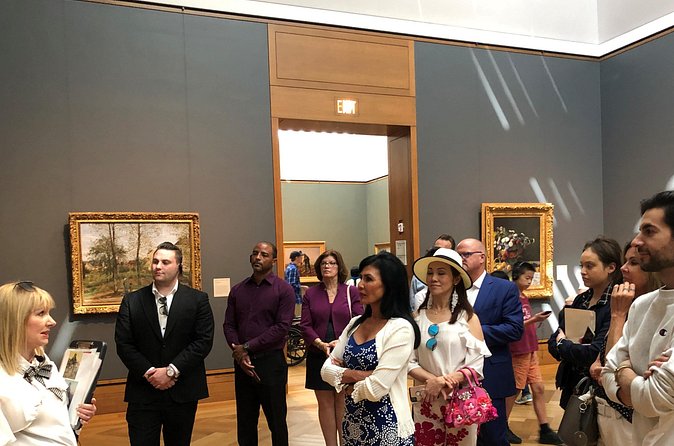
Dutch still-life painting often looks like a feast: flowers, fruit, silver, glass, and carefully arranged food. Look closer, though, and you may find wilted petals, dead bugs, a skull, or fruit beginning to spoil.
The tour uses these details to explain the ideas behind the pictures. A skull is not just a grim object placed in the corner. A fading flower or insect can point toward time, death, vanity, or the short life of pleasure. Once someone explains the visual language, the paintings become less like pretty arrangements and more like carefully built arguments.
This is a good subject for families and first-time museum visitors because it gives you a simple method. Look for what is fresh, what is damaged, and what is disappearing. Then ask why the painter wanted you to notice it.
The Getty’s permanent collection offers far more than one theme, but these small clues are the sort of details that can make a two-hour visit stick in your memory. You leave with a way to look, not just a list of names.
A few more Los Angeles trips worth weighing up
- Newport Beach: 2-Hour Whale Watching Tour
★ 4.2 · 1,375 reviews - 2-Hour Hollywood Bus Tour
★ 4.5 · 461 reviews - 2-Hour Hollywood, West Hollywood and Beverly Hills Open Bus Tour
★ 4.5 · 290 reviews - Los Angeles: 2-Hour Hollywood Trail Horseback Riding Tour
★ 4.7 · 256 reviews
Impressionism without the blurry-painting confusion
Many people first meet Impressionism through the question, Why does it look blurry? The answer involves more than poor technique or unfinished work.
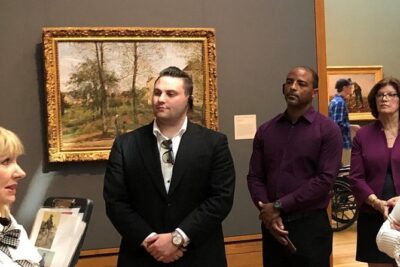
A guide can show you how Impressionist painters handled light, color, movement, and the act of seeing. The loose marks are part of the method. What appears vague from a few inches away may make more sense when you step back and let the colors work together.
This is where a conversational guide earns the fee. You can ask what to look for, then test the idea on the next painting. The lesson stays tied to an actual work rather than becoming a lecture on art terms.
The tour’s guides are praised for making these subjects suitable for different ages. One family toured with three children between 8 and 13, along with three adults, and found the visit both fun and instructive. For teenagers, questions about artists’ friendships, working lives, and relationships can make the art feel less remote.
A guide who talks with you, not at you
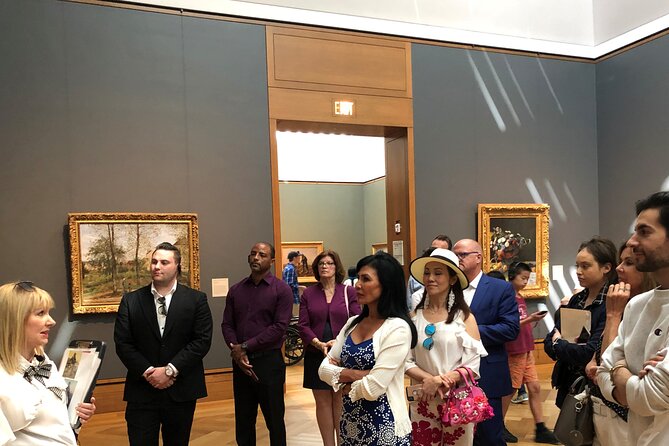
The strongest pattern among the named guides is their conversational approach. Ellen is described as warm, patient, and well prepared, while Sasha is noted for years of museum work and a background in architecture. Alexandra is praised for strong energy and broad art-history knowledge, and Meena has experience as a docent.
Guide assignments can change, so you should not assume a particular person will lead your tour unless the provider confirms it. Still, these examples show the kind of experience to expect: stories about artists, cultural context, links between works, and room for questions.
A good guide does more than identify a painting. You want someone who can explain why it matters, connect it to another work, and notice when your group is ready to move on. The personal format makes that possible.
The laminated pictures used by Ellen are especially helpful. A reproduction, portrait, or historical image can make a difficult subject easier to follow. It also gives children and visual learners something concrete to study while the guide talks.
You should bring your own questions. Ask about a detail that bothers you, an artist you already know, or a period you want to understand better. The tour is designed to respond to your curiosity, so silence wastes part of what you are paying for.
What $275 means for your group
The price is $275 per group of up to six, not $275 per person. For a full group, that works out to about $46 per person before parking or food. For two people, the per-person cost is much higher.
That makes the tour a stronger buy for families and small groups who want personal attention. You are paying for a private guide, a planned two-hour visit, and timed entry rather than for admission alone. You also gain the ability to shape the content around your interests.
The value is less convincing if you already know the Getty well, prefer wandering alone, or want to spend half a day with one artist. In that case, the two-hour structure may feel restrictive.
The Getty also has snacks and fine dining, but lunch, drinks, and snacks are not included. Parking is not included either. Build those costs into your day rather than treating the $275 as the full outing price.
Timing, access, and comfort
The tour is offered in English, with other languages available for a surcharge. Confirmation arrives within 48 hours of booking, subject to availability, and the experience is often booked about 18 days ahead. If your Los Angeles schedule is tight, do not leave this until the last minute.
A ride-share drop-off point is available, and the Getty is near public transportation. The meeting point is the Getty Center itself, at 1200 Getty Center Drive. The tour returns to that same meeting point.
Most people can take part, and service animals are allowed. If anyone in your party is under 16, note that when arranging the tour. Assisted listening devices are sanitized and used for groups of six or more, or whenever requested.
The wheelchair experience described above is encouraging, but you should still mention mobility needs ahead of time. The Getty is large, and your guide needs to know how to set a comfortable pace. A private tour gives you more room to adapt than a standard group visit.
Free cancellation is available if you cancel at least 24 hours before the start time. Cancellations or changes made inside that window are not accepted for a refund.
Who will get the most from this Getty tour
I would choose this experience for a family with mixed ages, a small group of friends, or anyone who feels unsure about reading art. It is also a good fit for people who want to see the Getty’s major works but do not want to spend their first hour figuring out the building and galleries.
It suits curious beginners especially well. You do not need a background in art. Questions about nudes, symbols, flowers, skulls, and blurry brushwork are enough to get the conversation moving.
Art lovers can benefit too, particularly if you request a narrower theme. You might ask for a period, a special exhibition, or a closer look at artists such as Rembrandt, Bernini, or painters connected with Leonardo da Vinci’s studio. The final selection depends on what is showing and what your guide can cover in two hours.
I would think twice if you want a slow, solitary visit. A guide changes the pace and adds conversation. That is the point of the tour, but it may not suit someone who wants to read every label or sit quietly with a single painting.
Should you book Demystifying Art at The Getty?
Book it if you want the Getty to make sense quickly. The best reasons are the private group size, the flexible route, the timed entry, and the guides’ ability to explain both the art and the building. The tour is especially useful when your group includes first-time museum visitors, children, teenagers, or people with different levels of interest.
I would book several weeks ahead, name your preferred art period, and mention children or mobility concerns before the visit. If you can fill all six places, the cost becomes easier to justify.
Skip it if you already know the Getty well or would rather explore independently. For everyone else, $275 buys a focused introduction to a huge museum, with enough time to learn how to look and still leave room for your own discoveries.
FAQ
How long does the Getty art tour last?
The tour lasts approximately two hours.
Where does the tour begin?
It begins at The Getty Center, 1200 Getty Center Drive, Los Angeles, California 90049.
Where does the tour end?
The activity ends back at the Getty Center meeting point.
Is admission included?
A timed-entry ticket is included. Parking, food, drinks, and snacks are not included.
How many people can join the private tour?
The price covers one private group of up to six people.
Is the tour offered in English?
Yes. English is offered. Other languages may be available for an additional charge.
Can the itinerary be customized?
Yes. You can ask to focus on specific art periods or a special exhibition if one is showing. The tour also includes highlights of the permanent collection.
What is the cancellation policy?
You can cancel for a full refund up to 24 hours before the experience start time. Cancellations or changes made less than 24 hours before the start time are not accepted for a refund.
Just added around Los Angeles
- Los Angeles: Speakeasy Bar Hopping Tour with Drink★ 4.7 · 3 reviews
- Private Surf Lesson in Venice Beach, CA★ 5.0 · 3 reviews
- LA: Expo Park Space & Dinosaurs Tour with Cal Science Center★ 5.0 · 3 reviews
- Private Photo Tour of the Best Instagram Spots in Los Angeles★ 5.0 · 3 reviews
- Santa Monica Superhero Exploration Game and Tour★ 5.0 · 3 reviews
- Private Hollywood Sign Hiking Tour with Select Hotel Pickup★ 5.0 · 3 reviews
- Private 5-Hour Limo Tour of Los Angeles and Beach Cities★ 3.5 · 3 reviews
- Explore Malibu’s Coast: PCH & Beyond – Self Guided Audio Tour★ 3.5 · 3 reviews
Getty & Art Museums, compared.
Private Getty Center to Griffith Observatory Guided Tour
Read our review →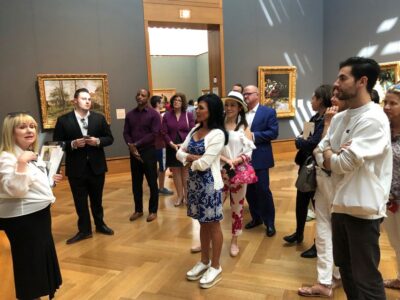

Private Getty Center to Griffith Observatory Guided Tour
Read our review →
Downtown LA Arts Tour with MOCA, The Broad, and Infinity Room
Read our review →
Getty Villa Private Tour with Expert Art Historian & Ocean Views
Read our review →Browse the lists this tour appears in