
Reviewed · WALKING TOURS
LA’s Art Deco & Beaux Art Architecture: Private Walking Tour
Los Angeles reveals its older, more polished face on this three-hour walk from City Hall to the Eastern Columbia Building. You move through civic monuments, former office towers, grand hotels, and department-store architecture while your guide explains how Beaux-Arts gave way to Art Deco.
I like the private format, since your guide can slow down for photos and answer questions without a large group setting the pace. I also like the route itself: it links several of downtown’s most distinctive buildings, including the Bradbury Building and the green terra-cotta Eastern Columbia clock tower. The main drawback is the price, $175 per person, which is a serious spend for a walking tour that includes no food, drinks, or paid admissions.
In This Review
- Key points
- Why this downtown walk works
- City Hall and the Los Angeles Courthouse
- The Bradbury Building, downtown’s great interior
- Title Guarantee Building and the vertical Art Deco idea
- Pershing Square and the Beaux-Arts link
- CalEdison’s marble and 1931 glamour
- Los Angeles Central Library and a preservation fight
- Oviatt Building and PacMutual’s changing face
- Eastern Columbia Building and the Broadway finish
- What the private guide adds
- Price, pace, and practical value
- Who should book this walk
- Should you book LA’s Art Deco and Beaux-Arts walk?
- FAQ
- How long does the private architecture tour last?
- Where does the tour begin?
- Where does the tour end?
- Is the tour private?
- Is the tour wheelchair accessible?
- Is public transportation available near the tour?
- Are admission tickets included?
- Is food or drink included?
- What happens if the weather is poor?
Key points
- A three-hour architectural route: Walk from Los Angeles City Hall to the Eastern Columbia Building, with eight planned stops.
- Private attention: Only your group takes part, making it easier to ask questions and adjust the pace.
- Strong photo opportunities: The Bradbury Building, CalEdison interiors, City Hall, and Eastern Columbia Building offer plenty to frame.
- Architecture across eras: See Beaux-Arts, Art Moderne, Romanesque Revival, and several stages of Art Deco design.
- Useful downtown finish: The tour ends near public transportation and taxi links, with help from your guide if you need directions.
- A few personal touches: Sam has offered rooftop access on one outing, while a separate experience with Mary included the market, Disney Theatre, an old church, and Angels Flight.
Why this downtown walk works
This is not a general sightseeing loop with a few old buildings added for flavor. The route is built around architectural change. You begin with the monumental civic style of City Hall, move through the ornate Bradbury Building, then track the sharper lines and vertical emphasis of Art Deco toward Broadway.
That progression gives the walk a clear purpose. You are not simply checking off addresses. You are seeing how Los Angeles expressed public power, business ambition, luxury, and modernity through its buildings.
The private setup matters here. Architecture tours can become dry when the guide races through dates and labels. With only your own group present, you can ask why one facade feels heavier than another, pause for a photograph, or spend more time at a building that catches your eye.
The route covers a moderate amount of downtown on foot. You should have a reasonable level of physical fitness, and comfortable walking shoes make sense. The tour is wheelchair accessible and near public transportation, though the experience still involves moving between several downtown stops over three hours.
A few more Los Angeles trips worth weighing up
- Los Angeles Original 90-Minute Walking Tour to The Hollywood Sign
★ 5.0 · 693 reviews - The ORIGINAL Downtown Santa Barbara Walking Food & Drink Tour
★ 5.0 · 551 reviews - Hollywood Stars Tour: Walk of Fame, Celebrity Homes, Sunset Strip
★ 4.0 · 341 reviews
City Hall and the Los Angeles Courthouse
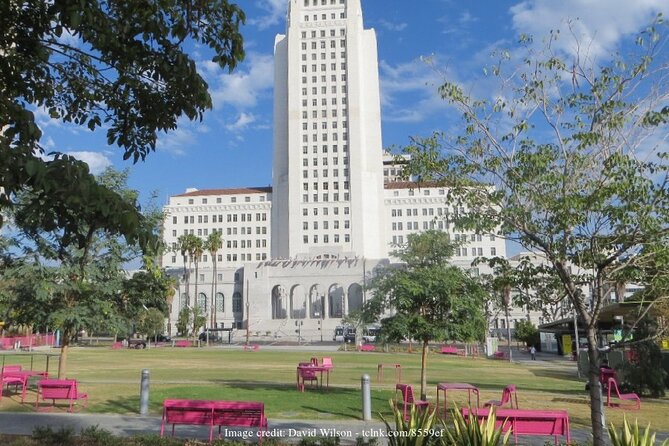
The walk begins at Los Angeles City Hall, 200 N Spring Street. This is a fitting starting point because the building carries both civic weight and a strong connection to the film industry. Its eclectic appearance has made it a familiar backdrop on screen, and your guide can place its design within the wider story of downtown Los Angeles.
You have about 30 minutes here, including the move toward the Los Angeles Courthouse. Since admission is free, the value comes from the explanation rather than a ticketed interior visit.
The courthouse provides an early contrast. It is presented as an example of Art Moderne, a cleaner and more streamlined expression than the decorative Beaux-Arts style seen elsewhere on the route. That contrast helps you understand that Art Deco was not one fixed look. It could be ornate, geometric, polished, or restrained.
City Hall is also a practical meeting point. It is easy to identify, close to public transportation, and gives you a clear place to begin before the route heads into the historic core.
The Bradbury Building, downtown’s great interior
The Bradbury Building receives about 30 minutes, and it deserves the time. It is one of downtown Los Angeles’s best-known architectural landmarks and one of the oldest surviving Beaux-Arts buildings in the area.
The exterior is worth a close look, but the interior is the real reason to stop. Its design offers a strong counterpoint to the later Art Deco buildings on the route. Instead of focusing on the sleek vertical lines of the 1930s, the Bradbury brings attention to ornament, structure, and a sense of old-world grandeur.
Your guide’s role is especially useful here. A quick independent visit can leave you admiring the building without understanding what makes it important. On the tour, you can connect its Beaux-Arts character with the later buildings you will see in the next two hours.
This is one of the places where you will want your camera ready. Still, keep your attention on the details around you. The purpose of the stop is not just to photograph a famous facade, but to see how a different architectural language shaped early downtown Los Angeles.
Title Guarantee Building and the vertical Art Deco idea
The 1930 Title Guarantee Building takes about 15 minutes. It was once an office building and is now made up of loft-style apartments.
This stop is less about grand civic drama and more about proportion. The building shows the vertical character often linked with Art Deco. Look for the way the design draws your eye upward, a fitting choice for a period when towers and skyscrapers represented modern business and city growth.
Because the stop is short, your guide will likely keep the explanation focused. That is useful after the larger Bradbury Building. You get a quick architectural lesson, then continue toward Pershing Square without turning the walk into a long lecture at every address.
The current residential use also gives you a reminder that downtown buildings can change purpose without losing their architectural identity. You may not enter, so this is mainly an exterior viewing point.
A different kind of day out, same stretch of Southern California:
- Full-Day Iconic Sights of LA, Hollywood, Beverly Hills, Beaches and More
★ 5.0 · 6,147 reviews - Warner Bros. Studio Tour Hollywood
★ 4.5 · 5,246 reviews - Hollywood, Beverly Hills & Celebrity Homes Tour by Open Air Bus
★ 5.0 · 2,557 reviews - Hollywood Sign 2.5-Hour Tour with Comedians and Their Dogs
★ 5.0 · 2,496 reviews
Pershing Square and the Beaux-Arts link
Pershing Square is scheduled for about 15 minutes. Here the guide places Art Deco in context by pointing back to the Beaux-Arts tradition that came before it.
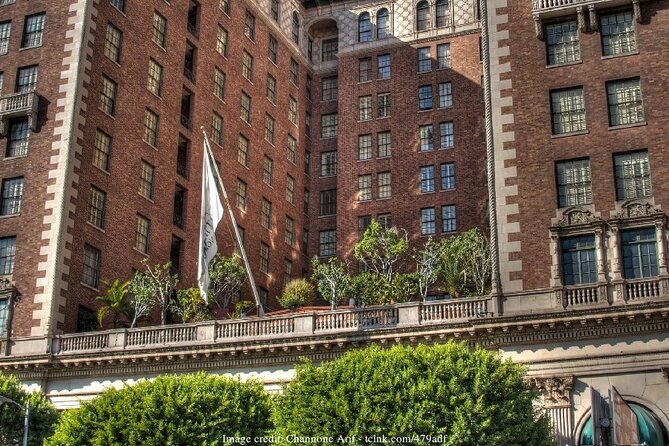
The nearby 1925 Biltmore hotel provides the example. This matters because Art Deco did not appear in isolation. It followed an earlier taste for formal symmetry, classical references, and grand public interiors. Seeing those ideas discussed near Pershing Square helps you read the buildings that come later with more confidence.
Pershing Square itself offers a change of pace from the close-up facade stops. You have room to look around and consider how a major open space relates to the surrounding buildings. The stop is brief, so do not expect a long park visit. Think of it as a useful pause and a lesson in architectural succession.
CalEdison’s marble and 1931 glamour
The CalEdison building receives about 30 minutes and may be one of the tour’s most rewarding stops, especially if you care about interior materials.
Built in 1931, the building occupies a prominent corner. You might be able to go inside and see striking marble flooring and columns. Because interior access is not guaranteed, treat this as a possible bonus rather than a promise.
That uncertainty is worth noting when you plan your expectations. If the doors are open, the marble details can make the visit feel much more immediate than a street-side look at another facade. If you cannot enter, the building still gives you a strong example of the period’s taste for polished surfaces and carefully designed public spaces.
This is also a good place to slow down. Your guide can help you notice materials that are easy to miss when you are thinking only about the outline of a building. Take photographs, but also look down at the floor and up at the columns.
Los Angeles Central Library and a preservation fight
The 1926 Los Angeles Central Library is another 30-minute stop. It is described as an early Art Deco building and has an important preservation story.
The library was threatened with demolition in 1978 and was saved by the Los Angeles Conservancy. That detail gives the building a practical lesson in preservation. Architectural value is not always obvious to the public or to city planners at the moment a building is under threat. The survival of the library shows how organized conservation efforts can shape what a city gets to keep.
The stop is useful even if you are more interested in design than preservation. Early Art Deco can feel different from the highly polished 1930s buildings later on the route. Your guide can help you see the transition in the library’s forms and decorative choices.
The Central Library also breaks up the walking route with another substantial stop. You have time to look, listen, and take photographs rather than being pushed from one address to the next.
Oviatt Building and PacMutual’s changing face
The Oviatt Building gets about 15 minutes. It has a layered design story, with some portions built in the Romanesque Revival style and other parts altered to reflect Art Deco after the owner visited the 1925 Paris exposition.
That makes the building especially useful for understanding how architectural fashion travels. A personal experience in Paris influenced the look of a Los Angeles building, and the result was not a pure example from one period. It shows how owners adapted existing structures to signal a new taste.
You also pass PacMutual, originally from 1908. Its first design resembled a Greek temple, but it was remodeled in the 1930s to give it an Art Deco appearance.
These two buildings reward a careful eye. They show that a city’s architecture is not always a clean sequence of styles. Older structures can be altered, refreshed, and reinterpreted. If you enjoy comparing original details with later changes, this may be one of the more interesting parts of the route.
The stop is short, so listen for the main points and photograph what catches your attention. Your guide’s explanation is what turns a quick pass into a useful architectural lesson.
Eastern Columbia Building and the Broadway finish
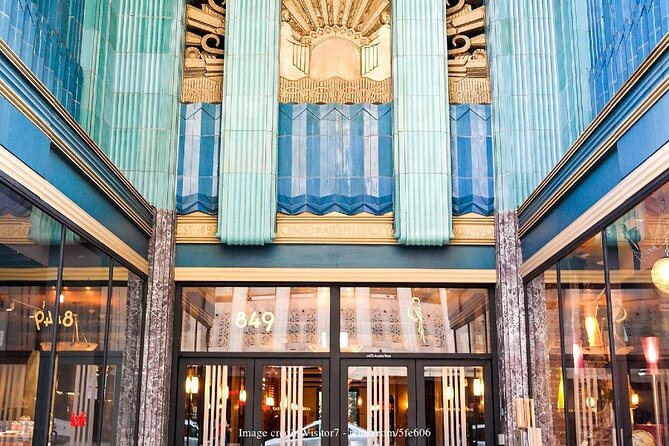
The tour ends at the Eastern Columbia Building, 849 S Broadway. You have about 15 minutes here, but the building makes a strong final impression.
Its clock tower and greenish terra-cotta exterior are among the route’s clearest Art Deco images. The building was originally constructed as a department store and is now luxury condominiums. One unit is still owned by Johnny Depp, a detail likely to interest film fans as well as architecture enthusiasts.
The terra-cotta color gives the building a different mood from the stone and marble seen earlier. The clock tower also makes it an easy landmark and a satisfying place to finish the walk.
Since this is the final stop, plan to take your best photographs here. The tour does not include transportation afterward, but the finish is close to public transportation and taxi links. Your guide can help you work out your next move, which is useful if you are not familiar with downtown.
What the private guide adds
The quality of this experience depends heavily on the guide. The itinerary gives you a good route, but the guide supplies the connection between dates, styles, people, and changes over time.
Sam is specifically named in one account of the experience. He shared architectural background, pointed out lesser-known downtown places, and arranged a surprise rooftop view. Rooftop access is not listed as a guaranteed feature, so you should see that as an occasional extra, not part of the standard promise.
Mary is also named in a separate account. That outing included meeting Mary, lunch at the market, Disney Theatre, an old church, and Angels Flight. The old church was noted as outside the planned tour, so do not assume every one of those stops belongs to this architecture route. Still, the details suggest that a private guide may help you connect the scheduled walk with nearby downtown sights if time and interest allow.
That flexibility is one reason to use the private format. Tell your guide early if you care most about interiors, preservation, film locations, photography, or specific architectural styles. You will get more from the three hours if the conversation follows your interests.
Price, pace, and practical value
At $175 per person, this is not a budget walking tour. There are no admission tickets, food, drinks, hotel pickup, or transportation included. You are paying for a private guide, a carefully planned route, interpretation, and the ability to take your time with your own group.
The value improves when several people share the experience through a group discount. It also makes more sense if architecture is a major reason you came to Los Angeles, or if you want a guide to handle navigation while you focus on the buildings.
The tour lasts about three hours, and the listed stop times add up to the full outing. You should not book it immediately before a timed reservation unless you allow extra room. Photos, interior access, questions, and city walking can all affect the pace.
The tour is offered in English, uses a mobile ticket, and requires no admission payments along the route. Confirmation arrives at booking. You can cancel for a full refund up to 24 hours before the start time, but changes or cancellations inside that window are not accepted. Poor weather can also lead to a new date or a full refund.
Who should book this walk
I would recommend it first to people who enjoy buildings more than broad city sightseeing. You will get the most from the experience if you like comparing styles, noticing materials, and hearing why a structure looks the way it does.
It also suits first-time downtown visitors who want someone else to manage the route. City Hall, Broadway, the Central Library, and the Eastern Columbia Building cover a lot of visual ground, and a private guide can keep the day organized.
Families can benefit if one person in the group has a strong interest in architecture. One outing worked particularly well for a son intrigued by buildings, with the rooftop view adding an unexpected highlight.
I would hesitate if you want a low-cost walk, a food tour, or a broad introduction to all of Los Angeles. This is focused on downtown architecture, and the price is hard to justify if you have little interest in design or preservation.
Should you book LA’s Art Deco and Beaux-Arts walk?
Book it if you want a focused look at downtown Los Angeles’s architectural story and value private attention. The route has real variety, from City Hall and the Bradbury Building to CalEdison’s possible marble interior and the Eastern Columbia clock tower.
Skip it if $175 per person feels too high for three hours without included food or paid attractions. For architecture fans, families with a keen young enthusiast, and visitors who prefer a guide-led city walk, the private format and strong sequence of buildings make the cost easier to defend.
FAQ
How long does the private architecture tour last?
The tour lasts approximately three hours.
Where does the tour begin?
It begins at Los Angeles City Hall, 200 N Spring Street, Los Angeles, California 90012.
Where does the tour end?
It ends at the Eastern Columbia Building, 849 S Broadway, Los Angeles, California 90014.
Is the tour private?
Yes. Only your group participates in the private activity.
Is the tour wheelchair accessible?
Yes, the experience is listed as wheelchair accessible.
Is public transportation available near the tour?
Yes. The route is near public transportation, and the finish point is also close to public transportation and taxi links.
Are admission tickets included?
No tickets are required for the listed stops, and there are no admission charges included in the tour price.
Is food or drink included?
No. Food and drinks are not included.
What happens if the weather is poor?
The experience requires good weather. If it is canceled because of poor weather, you will be offered another date or a full refund.
Just added around Los Angeles
- Los Angeles: Speakeasy Bar Hopping Tour with Drink★ 4.7 · 3 reviews
- Private Surf Lesson in Venice Beach, CA★ 5.0 · 3 reviews
- LA: Expo Park Space & Dinosaurs Tour with Cal Science Center★ 5.0 · 3 reviews
- Private Photo Tour of the Best Instagram Spots in Los Angeles★ 5.0 · 3 reviews
- Santa Monica Superhero Exploration Game and Tour★ 5.0 · 3 reviews
- Private Hollywood Sign Hiking Tour with Select Hotel Pickup★ 5.0 · 3 reviews
- Private 5-Hour Limo Tour of Los Angeles and Beach Cities★ 3.5 · 3 reviews
- Hooray for Hollywood: 35-Minute Helicopter Tour★ 4.7 · 3 reviews
Walking Tours, compared.
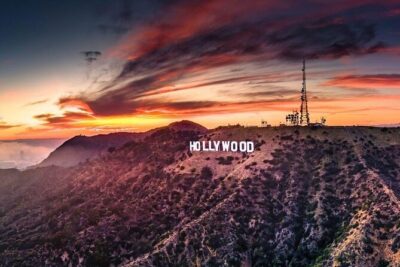
Los Angeles Original 90-Minute Walking Tour to The Hollywood Sign
Read our review →
The ORIGINAL Downtown Santa Barbara Walking Food & Drink Tour
Read our review →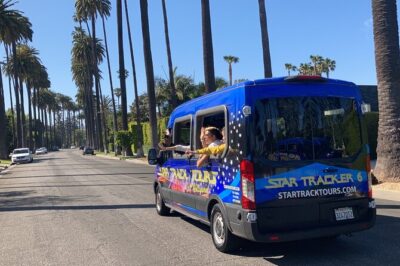
Hollywood Stars Tour: Walk of Fame, Celebrity Homes, Sunset Strip
Read our review →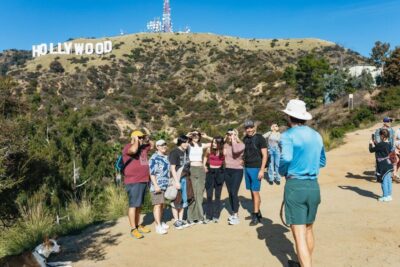
Express Hollywood Sign Guided Walking Tour with Photos
Read our review →
Haunted Hollywood Walking Tour: True Crime and Creepy Tales
Read our review →
Walk of Fame, Hollywood Sign & Beverly Hills Tour
Read our review →Browse the lists this tour appears in