
Reviewed · WALKING TOURS
Los Angeles Beginnings Walking Tour
Los Angeles began downtown, not among the palm trees of Hollywood. This two-hour walk links the city’s oldest streets with its boldest modern buildings, from Union Station’s grand halls to Frank Gehry’s Walt Disney Concert Hall. Guide Phil, also called LA Phil, brings the story together with clear explanations and plenty of local detail.
I like the way Union Station and Olvera Street give you a real sense of the city’s beginnings before the tour shifts to art, music, and modern architecture. I also like the manageable pace, with time to look around rather than race from stop to stop. The main drawback is the ending: you finish at Angels Flight, about a 25-minute walk or two Metro Rail stops from the starting point.
In This Review
- Key points
- Starting at Union Station, Los Angeles in one grand room
- Olvera Street and the city’s first chapter
- Two historic churches and an older government building
- Grand Park brings downtown back into public life
- Disney Hall shows Los Angeles at its most dramatic
- The Broad, MOCA, and the arts district around them
- Finishing at Angels Flight Railway
- How much walking and how much history
- What the $38 price gets you
- Who will enjoy this downtown walk
- Booking, weather, and cancellation details
- Should you book the Los Angeles Beginnings Walking Tour?
- FAQ
- How long is the Los Angeles Beginnings Walking Tour?
- Where does the tour begin?
- Where does the tour end?
- Is admission to the museums included?
- Is the Angels Flight ride included?
- Can I cancel for a full refund?
Key points
- Union Station sets the scene: Begin inside one of America’s finest railway stations, with murals, tiled spaces, and a grand vaulted ceiling.
- Olvera Street connects you to early Los Angeles: Browse this historic pedestrian street and learn why it is called the birthplace of the city.
- Phil gives the tour its character: His stories cover roughly 250 years of Los Angeles history, along with architecture and useful advice for the rest of your visit.
- The route mixes old and new: Historic churches and government buildings lead to Grand Park, Disney Hall, The Broad, and MOCA.
- Angels Flight is a fitting finish: You get a downtown view and the option to ride one of the world’s shortest railways, though the fare is extra.
- The group stays relatively small: A maximum of 20 people makes it easier to hear the guide and ask questions.
Starting at Union Station, Los Angeles in one grand room
The tour begins at 800 N Alameda Street, at Union Station. This is an excellent place to start because the building tells part of the city’s story before the guide says a word.
Often described as America’s last great railway station, Union Station combines grand civic design with the practical purpose of moving people through the region. On this visit, you spend about 10 minutes looking at its murals and vaulted ceiling. Admission is included, so there is no extra ticket to arrange.
I like this opening because it gives you an immediate sense of scale. Los Angeles is often thought of as a spread-out collection of neighborhoods, but Union Station shows that downtown once served as a major gateway. Phil uses the setting to explain the city’s beginnings and growth, making the first stop more than a quick photo break.
Ten minutes is enough for an introduction, not a full architectural tour. You should expect to keep moving, and you may want to return on your own if you are especially interested in the station’s design. Still, as the first chapter of the walk, it works very well.
A few more Los Angeles trips worth weighing up
- Los Angeles Original 90-Minute Walking Tour to The Hollywood Sign
★ 5.0 · 693 reviews - The ORIGINAL Downtown Santa Barbara Walking Food & Drink Tour
★ 5.0 · 551 reviews - Hollywood Stars Tour: Walk of Fame, Celebrity Homes, Sunset Strip
★ 4.0 · 341 reviews
Olvera Street and the city’s first chapter
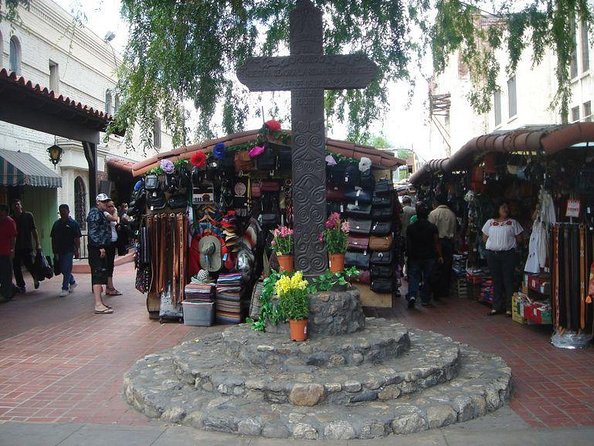
From Union Station, the route heads to Calle Olvera, usually called Olvera Street. The stop lasts about 15 minutes and is one of the most important parts of the tour.
This pedestrian street is known as the birthplace of Los Angeles. It also offers a more informal feel than the large civic buildings nearby, with souvenir shopping and a street setting that reflects the city’s Mexican and Spanish roots. You have time to browse as you learn how early Los Angeles developed.
I like this contrast. Union Station is monumental and polished, while Olvera Street feels closer to an everyday public gathering place. The change helps you understand that Los Angeles history is not only about famous buildings. It is also about streets, commerce, food, faith, and cultural traditions.
The stop is brief, so think of it as an introduction rather than a long shopping visit. If you want to browse every stall, you may need to come back later. The tour’s value here is the context Phil supplies, showing you why this small area matters to the much larger city.
Two historic churches and an older government building
The walk continues to Our Lady Queen of Angels Catholic Church, described as Los Angeles’ oldest standing church. You spend about 10 minutes here, with no admission charge.
This stop adds a strong human element to the city’s early story. Churches were central gathering places in the first period of Los Angeles, and this building helps put the city’s age into perspective. The name Los Angeles can suggest a young entertainment capital, but this part of downtown reaches much further back.
The route also passes the oldest standing government building. The supplied details do not identify the building by name, but the stop adds another piece to the city’s early civic story. You should expect an exterior look and a spoken explanation rather than a long indoor visit.
Next comes the Cathedral of Our Lady of the Angels, the mother church of Los Angeles and one of the largest Catholic churches in the world. The tour allows about 15 minutes here.
The cathedral provides a sharp change in scale and style. Its modern design and large public presence show how the city’s religious institutions continued to grow long after the original settlement. The short visit gives you time to take in the exterior and general setting without turning the walk into a specialized religious architecture tour.
If you want to study the cathedral at length, you may find 15 minutes limiting. For a first look at downtown, though, the timing is sensible. You get another major landmark without losing the steady rhythm of the walk.
Grand Park brings downtown back into public life
The next stop is Gloria Molina Grand Park, with about 10 minutes set aside for the visit. The park is presented as a center for the arts and culture of Los Angeles.
This section helps explain the newer energy around downtown’s civic core. After the older streets and churches, Grand Park gives you open space and a place designed for public events and city life. It also creates a useful pause before the route reaches the major cultural buildings.
I like having the park included because it keeps the tour from becoming a string of facades. You get a chance to see how downtown has been reworked for people on foot, not only for offices, traffic, and government buildings. The guide’s broader explanation of the city’s growth makes this stop more meaningful than a simple walk through a landscaped plaza.
The tour does not promise a long break here, so do not plan on sitting down for a full rest period. This is still a walking tour with a firm two-hour shape.
A different kind of day out, same stretch of Southern California:
- Full-Day Iconic Sights of LA, Hollywood, Beverly Hills, Beaches and More
★ 5.0 · 6,147 reviews - Warner Bros. Studio Tour Hollywood
★ 4.5 · 5,246 reviews - Hollywood, Beverly Hills & Celebrity Homes Tour by Open Air Bus
★ 5.0 · 2,557 reviews - Hollywood Sign 2.5-Hour Tour with Comedians and Their Dogs
★ 5.0 · 2,496 reviews
Disney Hall shows Los Angeles at its most dramatic
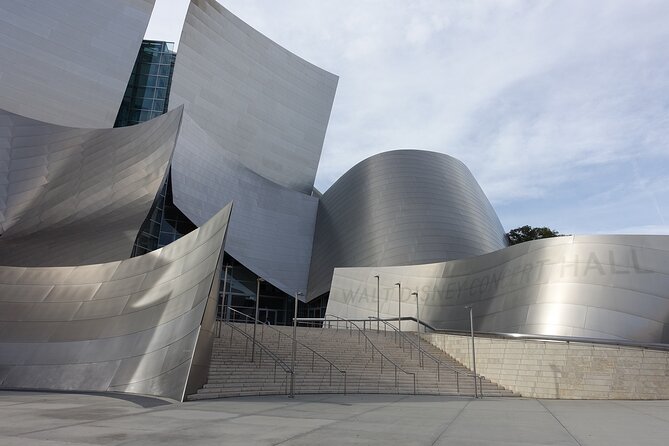
Walt Disney Concert Hall is one of the route’s major highlights. You spend about 10 minutes outside the home of the Philharmonic and see one of Frank Gehry’s best-known buildings.
The hall’s sweeping metal forms make it easy to understand why architecture is such an important part of modern downtown Los Angeles. Phil explains the design and answers questions about architecture, which adds useful depth if you know little about the building.
This is one of the best photo stops on the tour, but the guide does more than point at an unusual structure. The building helps show how cultural projects have changed the face of downtown. It also connects the city’s public history to music, performance, and design.
The visit is exterior-focused based on the listed timing and admission details. You are not buying a concert ticket or taking a full interior tour. That distinction matters if you are hoping to see a performance space from inside. For a quick introduction to the building and its role in the area, 10 minutes is enough.
The Broad, MOCA, and the arts district around them
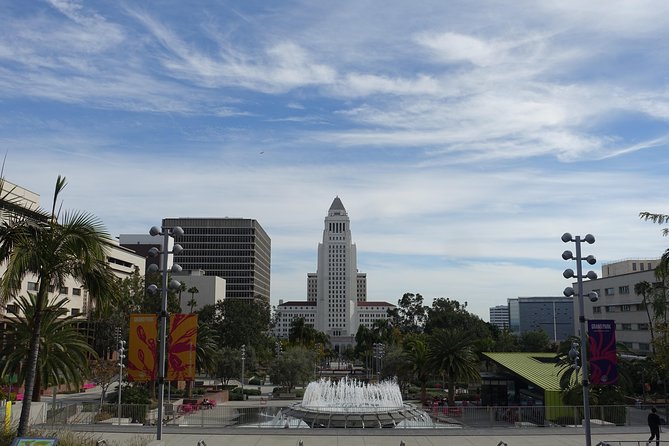
The route then takes in The Broad, a contemporary art museum in the center of the city. The planned stop is about five minutes, and museum admission is not included.
Five minutes is a short time for any art museum, so treat this as an architectural and neighborhood introduction. You can see where the museum fits into downtown’s cultural core and decide if you want to return later for a proper visit. The tour is not designed to replace an art museum ticket.
The Museum of Contemporary Art, known as MOCA, follows with another five-minute stop. It has focused on contemporary art since the 1980s, and it adds another layer to the walk’s story of downtown renewal.
I like this part of the route because it shows that downtown Los Angeles is not frozen in its early history. The city’s past is important, but the tour also points you toward its current art and music life. You get a useful overview of several major institutions without spending the entire afternoon indoors.
The tradeoff is clear: art lovers will need a separate visit. Neither museum admission is included, and the short stops are better for orientation than for viewing collections.
The itinerary also passes a school of music and arts. It is not given a separate time or admission detail, so expect it to be a brief point of interest along the route rather than a scheduled tour inside the school.
Finishing at Angels Flight Railway
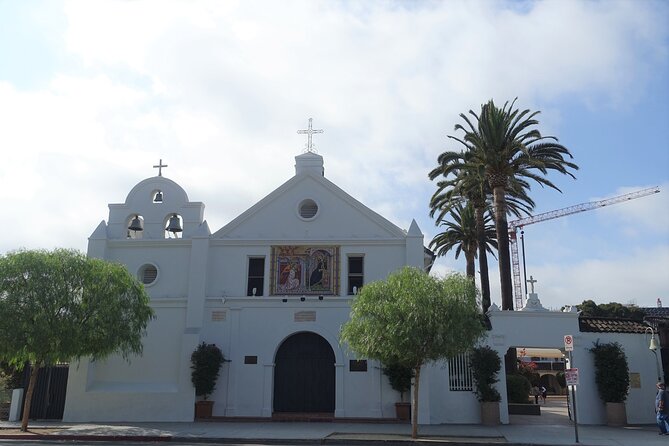
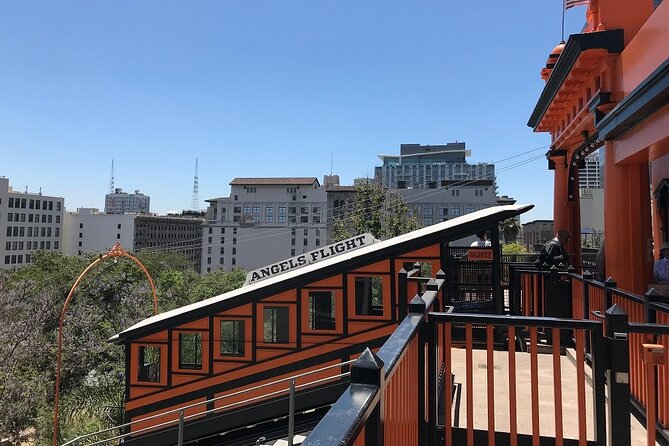
The walk ends at Angels Flight Railway, at 351 S. Hill Street. The stop lasts about 10 minutes and offers a view over the Los Angeles skyline, along with the chance to ride what is described as the shortest railway in the world.
The ride is not included in the tour price. You should bring extra money if you want to use it, and you should ask Phil about the current fare because the supplied tour details do not state the amount.
Angels Flight is a smart ending. It gives the tour a small, memorable attraction after the larger stations, churches, parks, and museums. It also puts you in a useful downtown location for continuing your day.
The practical issue is that the tour does not loop back to Union Station. You can walk back in about 25 minutes, or take two Metro Rail stops. Rail fare is not included, but Phil can point you in the right direction.
How much walking and how much history
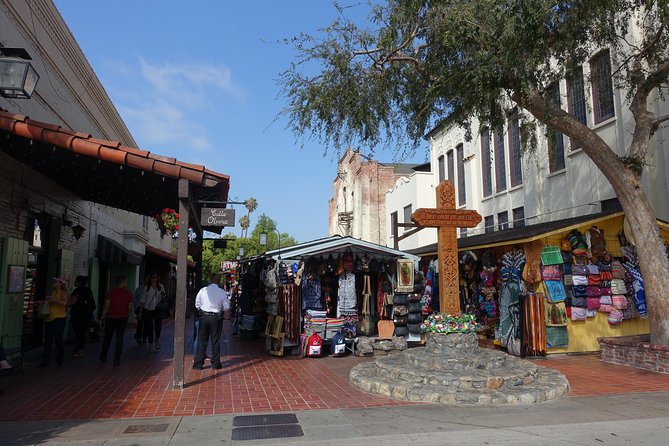
The listed duration is about two hours. The timed stops add up to roughly 90 minutes, leaving about 30 minutes for walking between them and for Phil’s explanations along the way.
That makes this a moderate introduction rather than an exhausting city march. The route covers a lot of ground, but the schedule leaves room for stories and questions. Several people have enjoyed Phil’s ability to explain about 250 years of California and Los Angeles history in a clear, entertaining way.
I would choose this tour early in a downtown visit. It gives you a map in your head and helps you decide which places deserve more time later. Phil has also offered practical advice for continuing the day, which is useful since the route ends in a different part of downtown.
The group can include up to 20 people. That is small enough for a personal feel in most cases, though a full group may make it harder to ask long questions at every stop. The experience may also run with only a few people. One booking had a single participant, allowing a more personal walk, but you should not assume that will happen on your date.
What the $38 price gets you
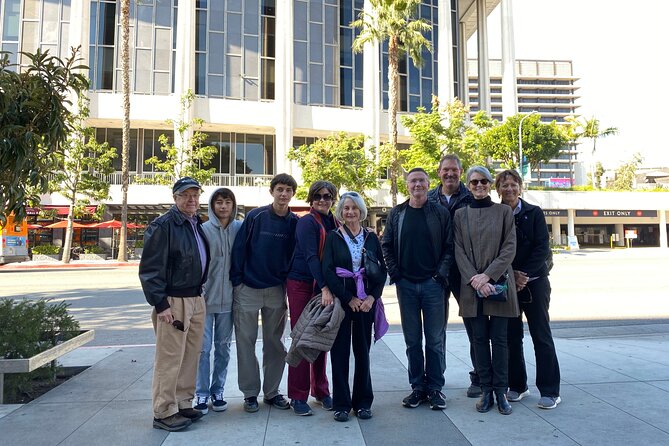
At $38 per person, the tour is priced as a guided orientation to downtown rather than as a package of admissions. Every listed stop is free to visit as part of the walk, but museum entry and the Angels Flight ride cost extra.
The value rests mainly in Phil’s storytelling, route planning, and ability to connect places that you might otherwise see as unrelated. You could walk between Union Station, Olvera Street, the cathedral, Grand Park, Disney Hall, and Angels Flight on your own, but you would miss the explanations about how the city developed and why these sites belong in the same story.
The price makes the most sense for a first visit, especially if you want history and architecture without committing to a longer day tour. It is less appealing if you already know downtown well or plan to spend hours inside The Broad and MOCA. In that case, your money may be better spent on museum admission and independent exploring.
The tour is often booked about 11 days ahead. That suggests you should reserve before your visit if your schedule is tight, especially if you want a particular date.
Who will enjoy this downtown walk
I would recommend the tour to first-time visitors who want a clear introduction to Los Angeles beyond Hollywood and the beach districts. It suits anyone interested in city origins, religious buildings, public spaces, architecture, and the way downtown has changed.
It is also a good match for travelers who prefer a compact activity. Two hours is long enough to learn a great deal but short enough to leave the rest of the day open. Families and mixed-age groups may appreciate the variety of stops, since the walk is not focused on one museum or one narrow subject.
You should be comfortable walking between stops and spending time on your feet. Most people can participate, and service animals are allowed. The meeting point is near public transportation, which makes Union Station a practical place to begin.
This is not the right choice if you want a bus tour, a long museum visit, or a deep architectural study of each building. It also does not finish where it starts, so allow a little extra time for your return trip or next activity.
Booking, weather, and cancellation details
You receive confirmation when you book, and the experience offers free cancellation up to 24 hours before the start time. Cancel at least 24 hours ahead for a full refund. Changes or cancellations within 24 hours are not accepted for a refund.
The walk requires good weather. If poor weather cancels it, you can choose another date or receive a full refund. The tour also requires a minimum number of participants, so a cancellation for that reason brings the same choice of another date or a full refund.
Should you book the Los Angeles Beginnings Walking Tour?
Book it if you want downtown Los Angeles explained by someone who can connect its earliest settlements, churches, civic buildings, parks, museums, and modern concert halls. Phil is the key reason to choose this experience. His clear history talks, architectural answers, and practical suggestions give the route more meaning than a self-guided stroll.
I would especially choose it near the start of a Los Angeles visit. You will finish with a better sense of where the city began and which downtown sights deserve a longer return visit. Just remember to budget for Angels Flight if you want the ride, and plan your trip back from the Hill Street ending.
FAQ
How long is the Los Angeles Beginnings Walking Tour?
The tour lasts approximately two hours.
Where does the tour begin?
The meeting point is 800 N Alameda Street, Los Angeles, California 90012, USA.
Where does the tour end?
The tour ends at Angels Flight Railway, 351 S. Hill Street, Los Angeles, California 90013.
Is admission to the museums included?
No. Admission to The Broad and the Museum of Contemporary Art is not included.
Is the Angels Flight ride included?
No. The railway fare is not included in the tour price.
Can I cancel for a full refund?
Yes. You can cancel at least 24 hours before the experience start time for a full refund. Cancellations within 24 hours are not refunded.
Just added around Los Angeles
- Los Angeles: Speakeasy Bar Hopping Tour with Drink★ 4.7 · 3 reviews
- Private Surf Lesson in Venice Beach, CA★ 5.0 · 3 reviews
- LA: Expo Park Space & Dinosaurs Tour with Cal Science Center★ 5.0 · 3 reviews
- Private Photo Tour of the Best Instagram Spots in Los Angeles★ 5.0 · 3 reviews
- Santa Monica Superhero Exploration Game and Tour★ 5.0 · 3 reviews
- Private Hollywood Sign Hiking Tour with Select Hotel Pickup★ 5.0 · 3 reviews
- Private 5-Hour Limo Tour of Los Angeles and Beach Cities★ 3.5 · 3 reviews
- Hooray for Hollywood: 35-Minute Helicopter Tour★ 4.7 · 3 reviews
Walking Tours, compared.
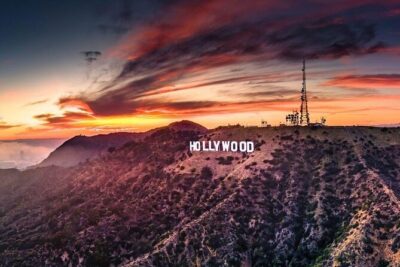
Los Angeles Original 90-Minute Walking Tour to The Hollywood Sign
Read our review →
The ORIGINAL Downtown Santa Barbara Walking Food & Drink Tour
Read our review →
Hollywood Stars Tour: Walk of Fame, Celebrity Homes, Sunset Strip
Read our review →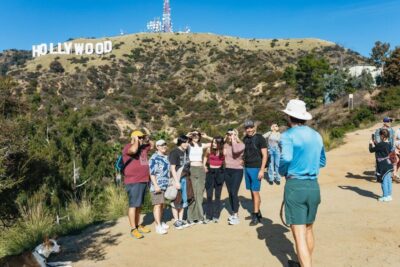
Express Hollywood Sign Guided Walking Tour with Photos
Read our review →
Haunted Hollywood Walking Tour: True Crime and Creepy Tales
Read our review →
Walk of Fame, Hollywood Sign & Beverly Hills Tour
Read our review →Browse the lists this tour appears in