
Reviewed · PALM SPRINGS TOURS
Make Sun Prints in the Desert
Cyanotypes turn desert sunlight into deep blue artwork. In this three-hour workshop with Rose Cefalu, you’ll coat paper, arrange objects and photo negatives, then use the strong Joshua Tree sun to make prints without a darkroom or costly camera gear.
I like the hands-on format and the fact that you leave with five to ten finished prints, not just a quick demonstration. I also like the personal touch: before class, you send a few photos so Rose can prepare digital negatives for you. The main drawback is the price, $125 per person, plus the need for good weather.
In This Review
- Key points
- Why Cyanotypes Work So Well in the Desert Sun
- Meeting Rose Cefalu at Commercial Street
- Coating Paper and Preparing Your Designs
- Using Personal Photos and Desert Objects
- What Three Hours Actually Gets You
- Is $125 a Fair Price?
- Weather, Timing, and What to Bring
- Who Will Enjoy This Workshop Most
- The Best Part: A Useful Creative Skill
- Should You Book Make Sun Prints in the Desert?
- FAQ
- Where does the sun print workshop meet?
- How long does the workshop last?
- Do I need previous art or photography experience?
- What will I make during the class?
- How many prints will I take home?
- What happens if the weather is poor?
Key points
- Make 5 to 10 prints: You’ll work on 9 by 12 inch sheets using different paper types and mediums.
- Use your own photographs: Send photos before class, and Rose Cefalu will prepare digital negatives for printing.
- Work with natural objects: Dried plants, crystals, feathers, and three-dimensional objects can create unusual shapes and textures.
- No darkroom required: Cyanotypes use coated paper, water, and sunlight rather than expensive photography equipment.
- Small group setting: The class accepts a maximum of 10 people, which suits a workshop where you need room to work.
- Plan for the weather: The process depends on sunshine, and poor weather can lead to a new date or a full refund.
Why Cyanotypes Work So Well in the Desert Sun
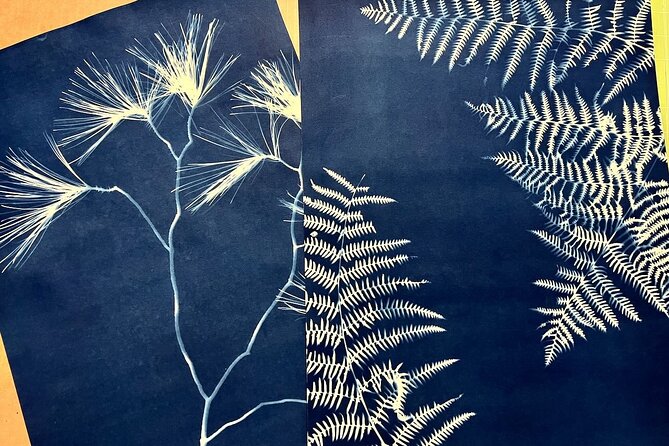
A cyanotype is a photographic printing process that produces a striking cyan blue image. You place an object or prepared negative on light-sensitive paper, expose it to sunlight, and wash the paper to reveal the final design.
The process has an appealing simplicity. You do not need a camera, a darkroom, or specialized printing machinery. The basic materials are paper, light-sensitive coating, water, and sunlight. That makes the class useful for anyone who wants an art activity that can be repeated at home.
The desert setting is not just a backdrop. Strong sunlight is central to the process, so the bright conditions around Joshua Tree help make the workshop possible. The finished prints also suit the area: plants, feathers, crystals, and other found forms become crisp silhouettes against a blue field.
You will learn the method rather than simply watch Rose make a print. That distinction matters. A demonstration can be entertaining, but a working session gives you a better sense of how much coating to use, how objects affect the paper, and how the image changes during exposure and washing.
The blue color is part of the appeal, but the real fun comes from the surprises. A flat leaf may create a recognizable outline. A three-dimensional object may leave a shape with soft edges or uneven areas of light. Small changes in placement can alter the final image.
More days around Palm Springs:
- Palm Springs Aerial Tramway Admission Ticket
★ 4.5 · 1,798 reviews - Palm Springs: Aerial Tramway Round-Trip Ticket
★ 4.6 · 1,122 reviews - Joshua Tree National Park Self-Guided Driving Audio Tour
★ 4.5 · 762 reviews
Meeting Rose Cefalu at Commercial Street
The workshop begins at 61884 Commercial St, Joshua Tree, California 92252, and ends at the same meeting point. The experience is advertised under Palm Springs, but the stated meeting point is in Joshua Tree, so check your drive time carefully before booking.
The class runs Friday through Sunday from 10 a.m. to 1 p.m. That morning schedule makes sense for a sun-based activity, but you should allow enough time to reach Joshua Tree before the 10 a.m. start. No transportation is listed, so you should plan your own way to the meeting point.
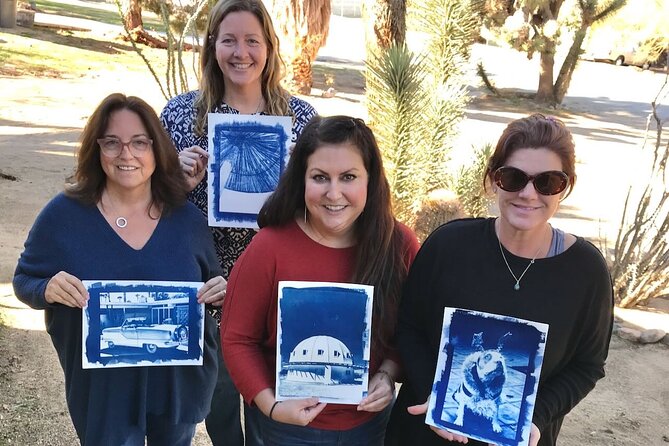
Rose Cefalu leads the experience and provides the materials. One especially useful touch is the pre-class photo preparation. You send a few photographs ahead of time, and Rose makes digital negatives that you can use during the workshop.
This gives you a more personal project than working only with prepared examples. Your print might include a photograph you took yourself, along with natural or three-dimensional objects selected in class. It also means you should think about which photos to send before the workshop rather than treating the session as a completely spontaneous craft activity.
You do not need previous experience. The class is designed to explain the process from the beginning, which makes it suitable if the word cyanotype is new to you.
Coating Paper and Preparing Your Designs
A key part of the class is learning how to coat paper for exposure. This is where you begin to understand why the process is both simple and hands-on.
The paper must be prepared with the light-sensitive solution, then handled carefully before exposure. The workshop lets you take part in that stage rather than handing you a ready-made sheet. You will see how the materials look before the sun does its work and how the paper changes afterward.
The activity includes everything needed to make the prints. You only need to bring yourself, although sending your photos before class is part of the preparation if you want to use personal images.
You can print from digital negatives or place objects directly onto the coated paper. Digital negatives create a photographic image, while objects block sunlight and produce silhouettes or outlines. Combining the two methods gives you more than one way to work.
Rose provides a collection of objects, including dried plants, crystals, and feathers, so you do not need to search for suitable materials before arriving. You may also use found objects, provided they can be placed safely on the paper. The supplied information specifically mentions nature and three-dimensional objects, which suggests that texture and shape are important parts of the activity.
The paper size is 9 by 12 inches. That is large enough for a substantial wall print, but still manageable during a three-hour class. You will work with various paper types and mediums, so the final group of prints should not all look exactly alike.
Using Personal Photos and Desert Objects
The personal photo element is one of the strongest reasons to choose this workshop instead of a general art class. You are not limited to an anonymous sample image. Rose prepares your selected photos as digital negatives before you arrive.
This part requires a little planning. Choose a few images with clear forms and strong contrast if you want the subject to translate well into a sun print. The supplied information does not promise that every photo will produce a perfect image, so keep an open mind about the result.
You also get to work with objects. Dried plants can create delicate patterns. Feathers may leave fine lines, while crystals and other solid objects can make bolder shapes. You are not simply reproducing a picture. You are testing how sunlight passes around or through different forms.
This is where the desert setting adds character. The workshop allows natural materials and found objects to become part of the design. You might make a print that feels tied to the place, even if the finished image is abstract.
I like that Rose has a supply of interesting materials ready for the class. That removes one common worry: arriving without the right object. You can bring a personal idea through your photographs, then experiment with the objects already available.
The process also works well for mixed ages and skill levels, based on the stated participation requirements. Most people can take part, and no previous experience is required. Still, you should be comfortable spending three hours in a practical art session rather than expecting a sightseeing tour.
A different kind of day out, same stretch of Southern California:
- San Andreas Fault Jeep Tour from Palm Desert
★ 5.0 · 751 reviews - Bank Heist Escape Room Game for Private Group
★ 5.0 · 519 reviews - Joshua Tree National Park Scenic Tour
★ 4.5 · 499 reviews - Titanic Escape Room Game for Private Group
★ 5.0 · 464 reviews
What Three Hours Actually Gets You
The three-hour length gives the workshop enough time for several stages:
- Learning the background of cyanotypes
- Coating paper
- Preparing photo negatives and objects
- Exposing the paper in sunlight
- Washing and developing the prints
- Making several versions on different papers and mediums
The class includes an introduction to the history of the process. Cyanotypes were once used by engineers well into the 20th century, so this is not a brand-new art trick. The method has a practical past, even though it is now popular with photographers and artists.
That background helps explain why the process feels different from ordinary photography. You are using a technique that sits between photography, printmaking, and craft. The class gives you enough context to understand what you are doing without requiring technical training.
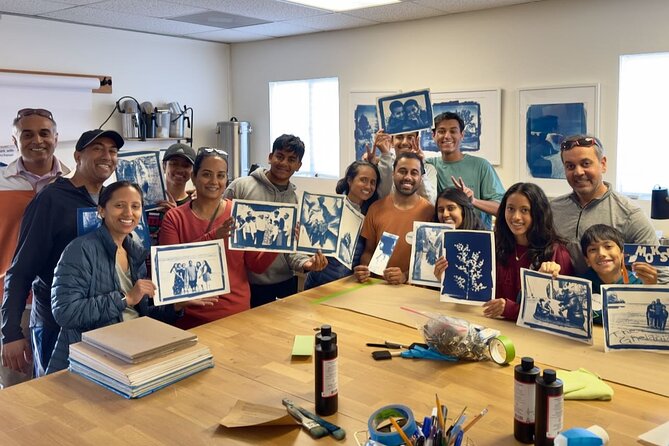
You will leave with five to ten cyanotype prints. That is a useful amount for the price because you are taking home a small body of work, not one souvenir sheet. The exact quality and appearance of each print will vary. That is part of the nature of the process, but it also means you should not expect every piece to look polished or identical.
The workshop ends back at the original meeting point. Lunch is not included, so plan food separately around the 10 a.m. to 1 p.m. schedule. Since the class ends at midday, you can arrange lunch afterward, but no meal stop is part of the experience.
Is $125 a Fair Price?
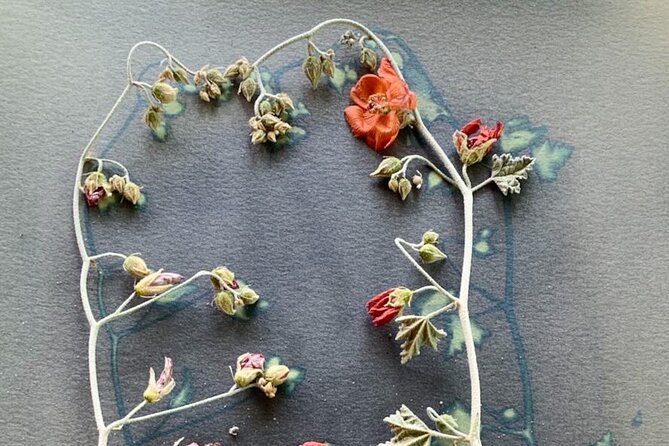
At $125 per person, this is not a cheap drop-in craft activity. The value depends on how much you care about instruction, personal projects, and taking home several finished prints.
The price includes the materials, the prepared digital negatives from your photos, the guided instruction, and five to ten prints on different paper types and mediums. If you tried to recreate the process at home, you would need light-sensitive chemicals, suitable paper, and time to learn through trial and error.
The workshop also provides an experience that is difficult to get from a basic souvenir shop or general art class. You are learning a process that can be repeated at home, and you get to use your own photos. For someone interested in photography, printmaking, or hands-on art, those benefits make the fee easier to justify.
The value is weaker if you mainly want a quick activity with a guaranteed perfect result. Cyanotypes involve exposure, placement, and material choices, so the prints can have an experimental quality. You are paying for the process and instruction as well as the finished pieces.
The small maximum of 10 people is another factor. A group of that size is more workable than a large class when everyone needs paper, objects, sunlight, and attention. The information does not promise private instruction, but a class capped at 10 should give the session a more personal feel than a mass activity.
Weather, Timing, and What to Bring
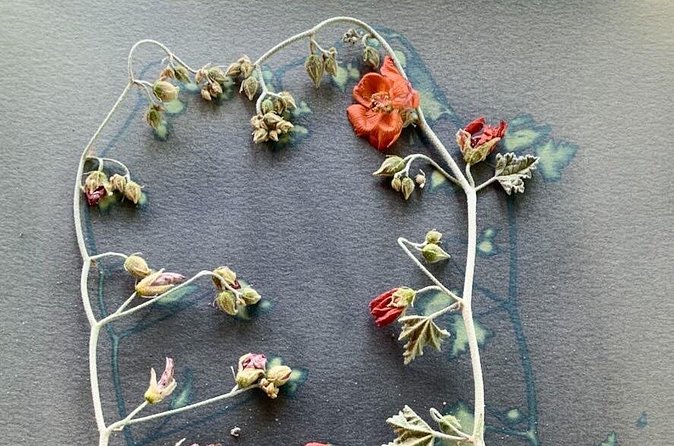
Good weather is required because sunlight is part of the printing process. If poor weather cancels the class, you can receive a different date or a full refund. This is helpful protection, but it also means you should keep your schedule flexible if the forecast looks uncertain.
The activity includes the materials needed for printing. You are told to bring yourself, and lunch is not included. The most important preparation is sending a few photos before class if you want to use them as negatives.
You should also verify the meeting point before setting out. The experience is associated with Palm Springs, but the actual address provided is in Joshua Tree. That is a practical distinction, not a minor detail. Palm Springs and Joshua Tree are different destinations, and the wrong assumption could make you late.
The class is offered in English. Service animals are allowed, and most people can participate. The maximum group size is 10.
Free cancellation is available if you cancel at least 24 hours before the start time. Cancellations made within 24 hours are not refunded, and changes during that period are not accepted. The local time in Joshua Tree controls the cut-off.
Who Will Enjoy This Workshop Most
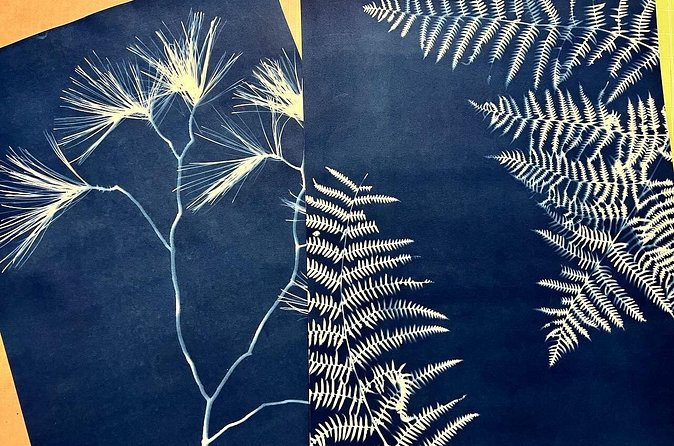
I would recommend this experience to you if you like making things with your hands and want a souvenir that feels personal. It works especially well for photographers who want to try an alternative printing method, artists looking for a new process, and couples or friends who prefer a creative activity to a standard tour.
Families may also find it appealing if everyone can manage a three-hour workshop and follow basic instructions. The supplied participation information says most people can take part, but it does not provide a specific minimum age, so you should confirm details if you are booking for young children.
The class suits beginners because no previous experience is required. You do not need to own a camera or understand darkroom photography. The preparation with your own photos adds interest without requiring you to make the digital negatives yourself.
It may not suit you if you want a fast, highly structured result or a sightseeing program with several stops. This is one meeting point, one workshop, and a focused art process. The reward comes from making something, not from covering a long list of attractions.
The small group limit should appeal if you prefer a quieter creative setting. Still, the information does not promise a private class, so book with the expectation of sharing the work area with up to nine other participants.
The Best Part: A Useful Creative Skill
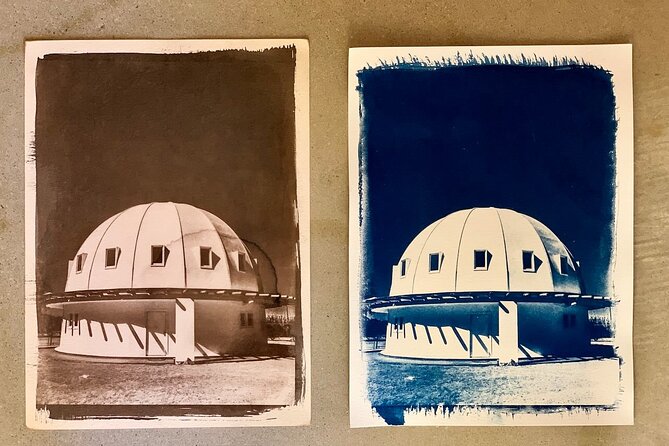
The most praised feature of this experience is the personal, welcoming instruction from Rose Cefalu. The workshop is not presented as a lecture followed by a single sample print. You coat paper, expose designs, and make a collection of pieces you can take home.
One especially nice extra is the surrounding-area guide provided at the end. Rose has been described as offering a useful guide to the area, so you may leave with both your artwork and ideas for what to see nearby. The guide is an added benefit, though it is not described as a separate sightseeing portion of the activity.
The method itself is also practical. You can repeat cyanotype printing at home without expensive equipment or a dedicated darkroom. The class gives you a creative skill with a low technical barrier and plenty of room for experimentation.
Your finished prints may be gifts, wall art, or simply records of a day spent working with light. Because you use different paper types and mediums, you will have a range of results rather than a stack of identical copies.
Should You Book Make Sun Prints in the Desert?
Book this workshop if you want a focused, hands-on Joshua Tree activity and like the idea of taking home five to ten original blue prints. The use of your own photos, natural objects, and desert sunlight gives the experience a clear sense of purpose.
At $125, the class is best value for people who care about learning the process, not just collecting a souvenir. Confirm that you are comfortable driving to the Joshua Tree meeting point, send your photographs ahead of time, and check the forecast before you go.
I would skip it if you are looking for a general Palm Springs tour, a meal-inclusive outing, or a guaranteed polished result. For beginners, photographers, and creative people who enjoy a little unpredictability, this is a distinctive way to spend three hours.
FAQ
Where does the sun print workshop meet?
The meeting point is 61884 Commercial St, Joshua Tree, CA 92252, USA. The activity ends back at the same location.
How long does the workshop last?
The workshop lasts approximately three hours, from 10 a.m. to 1 p.m. It is offered Friday through Sunday.
Do I need previous art or photography experience?
No. Previous experience is not required, and the process is taught during the workshop.
What will I make during the class?
You will learn to coat paper and expose cyanotype prints using sunlight. You can work with digital photo negatives, dried plants, crystals, feathers, and other natural or three-dimensional objects.
How many prints will I take home?
You will leave with five to ten cyanotype prints. The prints are approximately 9 by 12 inches and use various paper types and mediums.
What happens if the weather is poor?
The experience requires good weather. If it is canceled because of poor conditions, you will be offered a different date or a full refund. You can also cancel for a full refund up to 24 hours before the start time.
Just added around Palm Springs
- All-In-One California Self-Guided Driving & Walking Bundle Tour★ 4.5 · 3 reviews
- Palm Springs: Indian Canyons Jeep/Hiking Combo Tour★ 5.0 · 3 reviews
- Rock Climbing Trips in Joshua Tree National Park (8 Hours)★ 5.0 · 3 reviews
- Journey into Joshua Tree On-Demand Audio Tour and Locals Guide★ 3.5 · 3 reviews
- 100+ Self-Guided Audio Tours: Driving & Walking Bundle★ 3.5 · 3 reviews
- Palm Springs Shuffle Scavenger Hunt★ 5.0 · 4 reviews
- Private Abstract Painting Workshops in Palm Springs★ 5.0 · 4 reviews
- Joshua Tree Full Day Private Tour & Hike★ 5.0 · 4 reviews
Palm Springs Tours, compared.
Browse the lists this tour appears in