
Reviewed · MUSEUMS
Natural History Museum of Los Angeles County Admission
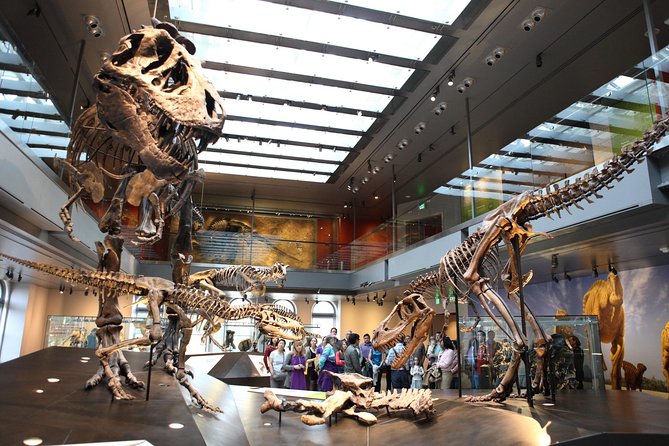
The biggest draw here is the Dinosaur Hall, where more than 300 fossils, 20 complete skeletons, and a Tyrannosaurus rex growth series turn ancient life into a clear, hands-on story. I like the museum for two good reasons: the exhibits work for adults as well as children, and the mix goes well beyond dinosaurs, from LA’s natural world to a vault of glittering stones.
The main drawback is getting there by car. Parking can be expensive and a long walk away, especially during events at the nearby stadium, so I would use public transportation if that works for you. Once inside, plan on plenty of walking and at least three hours.
In This Review
- Key points to know before you go
- Why the Dinosaur Hall deserves first place
- A 65-million-year story beyond dinosaurs
- Gems, minerals, and a little Hollywood sparkle
- Becoming Los Angeles, from pueblo to metropolis
- Nature Lab and Nature Gardens bring the subject closer
- The special cat exhibition costs extra
- How long to stay and how to plan the visit
- Parking is the main practical headache
- Food, breaks, and family comfort
- Is $18 good value?
- Who should book this museum visit?
- Should you book it?
- FAQ
- How much does admission to the Natural History Museum of Los Angeles County cost?
- How long should I plan to spend at the museum?
- What does the standard admission ticket include?
- Are Dinosaur Encounters tickets included?
- Is Fierce! The Story of Cats included with admission?
- What are the museum’s opening hours?
- Can I cancel my booking for a refund?
Key points to know before you go
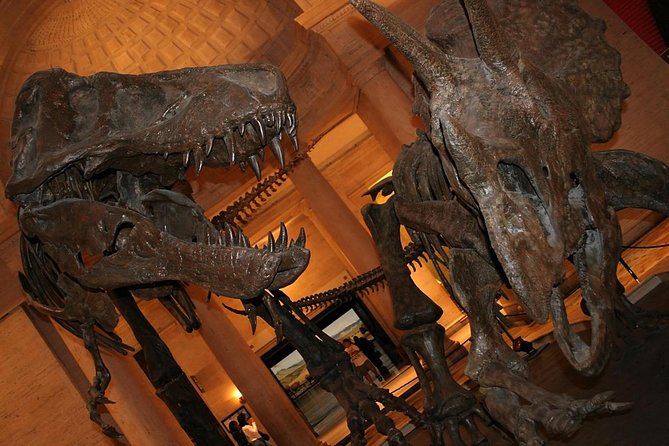
- The T. rex growth series is a rare highlight: See the world’s only display tracing how Tyrannosaurus rex changed as it grew.
- The $18 ticket covers the main museum: Dinosaur Hall, Diorama Halls, Gem and Mineral Hall, Nature Gardens, and Nature Lab are included.
- Children get plenty to do: Dig tables, interactive displays, live plant areas, and local wildlife keep the visit active rather than purely look-and-read.
- The museum tells LA’s story too: Becoming Los Angeles traces the city from pueblo to modern metropolis.
- Special shows cost extra: Dinosaur Encounters and Fierce! The Story of Cats are not part of standard admission.
- Give yourself room to roam: Three hours is a useful minimum, but a slower visit can take much of a day.
Why the Dinosaur Hall deserves first place

If you have children with you, I would make the Dinosaur Hall your first stop. The museum holds more than 300 fossils and displays 20 complete skeletons, giving you a strong sense of scale. A small dinosaur in a case is one thing. A full skeleton towering over your family is another.
The centerpiece is the Tyrannosaurus rex growth series. It is described as the only one of its kind in the world, and it helps you see how this famous predator changed from youth to adulthood. That is more useful than simply posing beside a giant skull, because you can follow the animal’s development.
The Dino Lab adds a working-science angle. You can look behind the scenes at paleontologists and see how fossils are studied. The museum also offers a virtual excavation activity, which gives children something to do with their hands while adults take in the larger story.
A dig table filled with artificial dirt is another hit with younger children. It lets them play at finding fossils without needing to stand quietly in front of a glass case. If your child is in the preschool or early elementary years, this sort of activity may be the difference between a good museum visit and a long afternoon of complaints.
Dinosaur Encounters is an additional show, not part of the basic admission. Tickets are available at the museum, but you should budget for that separately if the presentation is important to your family.
A few more Los Angeles trips worth weighing up
- Los Angeles: Petersen Automotive Museum Entry & Vault Access
★ 4.8 · 264 reviews - Los Angeles: Battleship Iowa Museum Ticket
★ 4.6 · 249 reviews - La Brea Tar Pits and Museum Admission Ticket with Excavator Tour
★ 4.5 · 193 reviews
A 65-million-year story beyond dinosaurs
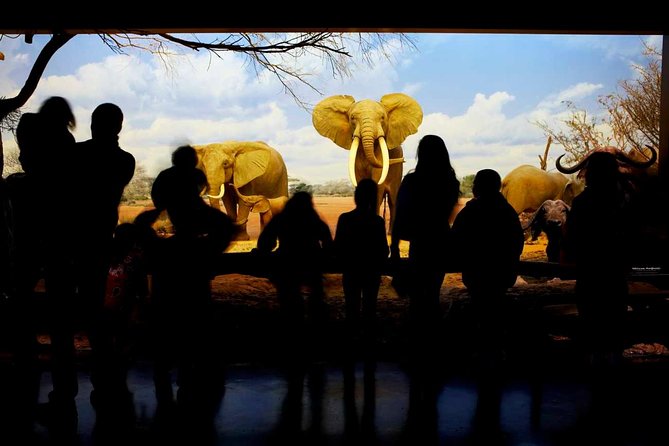
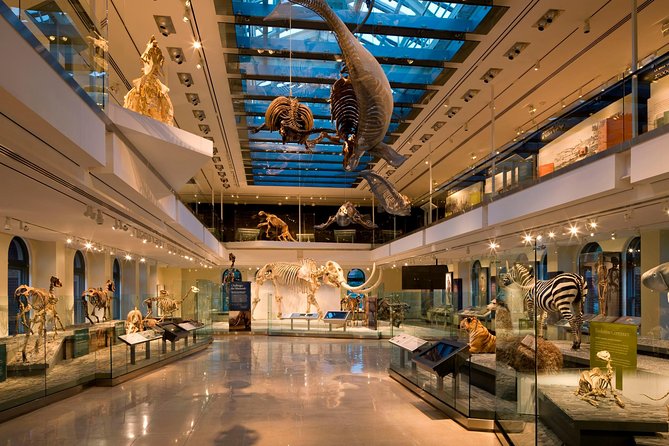
The Diorama Halls widen the scope. Here, the museum follows the evolution of life across 65 million years with more than 240 specimens, skeletons, and animal scenes from North America and Africa.
The mastodon and whale skeletons help show the size and variety of creatures that once lived on Earth. Animal dioramas provide a different kind of experience from the Dinosaur Hall. Instead of focusing on one extinct group, they place animals within recognizable settings and relationships.
I find this section useful for families because it encourages comparison. You can move from extinct mammals to animals that still exist, then consider how bodies, habitats, and survival have changed. Children who race through dinosaur displays may slow down when they recognize a familiar animal or spot an unusual skeleton.
This area can also be rewarding for adults who want more than a children’s attraction. The museum does not limit its story to spectacle. The specimens connect to broader ideas about evolution, extinction, and the variety of life.
Gems, minerals, and a little Hollywood sparkle
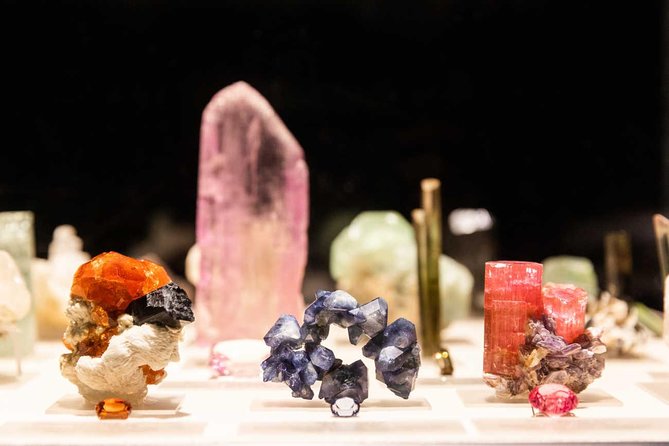
The Gem and Mineral Hall offers a welcome change of pace after the fossils and skeletons. More than 2,000 individual specimens include diamonds, rubies, sapphires, gold, and other stones.
This is the section for anyone who enjoys color, texture, and natural oddities. The stones catch the eye immediately, but the real appeal is seeing how many forms minerals can take. The vault adds a touch of theatrical drama, with valuable specimens presented as the museum’s glittering treasure room.
I would not treat this as a quick hallway on the way to the dinosaurs. Allow time to look closely. The hall is especially good for a mixed-interest group, since one person can focus on gems while another spends more time with fossils or LA history.
One young child was especially excited to touch a real crystal. That detail points to the hall’s value for families: the displays can make geology feel physical and immediate rather than like a school lesson on a page.
Becoming Los Angeles, from pueblo to metropolis
Becoming Los Angeles shifts the subject from natural science to local identity. The exhibit explains how LA changed from a pueblo into the sprawling city you see today.
That context matters because the museum is not only about creatures from the distant past. It also helps you understand the place outside its doors. After seeing extinct animals and ancient minerals, you can connect the city’s growth to the land, plants, animals, and people that shaped Southern California.
I would place this exhibit somewhere in the middle of your visit, when you want a break from skeletons and specimens. It gives the afternoon a stronger local focus and makes the museum feel tied to Los Angeles rather than interchangeable with any natural history museum.
The exhibition is also a sensible stop for first-time visitors. You may come for dinosaurs, but this is where you get a clearer sense of the city you are exploring.
A different kind of day out, same stretch of Southern California:
- Full-Day Iconic Sights of LA, Hollywood, Beverly Hills, Beaches and More
★ 5.0 · 6,147 reviews - Warner Bros. Studio Tour Hollywood
★ 4.5 · 5,246 reviews - Hollywood, Beverly Hills & Celebrity Homes Tour by Open Air Bus
★ 5.0 · 2,557 reviews - Hollywood Sign 2.5-Hour Tour with Comedians and Their Dogs
★ 5.0 · 2,496 reviews
Nature Lab and Nature Gardens bring the subject closer
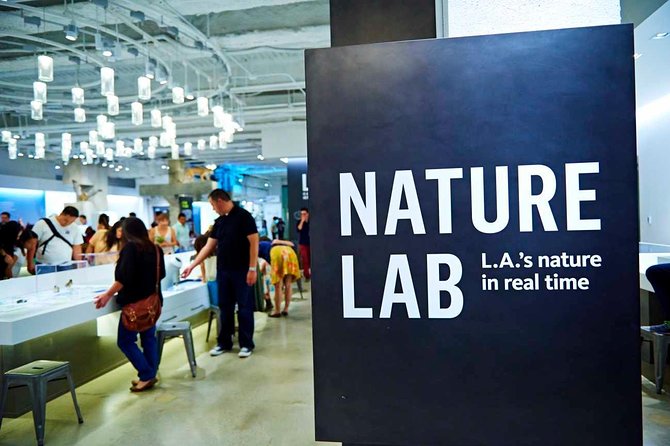
The Nature Lab focuses on creatures found in and around Los Angeles. You may see local animals and learn how urban wildlife fits into the city’s environment.
This is one of the museum’s most useful ideas. You do not need to travel far away to find nature. The creatures around LA can be strange, adaptable, and worth noticing, even in a heavily built-up area.
Outside, the Nature Gardens feature native plant species. The gardens give you a change of air and pace after the indoor galleries, while also showing what belongs naturally in Southern California. If you have spent the morning looking at extinct animals, the gardens provide a reminder that natural life is still active around you.
The combination of Nature Lab and Nature Gardens works well for children who need movement. It also helps tie the museum’s subjects together: fossils show the distant past, the halls show global animal life, and the garden brings the story back to the present day in Los Angeles.
The special cat exhibition costs extra
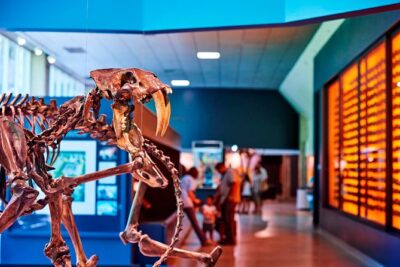
For visits between July 13 and February 18, 2026, the museum features Fierce! The Story of Cats. The exhibition covers cats from sabertooths to household pets, with attention to behavior, evolution, biology, and the long connection between cats and people.
This is a separate-ticket exhibition. Your standard $18 admission does not include it, and you must buy an add-on ticket at the museum.
If you have a cat lover in the family, the extra cost may be worthwhile. It gives the visit a focused subject and adds a hands-on option beyond the permanent halls. If your main goal is dinosaurs and general natural history, the basic ticket already provides plenty to see.
Check the exhibition dates carefully before planning around it. The supplied schedule ends February 18, 2026, so do not assume the cat exhibition will be available after that date.
How long to stay and how to plan the visit
The stated visit length is about three hours. That is a fair working plan if you want to see the major halls without reading every label.
I would allow more time if you have children who want to use the dig areas, or if you plan to add Dinosaur Encounters or the cat exhibition. One family found the museum large enough to need two days to see everything at a slow pace. You may not need a second day, but the point is useful: this is not a small stop you can finish in 45 minutes.
A practical order is:
- Start with Dinosaur Hall while everyone is fresh.
- Move through the Diorama Halls and the evolutionary story.
- Take a break before the Gem and Mineral Hall.
- Visit Becoming Los Angeles for local context.
- Finish with Nature Lab and the Nature Gardens.
That order is only a suggestion. If your children are eager for the gardens, go there early. If you arrive around 10:30 in the morning, you may find the museum calmer than it becomes after lunch. School groups can affect the pace, so a weekday morning may be preferable if your schedule allows.
The museum is open daily from 9:30 a.m. to 5 p.m. The mobile ticket makes entry simple, but the ticket does not solve the parking problem, so plan transportation before leaving your hotel.
Parking is the main practical headache

The museum is near public transportation, and I would seriously consider using it. Parking can cost around $20, and event days near the stadium can push prices much higher. One family faced parking several blocks away at about $40 during a major event, while another found the walk difficult with an older relative.
Construction has also made parking farther from the museum at times. This matters more than it may sound. A long walk is manageable for many adults, but it becomes tiring with a stroller, young children, or someone with limited mobility.
Before driving, check for major events in the surrounding area. A concert or sports game can turn a simple museum visit into a search for parking and a costly walk. If you use public transportation, you avoid that uncertainty.
Inside, expect to walk a lot. The museum is large, and the galleries reward a steady pace. Wear comfortable shoes and give yourself permission to skip a display rather than trying to read every panel.
Food, breaks, and family comfort
The museum has a cafe, but food lines can be long and prices may feel high. I would bring your own snacks or lunch if the rules for your visit allow it, especially with small children.
A food break can help keep the afternoon on track. Children often do better with a short pause before the final halls, and adults may appreciate a rest after the Dinosaur Hall and Diorama Halls.
The facility is described as family-friendly, and the exhibits give children several ways to participate. The dig tables, interactive displays, animal models, crystals, and Nature Lab all add variety. A toddler may be thrilled by the size of the dinosaurs, while an older child may spend more time with the fossil story or the LA exhibit.
Service animals are allowed, and most people can take part. The attraction is near public transportation. The provided details do not list every accessibility feature, so if you need specific arrangements, contact the museum before your visit.
Is $18 good value?
At $18 per person, standard admission is reasonable if you plan to spend three hours or more inside. The ticket covers the main halls, including the areas most families want to see. You are not paying an entry fee only to find that the dinosaurs or minerals require another charge.
The value improves if you enjoy museums at different speeds. A child can focus on interactive areas, an adult can read about evolution, and another family member can spend time with gems or LA history. That range makes the ticket work for mixed-age groups.
The price is less attractive if you are driving and add a steep parking fee. On a normal day, the parking cost may be an annoyance. During a stadium event, it can become the largest part of your outing budget.
Add-on shows also change the calculation. Dinosaur Encounters and Fierce! The Story of Cats are sold separately, so decide what your family actually wants before buying extras. The permanent collection is substantial enough that you do not need every add-on to have a full visit.
The ticket is mobile, confirmation arrives when you book, and bookings average about eight days ahead. I would reserve in advance if your schedule is fixed, then keep an eye on opening details and local events.
Who should book this museum visit?
I would recommend this admission most strongly to families with children, first-time LA visitors, dinosaur fans, and anyone who likes science presented through real objects. The museum has enough variety for a group with different interests, which is not always true of a single-subject attraction.
It also works well for solo visitors and couples. You can move at your own pace, spend extra time with the mineral collection, or treat the museum as a cool indoor stop on a hot day.
The visit may be less satisfying if you dislike walking, have limited time, or are unwilling to deal with uncertain parking. In those cases, public transportation and a clear three-hour plan will help.
The experience does not include a guide. It is self-guided admission, so you control the pace. That freedom is useful, though families who want a fully led tour should not expect one from this ticket.
Should you book it?
Book it if you want a substantial museum visit for $18, especially if dinosaurs are high on your list. The T. rex growth series, huge skeletons, fossil activities, minerals, local wildlife, and LA story give you more range than the price suggests.
I would book with three conditions: use public transportation if practical, check the calendar for stadium events, and budget separately for any special show. With those details handled, this is one of the better family-friendly ways to spend an afternoon in Los Angeles.
FAQ
How much does admission to the Natural History Museum of Los Angeles County cost?
The listed admission price is $18 per person. Taxes, fees, and handling charges are included.
How long should I plan to spend at the museum?
The expected visit lasts about three hours. You may need longer if you want to see every gallery carefully or add a special exhibition or show.
What does the standard admission ticket include?
The ticket includes Dinosaur Hall, the Diorama Halls, the Gem and Mineral Hall, the Nature Gardens, and the Nature Lab.
Are Dinosaur Encounters tickets included?
No. Dinosaur Encounters requires an additional ticket, available on site when you arrive.
Is Fierce! The Story of Cats included with admission?
No. Fierce! The Story of Cats requires a separate ticket. The listed exhibition dates run from July 13 through February 18, 2026, and the extra ticket can be purchased at the museum.
What are the museum’s opening hours?
The museum is listed as open Monday through Sunday, from 9:30 a.m. to 5 p.m.
Can I cancel my booking for a refund?
Yes, if you cancel at least 24 hours before the experience start time. Cancellations made within 24 hours are not refunded, and changes within that period are not accepted.
Just added around Los Angeles
- Los Angeles: Speakeasy Bar Hopping Tour with Drink★ 4.7 · 3 reviews
- Private Surf Lesson in Venice Beach, CA★ 5.0 · 3 reviews
- LA: Expo Park Space & Dinosaurs Tour with Cal Science Center★ 5.0 · 3 reviews
- Private Photo Tour of the Best Instagram Spots in Los Angeles★ 5.0 · 3 reviews
- Santa Monica Superhero Exploration Game and Tour★ 5.0 · 3 reviews
- Private Hollywood Sign Hiking Tour with Select Hotel Pickup★ 5.0 · 3 reviews
- Private 5-Hour Limo Tour of Los Angeles and Beach Cities★ 3.5 · 3 reviews
- Hooray for Hollywood: 35-Minute Helicopter Tour★ 4.7 · 3 reviews
Museums, compared.

Petersen Automotive Museum Entry & Vault Access
Read our review →
La Brea Tar Pits and Museum Admission Ticket with Excavator Tour
Read our review →
Hollywood Medieval Torture Museum Ticket with Ghost Hunting
Read our review →
Browse the lists this tour appears in