
Reviewed · MOVIE STUDIO TOURS
Oscar History and Film Set Studio Tour at the Biltmore Hotel
The clever idea here is simple: you stand inside the Biltmore Hotel while smartglasses place old photos, film clips, and historic events over the rooms in front of you. The same ballroom where JFK received the Democratic nomination in 1960 becomes a setting from the past, while spaces from Ghostbusters, Chinatown, Fight Club, Oppenheimer, and Taylor Swift videos appear in their real locations.
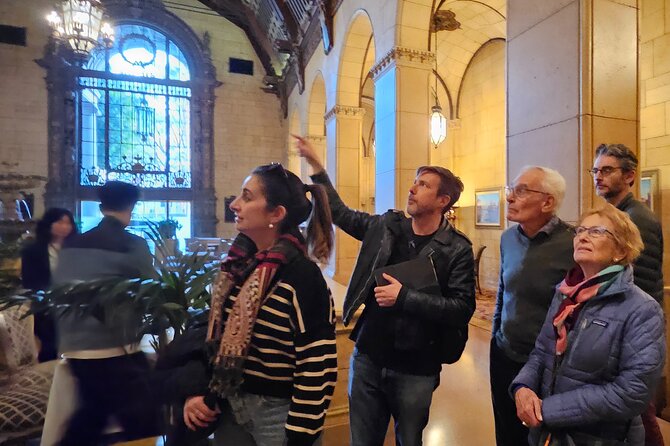
I like two things most. First, the tour connects grand architecture with actual Hollywood moments instead of treating the hotel as a pretty backdrop. Second, guides Eloi and Mark add context and help you use the technology, so the glasses support the story rather than replace the guide.
The main consideration is pace. One hour is enough for a focused introduction, but not a slow architectural study of every corner. The smartglasses also make this a better fit for you if you enjoy interactive technology and moving images more than a traditional lecture.
In This Review
- Key points to know before booking
- Why the Biltmore works so well as a film tour
- Meeting at 507 South Olive Street
- The Music Room and the hotel’s visual language
- The Galleria and Giovanni Smeraldi’s corridors
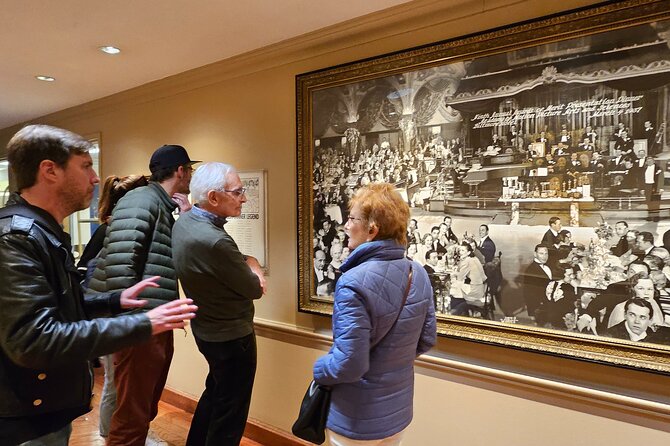
- The Historic Corridor and the first Academy Awards
- The VIP Olive Street Entrance and Chinatown
- The Crystal Ballroom and the JFK nomination
- The Gold Room and Prohibition-era secrets
- Rendezvous Court and the Moorish finish
- How the smartglasses change the experience
- Is $25 a fair price?
- Who should book this Biltmore tour?
- Final booking advice
- FAQ
- Where does the tour begin?
- Where does the tour end?
- How long does the tour last?
- How much does the tour cost?
- Is the tour offered in English?
- How many people can join the tour?
- Is public transportation available near the hotel?
- Can I cancel for a full refund?
Key points to know before booking
- Smartglasses turn each room into a film and history screen, showing footage in the spaces where events or scenes took place.
- The first Academy Awards were held at the Biltmore, making the hotel a true part of Oscar history.
- The Crystal Ballroom and Historic Corridor anchor the tour, with links to political events, Hollywood galas, and movie production.
- You may see clips from films and music videos, including Ghostbusters, Chinatown, Fight Club, Oppenheimer, and work by Taylor Swift and Jisoo.
- The group is limited to 10 people, a useful size for a guided technology-based walk.
- The $25 price covers about one hour, and group discounts are available.
Why the Biltmore works so well as a film tour
Downtown Los Angeles has plenty of movie locations, but the Biltmore gives you something more concentrated. Instead of crossing several neighborhoods to find a few exteriors, you move through one historic hotel whose rooms have hosted ceremonies, political gatherings, gala dinners, and film crews.
That concentration matters. You can walk from a corridor connected to the first Academy Awards into rooms with Italian Renaissance, Moorish, and old Hollywood design. The visual change is part of the fun, and the film clips help you notice how directors use the same architecture in very different ways.
The tour also gives the Biltmore a role beyond luxury lodging. It presents the hotel as a working piece of Los Angeles history. The story includes silent-film-era Los Angeles, Prohibition, Oscar ceremonies, presidential politics, and modern pop culture.
I find that approach more useful than a tour that simply lists famous productions. You begin to see why filmmakers return to the building. The rooms already have drama, symmetry, polished surfaces, and a sense of occasion. A camera does not need to invent much.
More studio backlot tours:
- Warner Bros. Studio Tour Hollywood
★ 4.5 · 5,246 reviews - Universal Studios Hollywood General Admission Ticket, California
★ 4.0 · 1,489 reviews - Skip the Line: Express Ticket at Universal Studios Hollywood
★ 4.5 · 1,144 reviews
Meeting at 507 South Olive Street
The tour begins at the Millennium Biltmore Historic Hotel at 507 South Olive Street in Downtown Los Angeles. It ends back at the same meeting point, which keeps the outing easy to fit into a day of sightseeing.
The hotel is near public transportation, so you do not need to treat this as a separate car trip. If you are already exploring Downtown LA, the location also works well as a one-hour stop between other plans. The activity is offered in English, and the group size is capped at 10 people.
That small limit is helpful here. Smartglasses require a little explanation, and you may want to ask why a particular room matters. A very large group would make it harder to follow both the guide and the visual material.
At the start, you receive the smartglasses and use your phone as part of the setup. The guide then directs the experience as you move through the hotel. This is not a self-guided headset visit. You follow a person who decides when to show a clip or image and explains what you are seeing.
The Music Room and the hotel’s visual language
The Music Room is an early highlight. Its ceiling is filled with intricate cherubs, and the design draws on Italian Renaissance influences. Even without the technology, this is the kind of room that rewards looking upward and slowing down.
The smartglasses add another layer by linking the room’s physical decoration to earlier images and events. You are not just told that the hotel is old or elegant. You get a visual comparison between the present room and its earlier appearance.
That before-and-after quality is one of the tour’s strongest tools. Historic photographs can make a familiar room feel less fixed. You see how the hotel changed, then look back at the surviving details around you.
The guide’s role is important in a room like this. Ornate interiors can blur together after a while, especially if you are visiting several grand buildings in Los Angeles. Eloi’s approach, according to the tour details, combines anecdotes, photographs, and footage, while Mark has also led the experience. Their commentary gives the decoration a reason to matter.
The Galleria and Giovanni Smeraldi’s corridors
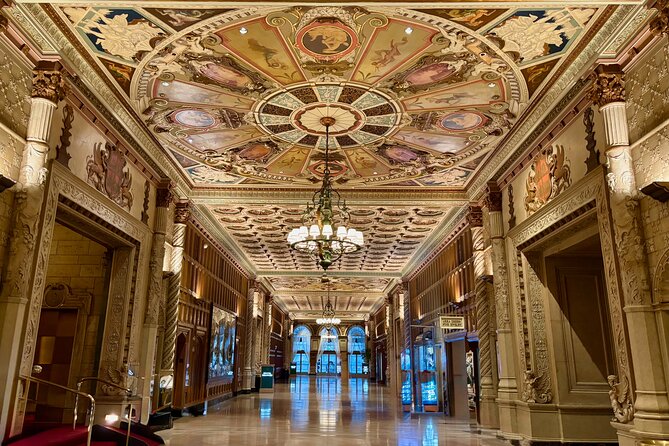
The Galleria brings you into the hotel’s ornate circulation spaces. The corridors were painted by Giovanni Smeraldi, and they help explain why the Biltmore can double as so many different screen settings.
A hallway may appear formal in one production, mysterious in another, and simply luxurious in a third. The tour uses images and clips to show how filmmakers frame these spaces. Seeing the scene through the glasses while standing in the actual location helps you match the camera’s view with the room itself.
This is where the experience differs from a standard movie-location walk. You do not only hear that a production used the hotel. You see a scene placed against the real setting. That makes the connection easier to remember, especially for familiar titles such as Ghostbusters or Chinatown.
You should still expect the tour to keep moving. The Galleria is part of a one-hour route, not a long photography session. If you want to study Smeraldi’s painted details closely, try to look around while the group is paused and keep your own photo time brief.
A few more Los Angeles trips worth weighing up
- Palm Springs Modernism Architecture & History Bike Tour
★ 5.0 · 359 reviews - Spooky Solvang Ghost Hunting & History Tour
★ 5.0 · 310 reviews - 45-Minute Private Guided Historic Walking Tour in Lititz
★ 5.0 · 143 reviews - Natural History Museum of Los Angeles County Admission
★ 4.5 · 111 reviews
The Historic Corridor and the first Academy Awards
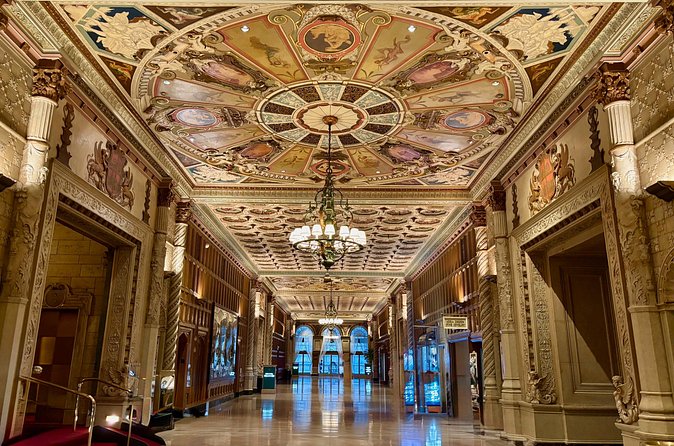
The Historic Corridor carries the clearest Oscar connection. The first Academy Awards were held at the Biltmore, so this is not a loose Hollywood association. The hotel was present at the beginning of the ceremony that became one of the world’s best-known film institutions.
The smartglasses make this moment easier to picture. Instead of hearing a date and moving on, you can see historical material connected to the space. The result is a more direct sense of how the hotel functioned during Hollywood’s early years.
For film fans, this may be the strongest stop. The Oscar story gives the tour a firm center, while the later film references show how the building continued to serve the screen industry across generations.
I also like that the tour places Hollywood history inside Downtown LA. The area is often reduced to modern offices, traffic, and a few famous landmarks. The Biltmore shows a different side of the district, one tied to old ceremonies, grand hotels, and major civic events.
The VIP Olive Street Entrance and Chinatown
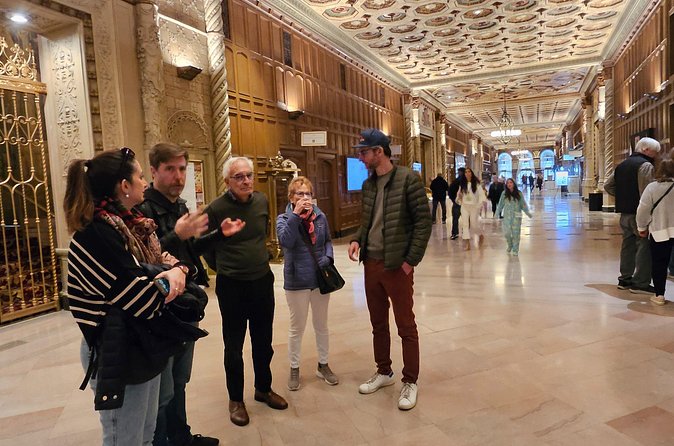
The VIP Olive Street Entrance was featured in Chinatown. That detail gives you a chance to connect a specific doorway with one of Los Angeles cinema’s most recognizable films.
The value here is location accuracy. A movie fan may know a scene but not realize which part of the Biltmore provided the setting. Standing at the entrance while viewing related material gives the film a physical address inside the hotel.
This stop should suit you if you enjoy spotting production design and location choices. It is less about learning a long sequence of dates and more about recognizing how a real entrance becomes part of a movie’s world.
The Biltmore’s interiors also offer a useful lesson in film geography. A production may use several parts of one building to suggest different places. The tour helps you understand that visual trick without needing technical film-school language.
The Crystal Ballroom and the JFK nomination
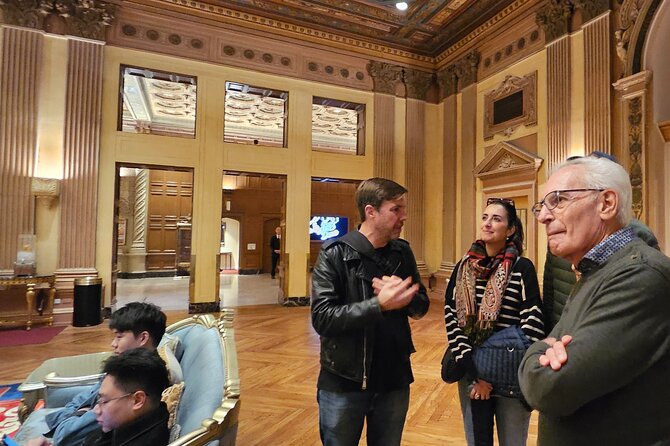
The Crystal Ballroom is one of the grandest spaces on the route and a major setting for Hollywood galas. Its scale and decoration make it easy to understand why the room has been useful for ceremonies and productions.
The political connection adds weight. In the same ballroom, footage shows the 1960 Democratic National Convention event where JFK was nominated for president. You are looking at a room that served both entertainment and national politics.
That contrast is one of the best ideas in the tour. The Biltmore was not only a film set. It was also a place where major public events took place. The glasses let you move between those roles while remaining in the same physical room.
If you have seen old convention footage, this stop can make the material feel less distant. The room is not an abstract historical background. It is the setting around you, with its proportions and decorative details still visible.
The Gold Room and Prohibition-era secrets
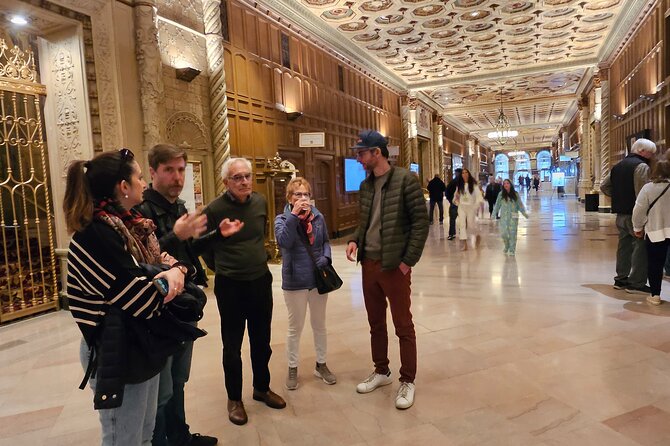
The Gold Room brings a different mood. Its story reaches back to Prohibition and the era of hidden drinking rooms and discreet hotel activity. The tour presents it as a former speakeasy, giving the grand hotel a more secretive side.
This is a useful change of tone after the formal Oscar and political stories. You move from public ceremony to private concealment, from bright ballroom history to the less visible life of the hotel.
The room also shows why the Biltmore works well for screen storytelling. A polished space can suggest wealth in one scene and secrecy in another. The guide’s anecdotes and period visuals help you picture the room in its earlier setting.
Do not expect a full investigation of Prohibition-era Los Angeles in this one-hour visit. The Gold Room is one chapter in a fast route. Its value comes from the way it adds character to the hotel and gives you another lens for seeing the same building.
Rendezvous Court and the Moorish finish
The tour concludes at Rendezvous Court, a Moorish-inspired interior that gives the route a strong visual ending. After the Renaissance details of the Music Room and the formal spaces of the ballroom, this area brings a different design vocabulary into view.
A final stop with such a distinct look is practical. It leaves you with one more clear image of the hotel rather than a blur of similar corridors. It also reinforces the central theme: the Biltmore’s appeal comes from its changing interiors as much as from its famous events.
The end point back at the hotel is convenient. You can continue exploring Downtown LA, stop for food, or head to another nearby plan without arranging a return transfer.
How the smartglasses change the experience
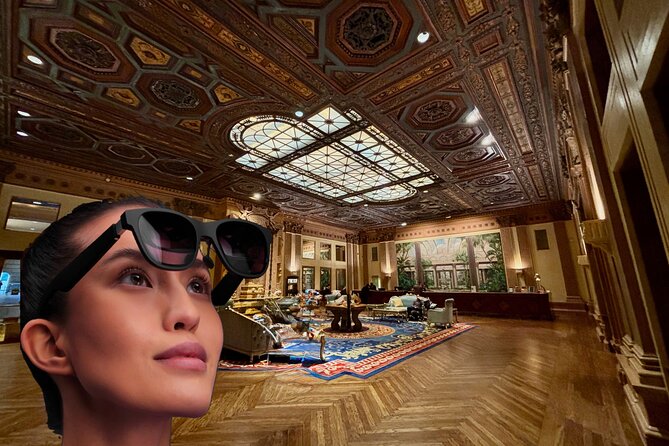
The technology is the reason to choose this tour instead of a conventional hotel history walk. Historic photos, videos, and movie clips appear while you are standing in the associated room or corridor. The effect is not simply watching a screen. It is matching past images to the building around you.
That can make time periods easier to understand. You might see the Biltmore in the 1920s, during the silent-film era, or in the Prohibition period, then compare it with the hotel as it looks now.
The film side is just as broad. Along with Ghostbusters and Chinatown, the material includes Fight Club, Oppenheimer, and music videos by Taylor Swift and Jisoo. That mix reaches beyond classic Hollywood and gives fans of current pop culture a reason to pay attention.
Still, this format will not suit everyone. If you prefer to photograph architecture quietly or study a room without electronic displays, a regular hotel visit may feel calmer. If you enjoy seeing how scenes fit into real places, the smartglasses are a strong reason to book.
Is $25 a fair price?
At $25 per person, the tour sits in a reasonable range for a one-hour guided activity in Downtown Los Angeles. The price includes admission to the experience and the smartglasses, so you are paying for both the guide’s interpretation and the visual material.
Value depends on your interests. For someone who already knows the Biltmore and wants a fresh angle, the film clips and historic overlays can make the cost worthwhile. One local participant learned new details despite living in Los Angeles for years, which suggests the tour is not only for first-time visitors.
The price is less compelling if you want a long architectural tour. One hour passes quickly, and the route covers several important rooms rather than examining each one in depth. Group discounts may improve the value if you are booking with others.
The average booking lead time is about 25 days, so popular dates may need planning. Free cancellation is available if you cancel at least 24 hours before the start time. Cancellations or changes made inside that window are not refunded or accepted.
Who should book this Biltmore tour?
I would choose this experience if you fit one or more of these descriptions:
- You enjoy seeing famous movie locations in person.
- You want a short Downtown LA activity with a clear beginning and end.
- You like history presented through photographs and video.
- You have visited the Biltmore before and want a new way to read its rooms.
- You are curious about augmented reality and have not tried smartglasses.
- You want a tour that works for different ages and does not depend on a specialist film background.
It also suits both Los Angeles residents and people visiting from elsewhere. The material covers local history, Oscar beginnings, political events, Prohibition, classic films, and recent music videos, so you do not need to arrive with a single narrow interest.
I would hesitate if your priority is a long, quiet look at architecture or a broad walking tour of Downtown LA. The route remains inside the Biltmore, and the one-hour timing keeps the focus tight.
Final booking advice
Book this tour if the idea of watching Ghostbusters, Oscar footage, or JFK-related material while standing in the actual Biltmore rooms sounds better than simply hearing a guide describe them. The combination of Eloi or Mark, period images, and smartglasses gives the hotel a sense of movement through time.
Skip it if you want a full museum-style study of the building. For $25, though, the tour offers a focused way to connect architecture, Hollywood, politics, and popular culture in one Downtown LA stop. The small group and return to the starting point make it easy to add to a busy day.
FAQ
Where does the tour begin?
It begins at the Millennium Biltmore Historic Hotel, 507 S Olive St, Los Angeles, CA 90013.
Where does the tour end?
The activity ends back at the meeting point at the Biltmore Hotel.
How long does the tour last?
The walking tour lasts approximately one hour.
How much does the tour cost?
The listed price is $25 per person.
Is the tour offered in English?
Yes. The experience is offered in English.
How many people can join the tour?
The tour has a maximum group size of 10 people.
Is public transportation available near the hotel?
Yes. The Biltmore is near public transportation in Downtown Los Angeles.
Can I cancel for a full refund?
Yes, if you cancel at least 24 hours before the experience start time. Cancellations made less than 24 hours in advance are not refunded.
Just added around Los Angeles
- Los Angeles: Speakeasy Bar Hopping Tour with Drink★ 4.7 · 3 reviews
- Private Surf Lesson in Venice Beach, CA★ 5.0 · 3 reviews
- LA: Expo Park Space & Dinosaurs Tour with Cal Science Center★ 5.0 · 3 reviews
- Private Photo Tour of the Best Instagram Spots in Los Angeles★ 5.0 · 3 reviews
- Santa Monica Superhero Exploration Game and Tour★ 5.0 · 3 reviews
- Private Hollywood Sign Hiking Tour with Select Hotel Pickup★ 5.0 · 3 reviews
- Private 5-Hour Limo Tour of Los Angeles and Beach Cities★ 3.5 · 3 reviews
- Hooray for Hollywood: 35-Minute Helicopter Tour★ 4.7 · 3 reviews
Movie Studio Tours, compared.
Universal Studios Hollywood General Admission Ticket, California
Read our review →
The VIP Experience at Universal Studios Hollywood in California
Read our review →
All-Inclusive Pass Plus with Universal Studios
Read our review →
Warner Bros. Studio Tour & Celebrity Homes Tour Package
Read our review →
Universal Studios Hollywood: VIP Tour with Ticket
Read our review →
Warner Bros Studio Hollywood & Bus Tour Package
Read our review →
Hollywood Sign & Universal Studios Helicopter Tour
Read our review →Browse the lists this tour appears in