
Reviewed · DOWNTOWN LA TOURS
The History and Architecture of Downtown Los Angeles
Downtown Los Angeles reveals its best stories in a few city blocks. On this three-hour walk, you ride the tiny Angels Flight Railway, trace the rise of the financial district, admire Frank Gehry’s Walt Disney Concert Hall, and finish among the food stalls of Grand Central Market. Guide Chris brings the buildings to life with photos, history, and plenty of local detail.
I like the route’s mix of architecture and everyday culture. Little Tokyo and a mochi sample at century-old Fugetsu-Do give the tour a human center, while the Bradbury Building, Broadway’s movie palaces, and The Last Bookstore show how much old Los Angeles remains. The small group, capped at 15 people, also makes it easier to ask questions.
The main consideration is pace. Three hours covers a lot of ground, and some stops are short, often just five or ten minutes. You will see many major sites, but this is an overview rather than a long interior tour of each building. The route also does not include Olvera Street or Plaza, so readers most interested in Spanish and Mexican Los Angeles should plan that separately.
In This Review
- Key points to know before booking
- Why this Downtown Los Angeles route works
- Angels Flight and the lost homes of Bunker Hill
- Bunker Hill’s modern museum district
- Frank Gehry’s Walt Disney Concert Hall
- City Hall and the civic center
- Little Tokyo and the story of Fugetsu-Do
- St. Vibiana’s Cathedral and Broadway’s movie palaces
- The Bradbury Building and the old bank district
- The Last Bookstore and Grand Central Market
- Guide style, pace, and practical comfort
- What the tour leaves out
- Who should book the Downtown Los Angeles tour?
- Final verdict
- FAQ
- How long is the History and Architecture of Downtown Los Angeles tour?
- How much does the tour cost?
- Where does the tour begin and end?
- Is the Angels Flight ride included?
- What language is the tour offered in?
- How large is the tour group?
Key points to know before booking
- Angels Flight is included: Begin with a ride on the historic funicular, the shortest train ride in the world.
- Chris leads the walk: Expect a friendly guide with strong knowledge of architecture, local history, and downtown businesses.
- Little Tokyo adds food and community: The route includes a traditional mochi sample at Fugetsu-Do, founded in 1903.
- A compact architectural survey: See MOCA, The Broad, Walt Disney Concert Hall, the Bradbury Building, City Hall, and Broadway theaters.
- The walk loops back to its starting point: Meet at 341 South Hill Street and finish at the same location.
- Plan for sun and city walking: A hat is a smart choice, especially on warm days, and good weather is required.
Why this Downtown Los Angeles route works
Los Angeles is often sold through Hollywood signs, film studios, and celebrity addresses. This tour takes a different path. It explains how a small settlement grew into a major city by using the streets and buildings of downtown as its classroom.
I like that the route is not limited to one period. You move from Victorian Bunker Hill to modern glass and steel, then into Little Tokyo, Broadway, and a century-old food hall. The result is not a polished postcard version of Los Angeles. You see grand ambitions, changing neighborhoods, old businesses, civic power, and the ongoing effort to make downtown useful and appealing again.
The tour is offered in English, uses a mobile ticket, and accepts no more than 15 people. That is a useful size for an urban walk. You can hear the guide without being part of a large crowd, and Chris can answer questions or adjust the emphasis when the group has a particular interest.
The $39.20 price is fair for three hours of guiding, the included Angels Flight ride, and the mochi sample. You are not paying for a long list of paid admissions, but the value comes from connecting places that can seem unrelated when visited alone. The walk gives you the backstory that makes the buildings and neighborhoods easier to understand.
More Downtown LA walks:
- Downtown Los Angeles Food Tour
★ 5.0 · 501 reviews - Old and New Downtown Los Angeles Walking Tour
★ 5.0 · 222 reviews - Culture and Arts Tour of Downtown LA with Angels Flight Ticket
★ 5.0 · 142 reviews
Angels Flight and the lost homes of Bunker Hill
The tour begins at 341 South Hill Street and quickly reaches Angels Flight Railway. The ride itself lasts only a few minutes, but it sets the tone. You learn why this tiny railway was built and how it once served the Victorian community that occupied Bunker Hill.
Angels Flight is one of those downtown sights that can look like a novelty until you know its purpose. The funicular connected Bunker Hill with the streets below, helping people manage the steep slope. The tour uses the ride to introduce a larger question: what happened to the homes and residents of old Bunker Hill?
From here, Chris explains how the Victorian houses disappeared as Los Angeles reshaped the hill for offices, roads, and large modern buildings. You also get a look at famous downtown skyscrapers that have appeared in films, including Independence Day. This is a good early lesson in how movie Los Angeles often uses real buildings as a dramatic backdrop.
The ride is included in the tour price, which removes one small extra cost and lets you enjoy the feature without a separate decision. Angels Flight is also a highlight for anyone who has seen it from the street and wondered what it was like to ride.
Bunker Hill’s modern museum district
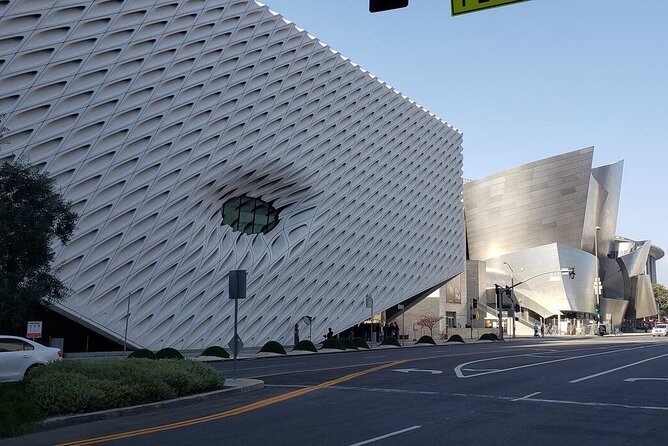
Bunker Hill now presents a sharp contrast to its former residential character. The route passes the Museum of Contemporary Art and The Broad, two major free art museums in the area.
At MOCA, the focus is not a museum visit. The stop lasts about five minutes and centers on the building and its architect, Pritzker Prize winner Arata Isozaki. Chris also explains the architect’s early struggles, adding a personal and professional layer to what could otherwise be a quick look at a striking facade.
The Broad brings another architectural lesson. Its name has a pronunciation that many first-time visitors get wrong, and the tour uses that detail as a light introduction. You hear about the building’s unusual design, its Pop Art collection, and plans for ambitious additions.
The short stops mean you should not expect to enter either museum as part of the scheduled walk. That is a limitation, but it also keeps the route moving. If you want to see the galleries, return later and allow separate time. Both museums are useful anchors for understanding how downtown has added modern art and architecture to its older civic core.
Frank Gehry’s Walt Disney Concert Hall
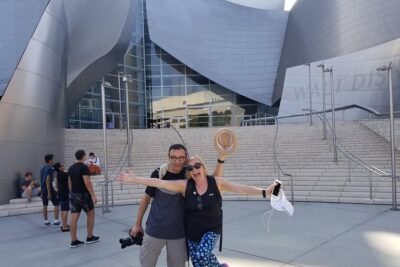
The Walt Disney Concert Hall receives more time than the two museums, about 15 minutes, and it deserves it. Frank Gehry’s sweeping metal forms are among the most recognizable pieces of recent Los Angeles architecture.
Chris explains both the building and the long story behind its creation. That matters because the hall is not only a dramatic object. It represents money, civic ambition, artistic goals, and the difficult process of turning a major cultural idea into a finished building.
I find this stop especially useful if you are not normally an architecture specialist. Gehry’s work can be easy to photograph and hard to read. A guide can point out why the curves, surfaces, and scale matter, and can connect the building to Gehry’s place in modern architecture.
You will view the exterior rather than attend a performance or take an interior concert hall tour. Still, the stop gives you enough context to appreciate the building instead of treating it as a shiny backdrop for photos.
A few more Los Angeles trips worth weighing up
- Palm Springs Modernism Architecture & History Bike Tour
★ 5.0 · 359 reviews - Spooky Solvang Ghost Hunting & History Tour
★ 5.0 · 310 reviews - 45-Minute Private Guided Historic Walking Tour in Lititz
★ 5.0 · 143 reviews - Natural History Museum of Los Angeles County Admission
★ 4.5 · 111 reviews
City Hall and the civic center
From Bunker Hill, the route moves toward City Hall and through Grand Park. This section shifts from private projects and cultural buildings to the political heart of Los Angeles.
The city’s growth is the main theme. Los Angeles developed from a town of only 44 people into a city of millions, and the walk uses the civic center to show how that expansion became visible in government buildings, public spaces, and broad urban plans.
Grand Park provides a change of pace. After looking upward at towers and concert hall forms, you walk through an open civic space and consider how people use the center of the city today. The stop is about ten minutes, so the emphasis remains on explanation and orientation rather than a long park visit.
This section also helps you place the rest of the route on a map. Little Tokyo, the Historic Core, Bunker Hill, Broadway, and the financial district are close enough to connect on foot, but each has a different character and past.
Little Tokyo and the story of Fugetsu-Do
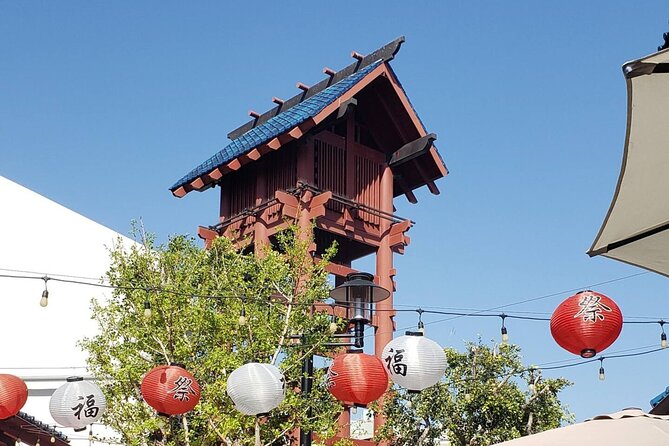
Little Tokyo is the tour’s strongest neighborhood stop. You spend about 30 minutes learning how Japanese communities shaped California and Los Angeles. Chris points out historic markers, long-running businesses, restaurants, and other signs of the neighborhood’s past and present.
This is where the walk moves beyond famous architecture. A city becomes easier to understand through its businesses and communities, and Little Tokyo gives you that connection. You get practical food suggestions as well as background on Japanese immigration and the local legacy of Japanese American life.
The route includes a stop at Fugetsu-Do, a family business opened by the Kito family in 1903. The shop endured through two world wars, the Great Depression, and more than 120 years of change. You sample mochi here, making the history tangible in a simple and memorable way.
The sample is not a full meal, so do not arrive expecting lunch. It is a traditional Japanese snack and a welcome pause during the walk. Little Tokyo also makes this tour different from many standard downtown routes, which tend to focus only on skyscrapers, old banks, and theaters.
St. Vibiana’s Cathedral and Broadway’s movie palaces
St. Vibiana’s Cathedral, now known as Vibiana, is the oldest building along the route. Built in 1876, it offers another reminder that Los Angeles has older roots than its modern image suggests.
The building was constructed when nearly one-fifth of the entire local population could fit inside it. That fact gives you a quick sense of how small Los Angeles once was. The stop lasts about five minutes, so think of it as a concise architectural and civic-history lesson rather than a full visit inside the building.
The walk then reaches Broadway, home to one of the largest surviving collections of historic movie palaces in the United States. The Million Dollar Theater is one of the grandest examples still standing. Chris connects these theaters to the era when Broadway hosted major premieres and Hollywood figures such as Charlie Chaplin.
This is a strong stop for film fans, but you do not attend a screening or take a full theater tour. The point is to understand Broadway as a former entertainment center and to notice the decorative ambition of its facades.
The Bradbury Building and the old bank district
The Bradbury Building is given about ten minutes, enough time to hear the story behind this 1893 landmark and to study its famous design. It is one of the most visually memorable buildings downtown, and its age makes it a useful bridge between Victorian Los Angeles and the commercial city that followed.
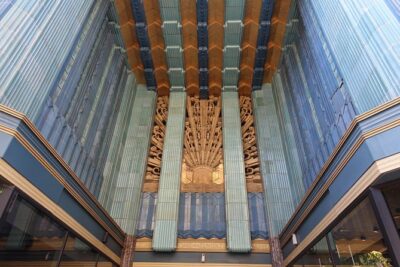
The route continues through the old bank district along Spring Street. Here, the buildings form an architectural timeline. Iron and steel give way to Beaux Arts decoration and then Art Deco design, reflecting the wealth and confidence of Los Angeles in the early twentieth century.
This is one of the places where a guide adds real value. On your own, you may notice that the buildings look different, but Chris explains how materials, styles, and business needs changed from block to block. The area was once called the Wall Street of the West, and the facades still show that financial ambition.
If you enjoy architecture, this may be the most rewarding stretch of the tour. If you prefer food, neighborhood life, or interiors, it may feel slower. The route does a good job of balancing both interests, but it remains an architecture-first walk.
The Last Bookstore and Grand Central Market
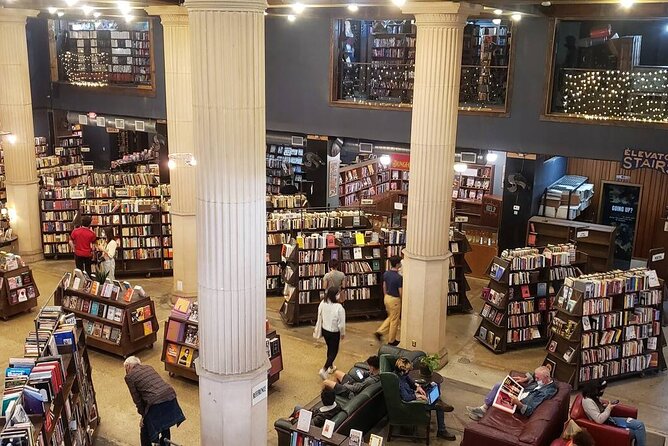
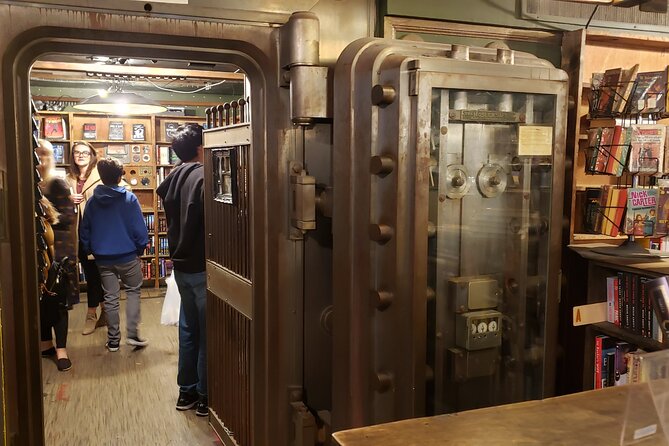
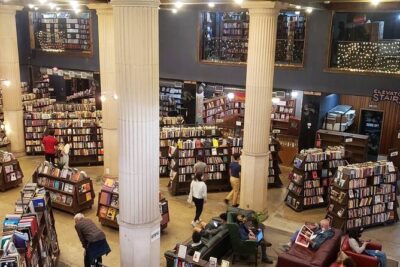
The Last Bookstore is a ten-minute stop and one of the tour’s more playful addresses. You go inside this popular bookshop, learn about its original bank building, and hear about the old vault. It also has several spots that work well for photographs.
The stop breaks up the formal architecture with a place people use today. It shows how an old commercial building can find a second life as a cultural hangout. You can browse if time allows, but the tour is not designed as an extended shopping stop.
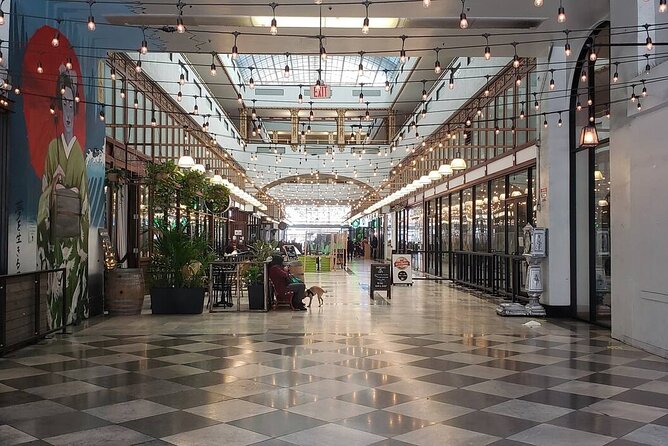
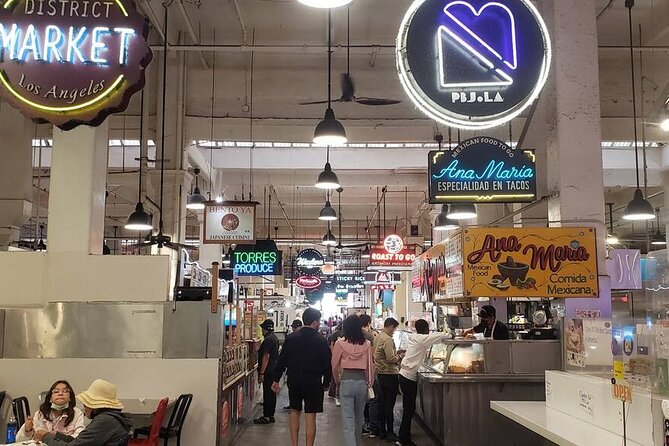
The walk ends at Grand Central Market, a food hall that has operated for more than 100 years. This is a sensible final stop because it lets you shift from looking at downtown to tasting it. You can hear about the market’s role in local life and then decide what to eat after the tour.
No full meal is included at Grand Central Market, so budget extra if you want lunch or a snack there. Since the activity returns to the original meeting point, you can also use the market as a starting point for more downtown exploring.
Guide style, pace, and practical comfort
Chris is the central reason this tour feels personal rather than scripted. He uses photos and a multimedia presentation to explain buildings and historical changes, and he encourages questions. His background leading tours in Chicago and a decade of work in downtown Los Angeles helps explain the broad range of material covered.
The tone is friendly and lively, with humor mixed into the facts. The strongest praise centers on Chris’s ability to explain architecture without making it dull, answer questions, and adjust the pace when needed. He has also tailored parts of the walk for people who already knew Little Tokyo, placing more attention on other areas.
The walk is described as comfortable, but it is still a three-hour urban route. Several people specifically appreciated stops in the shade and attention to individual needs. Bring a hat, use sun protection, and wear shoes suited to city streets. Weather matters, since the activity may be canceled in poor conditions.
The route is near public transportation, and service animals are allowed. Most people can take part. The maximum group size is 15, though a smaller booking could feel more like a private walk.
What the tour leaves out
No tour can cover all of Los Angeles in three hours. This one gives Japanese American history and Little Tokyo a proper place, but it does not visit Olvera Street or Plaza. That means the Spanish and Mexican founding story of Los Angeles receives less attention than it would on a route focused around the historic plaza.
That omission is worth considering, not as a flaw in the route’s chosen subject, but as a planning note. The walk is designed as a closed loop beginning and ending downtown, which keeps parking, navigation, and timing simpler. Adding Olvera Street would require a longer route and could weaken the focus on Little Tokyo and the Historic Core.
I would pair this tour with a separate visit to Olvera Street if that part of Los Angeles history matters to you. On this walk, the focus is architecture, downtown change, Japanese American community history, civic buildings, and the old commercial core.
Who should book the Downtown Los Angeles tour?
I recommend this tour if you want to understand downtown rather than simply photograph it. It suits first-time visitors, architecture fans, history buffs, film lovers, food-focused sightseers, and local residents who have passed these buildings for years without knowing their stories.
It is also a good choice if you prefer a guide who talks with you instead of delivering a fixed speech. Chris’s approach leaves room for questions and can shift emphasis when the group has a particular interest.
You should think twice if you want long museum visits, a sit-down meal, or a route centered on Old Plaza and Spanish colonial Los Angeles. You should also leave room in your day for exploring Grand Central Market, The Broad, MOCA, or Little Tokyo after the walk, since the scheduled stops are brief.
Free cancellation is available up to 24 hours before the start time for a full refund. Changes or cancellations inside 24 hours are not refunded, and poor weather or failure to reach the minimum group size can lead to a rescheduled date or full refund.
Final verdict
Book this walk if you want a clear, engaging introduction to the real downtown core. For $39.20, you get three hours with Chris, an included Angels Flight ride, a mochi sample, strong architectural coverage, and a route that connects Bunker Hill, the Civic Center, Little Tokyo, Broadway, and the Historic Core.
The best reason to go is the range. You move from a tiny railway and lost Victorian homes to Gehry’s concert hall, a Japanese family business, old movie palaces, a 1893 landmark, and a century-old market. Just remember that this is a brisk outdoor overview. Add separate time for museums and Olvera Street, wear a hat, and you will get much more from the day.
FAQ
How long is the History and Architecture of Downtown Los Angeles tour?
The tour lasts approximately three hours.
How much does the tour cost?
The listed price is $39.20 per person.
Where does the tour begin and end?
You meet at 341 South Hill Street, Los Angeles, California 90013. The activity ends back at the same meeting point.
Is the Angels Flight ride included?
Yes. The tour includes admission for the Angels Flight Railway ride.
What language is the tour offered in?
The tour is offered in English.
How large is the tour group?
The activity has a maximum of 15 participants.
Just added around Los Angeles
- Los Angeles: Speakeasy Bar Hopping Tour with Drink★ 4.7 · 3 reviews
- Private Surf Lesson in Venice Beach, CA★ 5.0 · 3 reviews
- LA: Expo Park Space & Dinosaurs Tour with Cal Science Center★ 5.0 · 3 reviews
- Private Photo Tour of the Best Instagram Spots in Los Angeles★ 5.0 · 3 reviews
- Santa Monica Superhero Exploration Game and Tour★ 5.0 · 3 reviews
- Private Hollywood Sign Hiking Tour with Select Hotel Pickup★ 5.0 · 3 reviews
- Private 5-Hour Limo Tour of Los Angeles and Beach Cities★ 3.5 · 3 reviews
- Hooray for Hollywood: 35-Minute Helicopter Tour★ 4.7 · 3 reviews
Downtown LA Tours, compared.
Culture and Arts Tour of Downtown LA with Angels Flight Ticket
Read our review →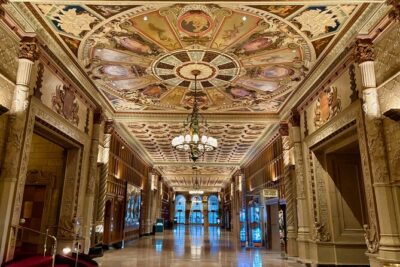
Downtown Los Angeles History and Architecture Walking Tour
Read our review →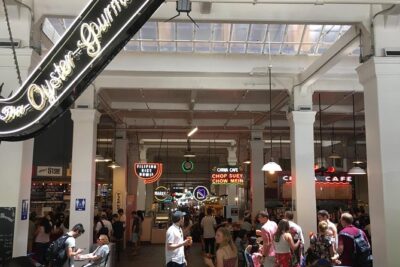
The History and Architecture of Downtown Los Angeles
Read our review →
Browse the lists this tour appears in