
Reviewed · WALKING TOURS
Walking Palm Springs “Twin Palms” Private Tour
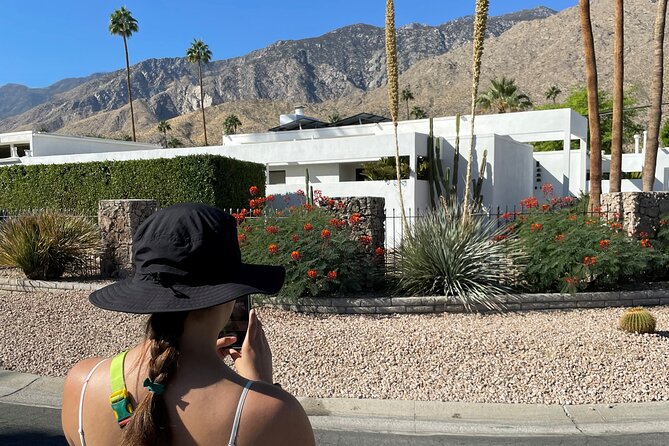
Palm Springs’ Twin Palms Estates is best understood on foot, one quiet street at a time. This private tour links mid-century houses with the people who lived in them, from architect William Krisel to author Ray Bradbury and Hollywood figures Debbie Reynolds and Eddie Fisher.
I like the small private format, which lets your group set a comfortable pace. I also like the focus on original details, restored homes, plants, streets, and stories rather than a quick drive-by view. Guide Douglas Kline is especially useful for readers who want architecture explained in plain language, not just photographed.
The main consideration is simple: you do not enter any homes. The experience is entirely outdoors, and Palm Springs heat can make the one-mile walk feel longer later in the day or season. Bring water and aim for an early start if you can.
In This Review
- Key things to know before you book
- Why Twin Palms works best as a walking tour
- William Krisel Way and the neighborhood’s design DNA
- East Anza Drive and a Hollywood marriage gone wrong
- Apache Circle and the strongest concentration of original details
- South Caliente Drive and Ray Bradbury’s Palm Springs years
- Aquanetta Drive and the details between the big sights
- South Navajo Drive and old homes beside new interpretations
- South Joshua Tree Place and the glamour of the 1960s
- What the $195 private price really gets you
- Timing, comfort, and practical limits
- Who will get the most from this Palm Springs walk?
- Should you book the Twin Palms private tour?
- FAQ
- How much does the Twin Palms private tour cost?
- How long does the tour last?
- How far do you walk?
- Does the tour include home interiors?
- Where does the tour start and finish?
- Is there a restroom during the tour?
- What happens if bad weather cancels the tour?
Key things to know before you book
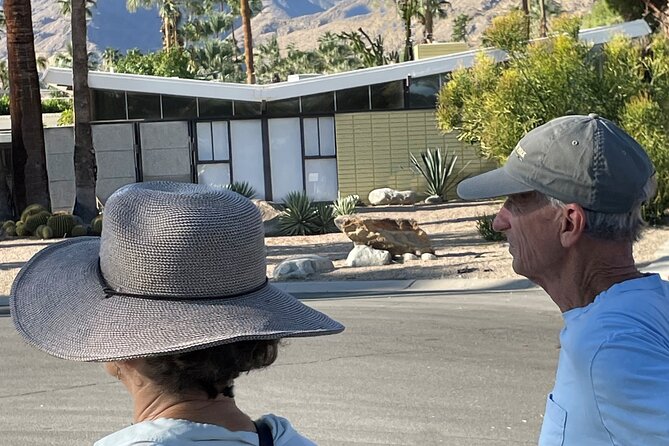
- William Krisel Way begins the story: You enter Twin Palms Estates near a street renamed for the architect who shaped much of the neighborhood.
- Celebrity addresses add human drama: Debbie Reynolds and Eddie Fisher’s former home comes with a story of a marriage that began to unravel there.
- The homes are viewed from public streets: You see facades, original details, restored features, gardens, and street design, but no interiors.
- The route covers about one mile: The pavement is flat, making the walk manageable for most people.
- You get a private guide for up to eight people: The $195 group price can be good value when shared by several people.
- An early start makes sense: The tour lasts about two hours, and there is no restroom stop along the way.
Why Twin Palms works best as a walking tour
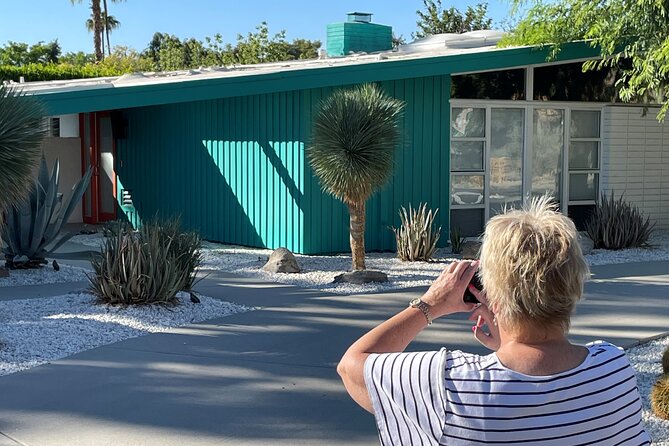
Twin Palms Estates is not simply a collection of striking houses. It is a planned neighborhood where architecture, streets, palm trees, open yards, and mountain-town living were designed to work together.
A car can show you more ground, but walking gives you time to notice the small choices. You can compare rooflines, windows, breeze blocks, carports, landscaping, and the way one house has been carefully preserved while another has been altered. The pace also gives Douglas room to explain why a home looks the way it does.
The route is about one mile and stays on flat pavement. That is a reasonable distance for most people, and the private format matters if someone in your group walks slowly. A previous booking included a 77-year-old participant, and Douglas adjusted the pace to suit her. That is the sort of flexibility a fixed group tour rarely provides.
The tradeoff is that the tour depends on the weather. Palm Springs can be pleasant in the morning and punishing later on. The published operating hours run from 8:00 AM to 4:00 PM, Monday through Sunday, for the stated booking period, so I would choose a morning slot whenever possible.
A few more Palm Springs trips worth weighing up
- Desert Nature Walk, Cacao Ceremony and Soundbath in Joshua Tree
★ 4.5 · 19 reviews - Joshua Tree’s Hidden Valley Self-Guided Walking Tour
★ 3.5 · 9 reviews - Palm Springs: Private Walking Tour “Twin Palms” Neighborhood
★ 5.0 · 9 reviews
William Krisel Way and the neighborhood’s design DNA
The first stop is near William Krisel Way, a street recently renamed to honor the architect closely tied to Twin Palms Estates. This is a smart starting point because it gives you a name and a design point of reference before the houses begin to blur together.
Krisel was responsible for much of the residential and outdoor design in the neighborhood. As you walk, you can use that opening explanation to look for repeated ideas across different homes. The value here is not just learning who designed the houses. It is learning how a neighborhood can feel unified while still giving each home its own shape.
The stop itself lasts about five minutes, so do not expect a long lecture at the street sign. Its purpose is to set the stage. From there, the tour becomes a moving lesson in mid-century residential design.
If architecture is new to you, this introduction should help you notice more than a dramatic roof or a wall of glass. You begin to see the relationship between the home and the street, the role of shade in a desert climate, and the way outdoor space was treated as part of everyday living.
East Anza Drive and a Hollywood marriage gone wrong
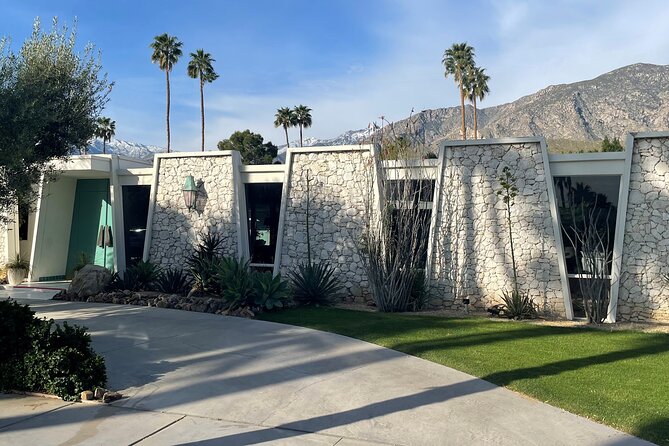
At East Anza Drive, you see the former home of Debbie Reynolds and Eddie Fisher. The address brings a dose of Hollywood drama to what might otherwise seem like a quiet residential walk.
The story concerns the way their high-profile marriage began to unravel at this Palm Springs address. That contrast is part of the fun: calm streets, carefully designed homes, and a very public personal story behind one front door.
You will be viewing the property from outside, so this stop is about context rather than access. It also shows how Twin Palms appealed to people who wanted privacy without giving up the glamour associated with Palm Springs.
I find celebrity history works best here as seasoning, not the main course. The houses remain the reason to come, but stories about their former occupants make the neighborhood easier to remember. You are not just looking at another 1950s facade. You are connecting it with a particular period of American entertainment and social life.
Apache Circle and the strongest concentration of original details
Apache Circle is one of the most rewarding parts of the route for anyone interested in preservation. From this quiet cul-de-sac, you see a group of especially well-preserved original 1950s homes.
This is where Douglas can help you separate authentic mid-century features from later additions and restorations. The homes retain or restore design elements associated with the period, so you have a better chance to see the intended character of the neighborhood rather than a heavily remodeled version of it.
A cul-de-sac also changes the mood. There is less through traffic, and you can spend more time looking at several homes in one compact area. The stop lasts around ten minutes, longer than most of the other listed stops, which makes sense because there is more to compare.
Do remember that preservation does not mean public access. You are still looking from the street. If you are hoping to study floor plans, kitchens, furniture, or interior materials, this tour will leave that part unanswered. For exterior design and neighborhood planning, however, Apache Circle gives you some of the clearest examples.
More days around Palm Springs:
- Palm Springs Aerial Tramway Admission Ticket
★ 4.5 · 1,798 reviews - Palm Springs: Aerial Tramway Round-Trip Ticket
★ 4.6 · 1,122 reviews - Joshua Tree National Park Self-Guided Driving Audio Tour
★ 4.5 · 762 reviews - San Andreas Fault Jeep Tour from Palm Desert
★ 5.0 · 751 reviews
South Caliente Drive and Ray Bradbury’s Palm Springs years
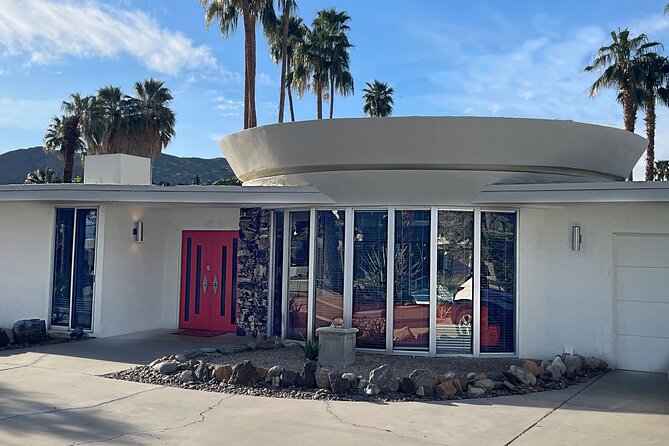
South Caliente Drive brings the literary world into the tour with a walk past the former home of author Ray Bradbury. You hear about his life in Palm Springs and the connection between the writer and the town.
This stop is brief, about five minutes, but it broadens the picture of Palm Springs. Twin Palms was not only a place for architects and film stars. It also attracted creative people who valued the desert setting and the privacy of a planned residential district.
The address is best treated as a story stop rather than a major architectural visit. You will not enter the house, and the tour does not present an indoor author museum. Instead, the point is to connect a familiar name with an ordinary-looking street and to understand how the neighborhood fit into Bradbury’s life.
That mix of architecture and biography is one reason the tour feels more substantial than a list of famous addresses. Each person adds a different angle to the same place.
Aquanetta Drive and the details between the big sights
Aquanetta Drive is a chance to stroll through the neighborhood at a gentler pace. The name itself has a playful quality, and the street helps show Twin Palms as a lived-in community rather than a row of isolated design objects.
This portion is useful because not every stop needs a famous resident or a landmark house. You get time to notice the planting, setbacks, street rhythm, and the relationship between neighboring properties. Douglas also brings attention to trees and plants, an aspect that can be easy to miss when you are focused on rooflines.
One particularly good feature of a private walk is the chance to ask about what catches your eye. If you are curious about a plant, a wall, a driveway, or a restored detail, you can raise the question without holding up a bus full of people.
The stop lasts about five minutes, so the tour keeps moving. That is helpful in the heat, though visitors wanting long photo sessions may find the pace a little brisk. Tell Douglas early if you need more time for pictures.
South Navajo Drive and old homes beside new interpretations
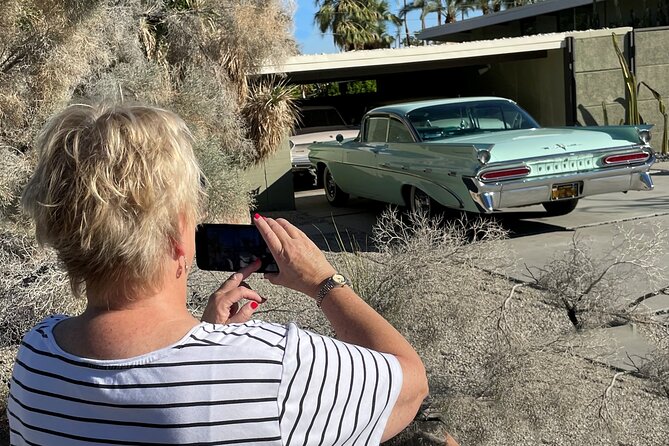
South Navajo Drive offers one of the most useful comparisons on the route. Here, 1950s house designs sit alongside contemporary remakes, giving you a direct look at how the neighborhood has changed.
This is more instructive than seeing only perfectly preserved homes. Original houses show the design language of the period, while newer versions reveal which ideas still appeal to modern owners. You can compare the scale, materials, front elevations, and relationship to the street.
The contrast also raises a practical question for anyone who cares about preservation: how much change can a house absorb before its period character fades? You may find that some updates respect the original spirit while others feel more dramatic. The tour does not require you to approve of every choice. It gives you the evidence to make your own judgment.
South Navajo Drive is another short stop, around five minutes. It works well as a visual comparison, not as a long architectural seminar.
South Joshua Tree Place and the glamour of the 1960s
The final stop moves into the 1960s, when Palm Springs design became even more closely linked with glamour and celebrity culture. South Joshua Tree Place features famous home designs with facades that have remained untouched.
That phrase matters because the exterior is the main event. You are seeing the front of homes in the form that helped make the decade recognizable: bold lines, polished presentation, and a strong visual identity. The exact details are best explained on site, where you can look at the facades as Douglas discusses them.
The shift from 1950s homes to 1960s designs gives the walk a useful timeline. You are not seeing one frozen style. You are watching taste change within the same neighborhood, from early postwar planning to a more glamorous expression of modern living.
After this stop, the tour returns to the meeting point at 1000 East Twin Palms Drive. The activity lasts about two hours in total. Since the end point is the same as the start, you do not need to arrange a pickup elsewhere.
What the $195 private price really gets you
The price is $195 per group of up to eight people. That is not the cheapest way to see Palm Springs architecture, but the calculation changes if you bring a family or a group of friends. At the maximum size, the cost works out to about $24.38 per person.
You are paying for a private guide, not admission to a house or museum. All stops are free, and no home interiors are included. The value comes from Douglas’s interpretation, the ability to ask questions, and the chance to keep the pace suited to your own group.
For two people, the cost is much harder to justify if you only want a quick look at the exteriors. For four to eight people, the price becomes more reasonable, particularly if architecture and local stories are central to your Palm Springs plans.
I would also factor in what you might miss without a guide. A self-guided walk can show you attractive houses, but it may not explain why one street matters, how Krisel shaped the neighborhood, or how celebrity and literary history fit into the same setting. If those connections matter to you, the private format earns its keep.
Timing, comfort, and practical limits
The total walking distance is about one mile on flat pavement, and most people can participate. Service animals are allowed, and the meeting point is near public transportation.
There are no restrooms during the tour. Plan ahead before you arrive, especially if you are traveling with children or anyone who needs regular facilities. You should also wear comfortable walking shoes and carry water. An early April start at 9:00 AM proved pleasant for one group, but later in the day or later in the season, a water bottle becomes even more important.
The tour is offered in English. Confirmation is sent within 48 hours of booking, subject to availability. Because the tour runs outdoors and requires good weather, a cancellation caused by poor conditions results in the choice of another date or a full refund.
You can cancel for a full refund up to 24 hours before the start time. Changes or cancellations made inside that window are not accepted for a refund, so check the weather and your schedule before the deadline.
Who will get the most from this Palm Springs walk?
This tour suits anyone who likes mid-century architecture but wants more than a photo stop. It is also a good choice for people who enjoy the connection between buildings and their former residents.
I would recommend it for:
- Architecture fans who want to compare original, restored, and contemporary homes.
- First-time Palm Springs visitors seeking a clear introduction to Twin Palms Estates.
- Small families or friend groups who value a private pace.
- Readers interested in Debbie Reynolds, Eddie Fisher, Ray Bradbury, and the people connected with the neighborhood.
- Older participants who prefer a flat route and the ability to walk at a measured pace.
- Garden-minded visitors who notice trees, plants, and outdoor design as much as buildings.
It is less suitable if your main goal is to enter famous homes, use a restroom during the walk, or avoid outdoor heat. It is also not a substitute for a museum visit or an interior-focused house tour.
Should you book the Twin Palms private tour?
Book it if you want to understand why Twin Palms Estates matters, not simply photograph a few famous facades. Douglas Kline’s personal guidance, the private group format, and the mix of architecture, plants, celebrity stories, and local history give the two-hour walk a clear purpose.
The best value comes with four or more people, an early start, and a real interest in mid-century design. Bring water, plan for no restroom stop, and accept that every sight is exterior only.
If that sounds like your kind of Palm Springs morning, this is a smart, focused tour. If you need indoor access or prefer a short sightseeing ride, spend your money elsewhere.
FAQ
How much does the Twin Palms private tour cost?
The tour costs $195 per group, with up to eight people included.
How long does the tour last?
The walking experience lasts approximately two hours.
How far do you walk?
The total distance is about one mile on flat pavement.
Does the tour include home interiors?
No. Home interiors are not part of the tour. You view the houses and their exterior features from the neighborhood streets.
Where does the tour start and finish?
The tour starts at 1000 E Twin Palms Dr, Palm Springs, California 92264, and ends back at the same meeting point.
Is there a restroom during the tour?
No. Restrooms are not available during the experience.
What happens if bad weather cancels the tour?
If poor weather causes a cancellation, you will be offered a different date or a full refund. You can also cancel up to 24 hours before the start time for a full refund.
Just added around Palm Springs
- All-In-One California Self-Guided Driving & Walking Bundle Tour★ 4.5 · 3 reviews
- Palm Springs: Indian Canyons Jeep/Hiking Combo Tour★ 5.0 · 3 reviews
- Rock Climbing Trips in Joshua Tree National Park (8 Hours)★ 5.0 · 3 reviews
- Journey into Joshua Tree On-Demand Audio Tour and Locals Guide★ 3.5 · 3 reviews
- 100+ Self-Guided Audio Tours: Driving & Walking Bundle★ 3.5 · 3 reviews
- Palm Springs Shuffle Scavenger Hunt★ 5.0 · 4 reviews
- Make Sun Prints in the Desert★ 5.0 · 4 reviews
- Private Abstract Painting Workshops in Palm Springs★ 5.0 · 4 reviews
Walking Tours, compared.

Los Angeles Original 90-Minute Walking Tour to The Hollywood Sign
Read our review →
The ORIGINAL Downtown Santa Barbara Walking Food & Drink Tour
Read our review →
Hollywood Stars Tour: Walk of Fame, Celebrity Homes, Sunset Strip
Read our review →
Express Hollywood Sign Guided Walking Tour with Photos
Read our review →
Haunted Hollywood Walking Tour: True Crime and Creepy Tales
Read our review →

Walk of Fame, Hollywood Sign & Beverly Hills Tour
Read our review →Browse the lists this tour appears in