
Reviewed · GETTY & ART MUSEUMS
Downtown LA Arts Tour with MOCA & The Broad + Infinity Room
The best part of this small-group DTLA art tour is the way it links Los Angeles architecture, music, and modern art in one compact outing. You’ll walk Bunker Hill with an artist and musician guide, visit MOCA and The Broad, and finish with Yayoi Kusama’s Infinity Mirror Rooms.
I like the strong mix of places, especially the chance to see Walt Disney Concert Hall, Angels Flight, MOCA, and The Broad without arranging separate visits. I also like the small group, limited to eight people, since it gives the guide room to explain works and answer questions. The main consideration is pace: two hours is efficient, but it leaves little time for lingering in either museum.
In This Review
- Key points to know before booking
- Why Bunker Hill makes a good starting point
- Walt Disney Concert Hall and the Music Center
- MOCA and its changing collection
- Angels Flight and the story of the hill
- The Broad and Yayoi Kusama’s Infinity Mirror Rooms
- What the two-hour schedule feels like
- The guide can shape the whole experience
- Is $44 a fair price?
- Who should book this DTLA art walk?
- Booking details worth knowing
- Should you book it?
- FAQ
- How long does the Downtown LA Arts Tour last?
- What museums are included?
- Are Yayoi Kusama’s Infinity Mirror Rooms included?
- Where does the tour meet?
- Is transportation included?
- Is the tour suitable for wheelchair users?
- Can I stay at The Broad after the tour?
Key points to know before booking
- The Infinity Mirror Rooms are included: Your visit to The Broad includes Yayoi Kusama’s popular installations.
- Bunker Hill gets proper attention: The tour explains the area’s development, architecture, and cultural institutions rather than rushing straight indoors.
- Expect an art-focused guide: The guide is an artist and musician, and past sessions have been led by people including Matt, Chris, and Angelica.
- Two museums in two hours: You receive a highlights visit to MOCA and a guided visit to The Broad, not a full day for either collection.
- The group is capped at eight: That is a helpful size for questions and a more personal walk.
- You can remain at The Broad: After the guided portion ends, you may continue exploring until the museum closes.
Why Bunker Hill makes a good starting point
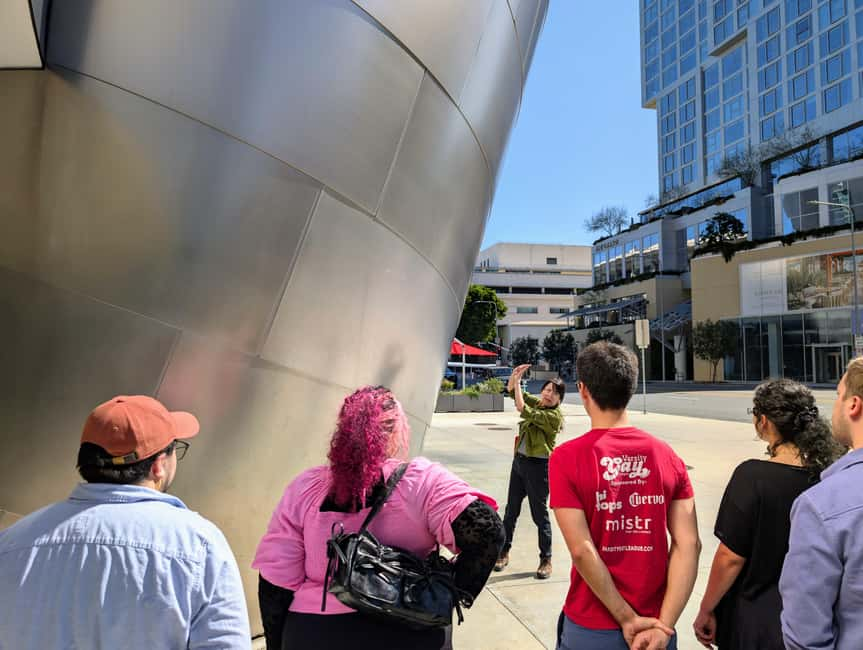
Downtown Los Angeles can feel scattered if you approach it as a list of disconnected sights. Bunker Hill gives you a useful center. In a short walk, you encounter major concert halls, public plazas, a historic funicular, two important art museums, and some of the city’s best-known modern buildings.
The tour begins at the top of the stairs at Jerry Moss Plaza. From there, your guide sets the scene for the Music Center and the surrounding streets. This is not just a march from one ticketed attraction to the next. The point is to understand how the district developed and why so much culture is concentrated here.
That context matters. Los Angeles is often associated with film studios, beaches, and palm-lined boulevards, but Bunker Hill shows another side of the city. It is a place shaped by public investment, private philanthropy, music, art, and ambitious architecture.
The guide’s background is a real advantage here. An artist and musician can explain a concert hall as both a building and a working cultural space. You may also get a more practical explanation of how artists, audiences, and public spaces interact than you would from a standard sightseeing walk.
More Getty and art museum visits:
- Private Getty Center to Griffith Observatory Guided Tour
★ 5.0 · 185 reviews - Los Angeles: Getty Center Guided Tour
★ 4.9 · 57 reviews - Demystifying Art at The Getty – 90 minutes
★ 5.0 · 31 reviews
Walt Disney Concert Hall and the Music Center
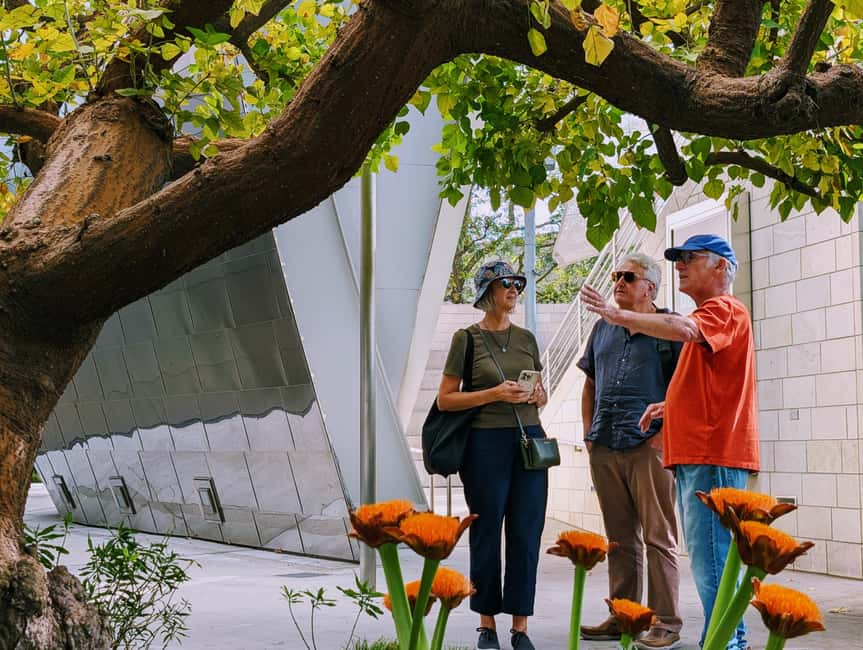
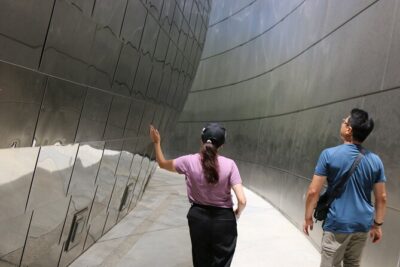
One of the early highlights is Walt Disney Concert Hall, designed by Frank Gehry. Its sweeping metal forms give the building a very different character from the more formal Dorothy Chandler Pavilion, home to the LA Opera. The tour uses these buildings to explain how changing ideas about performance and architecture shaped Bunker Hill.
You’ll also hear about the people who helped fund these institutions. The philanthropists connected with the Music Center left behind more than names on plaques. Their support helped create places where classical music, opera, and public performance could become part of everyday city life.
I like this section because it gives the buildings a human story. Architecture can otherwise become a parade of famous names and unusual shapes. Here, the focus includes the people, institutions, and public uses behind the design.
The tour does not promise an interior performance or a full architectural inspection. You should think of this as an outdoor introduction, with stops for explanation and views. If you are especially interested in Frank Gehry or Welton Becket, you’ll appreciate the focus. If you prefer to spend most of your time inside galleries, this portion may feel longer than expected.
MOCA and its changing collection
Next comes the Museum of Contemporary Art, usually called MOCA. The visit includes entry and a guided highlights tour, with attention to selected works rather than every room.
MOCA is known for modern and contemporary art across several forms, including painting, sculpture, and multimedia installations. That variety can be exciting, but it can also make a first visit feel less clear. Your guide helps give the collection a frame, pointing out themes and works that are worth your limited time.
This is where the guide’s art background can make a difference. Contemporary work often asks you to look past the subject and consider materials, scale, process, or the artist’s idea. A good explanation can help you decide what to notice without telling you what you must think.
The tour is especially useful if modern art is not already your comfort zone. You can ask a direct question, hear a plain explanation, and then look again with more confidence. At the same time, serious art fans should keep expectations in check. A two-hour tour covering two museums cannot offer a full account of MOCA’s collection or temporary exhibitions.
Exhibitions can change, so the exact works on view will vary. The broader promise is a guided selection from a museum known for established and emerging artists, not a fixed list of galleries.
Angels Flight and the story of the hill
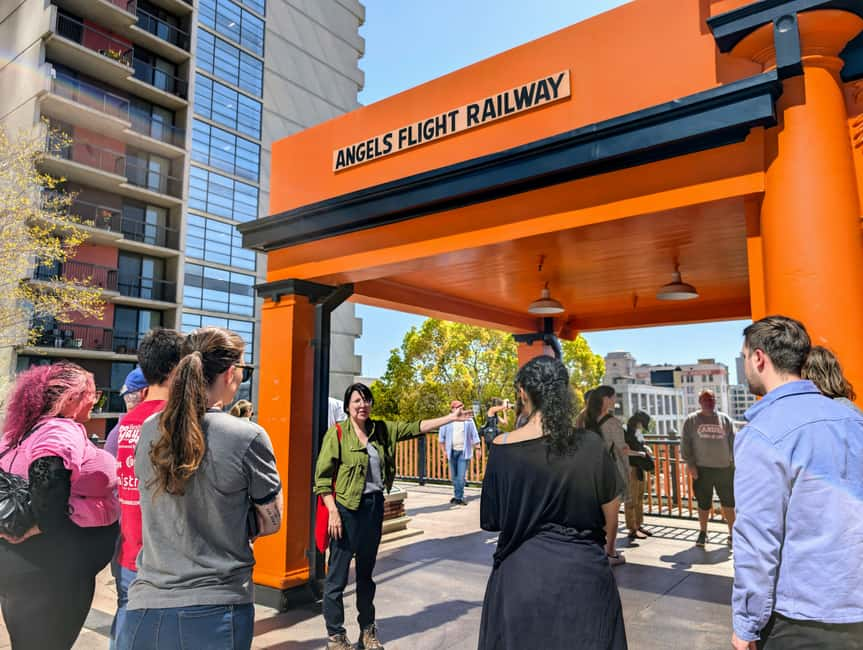
Angels Flight adds a different note to the outing. The orange and black funicular runs between Hill Street and Olive Street on a steep section of Bunker Hill. It is often called the shortest railway in the world.
The tour points it out as part of the district’s story. Its importance is not only visual. The railway connects the hill with the streets below and reflects the practical problem of moving people through a steep urban area.
The information provided for this experience does not say that a ride is included, so plan to see Angels Flight as a sightseeing stop rather than assume you will board it. That is a useful distinction when you are counting on every minute.
You’ll also visit public gathering areas such as California Plaza and Grand Park. These places help show how locals use the district for music and performances, rather than treating Bunker Hill as a collection of office towers and museums. Your guide can also point out nearby food options for afterward.
Food is not included, but this advice can save you time. Since the tour finishes near major cultural sites, you can decide after the walk whether you want a quick meal, a drink, or more time indoors at The Broad.
More Downtown LA walks:
- Downtown Los Angeles Food Tour
★ 5.0 · 501 reviews - Old and New Downtown Los Angeles Walking Tour
★ 5.0 · 222 reviews - Culture and Arts Tour of Downtown LA with Angels Flight Ticket
★ 5.0 · 142 reviews - The History and Architecture of Downtown Los Angeles
★ 5.0 · 94 reviews
The Broad and Yayoi Kusama’s Infinity Mirror Rooms
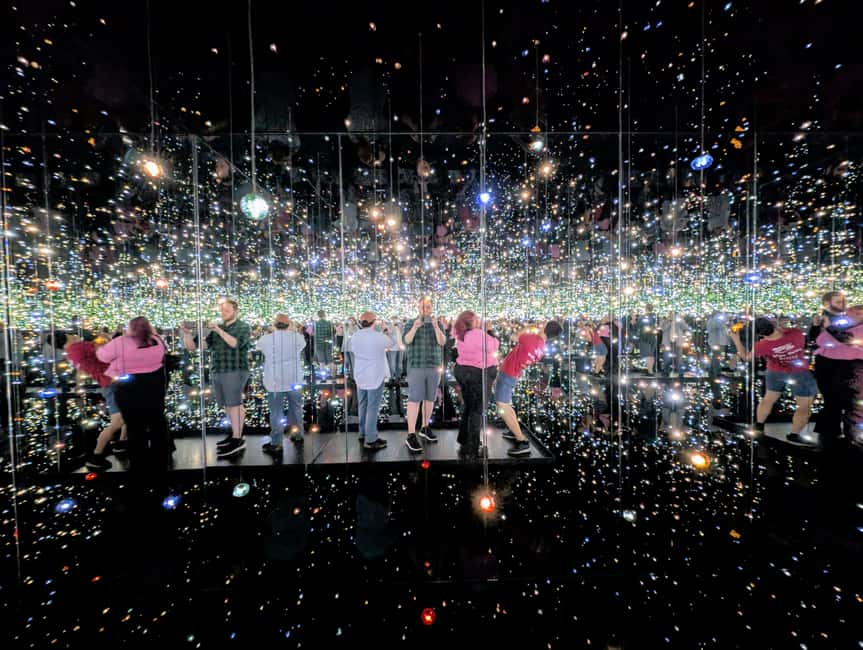
The final major stop is The Broad, home to a celebrated collection of postwar and contemporary art. The visit includes a guided tour and entry to Yayoi Kusama’s Infinity Mirror Rooms.
The Infinity Mirror Rooms are built around reflections, lights, and repeated space. They are popular for good reason, but the practical benefit of having this access included is just as important. You do not need to plan a separate museum visit and then fit the installation around the rest of your day.
The tour also introduces major artists such as Andy Warhol, Jean-Michel Basquiat, Robert Rauschenberg, and Roy Lichtenstein. These names represent different approaches to popular culture, painting, collage, sculpture, and the changing art world after the Second World War.
Your guide explains key themes in the museum rather than simply pointing at famous works. That matters at The Broad, where a quick photo stop can easily replace looking closely. I would pay attention during the introduction, then use the free time afterward to revisit the pieces that catch your eye.
A strong practical feature is that you may stay inside The Broad after the guided tour ends, until closing time. This helps correct the main weakness of the two-hour format. You get the structure and orientation of a guide, then the option to continue at your own speed.
The experience description calls this an exclusive tour of The Broad, but it does not promise private access to the entire museum. Read that wording as a guided museum visit with included entry and Infinity Mirror Room access.
What the two-hour schedule feels like
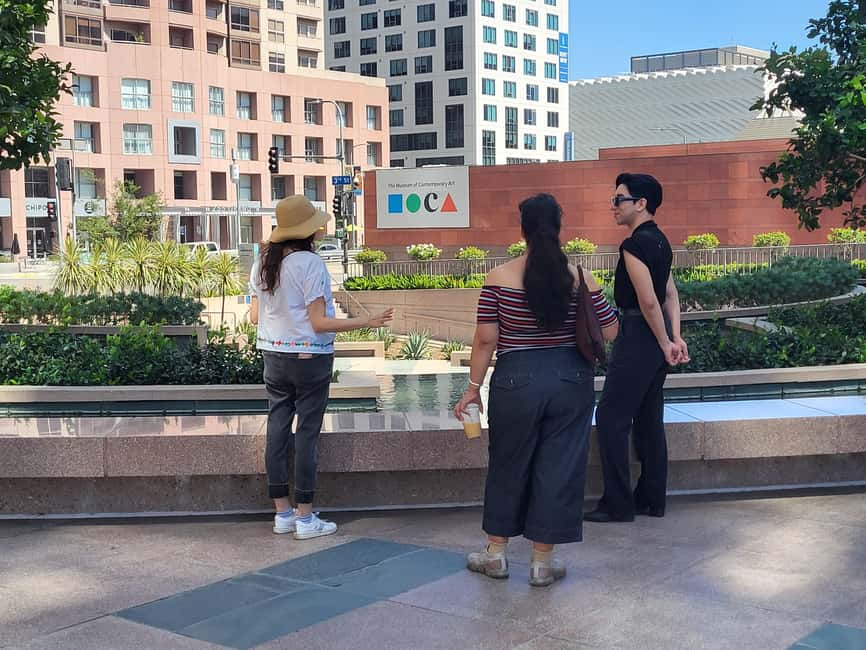
Two hours is a good length for a focused introduction, but you should not expect a slow museum day. The schedule combines outdoor walking, architecture, MOCA, Angels Flight, public spaces, and The Broad. The guide has to keep moving.
One past participant found about two and a half hours to be the right amount of time. That is a useful clue: the exact pace may stretch a little, but you should still arrive ready for a compact outing. Wear comfortable shoes, since the route includes city streets, stairs, and the incline around Bunker Hill.
The small group helps. With no more than eight participants, the guide can keep the walk together and respond to questions without the delays common on larger group tours. It also makes a difference at museum stops, where a large crowd can make discussion awkward.
The tour is offered in the morning and afternoon, though exact times depend on the date you choose. Check the weather and dress for conditions because part of the experience takes place outdoors. Bring a camera for the buildings and public spaces, while following museum rules indoors.
Transportation is not included. You need to reach the meeting point at Jerry Moss Plaza yourself, and the tour does not provide transfers between sights. The locations are part of the Bunker Hill area, so the format works best if you are already in central Los Angeles or are comfortable arranging your own way there.
The guide can shape the whole experience
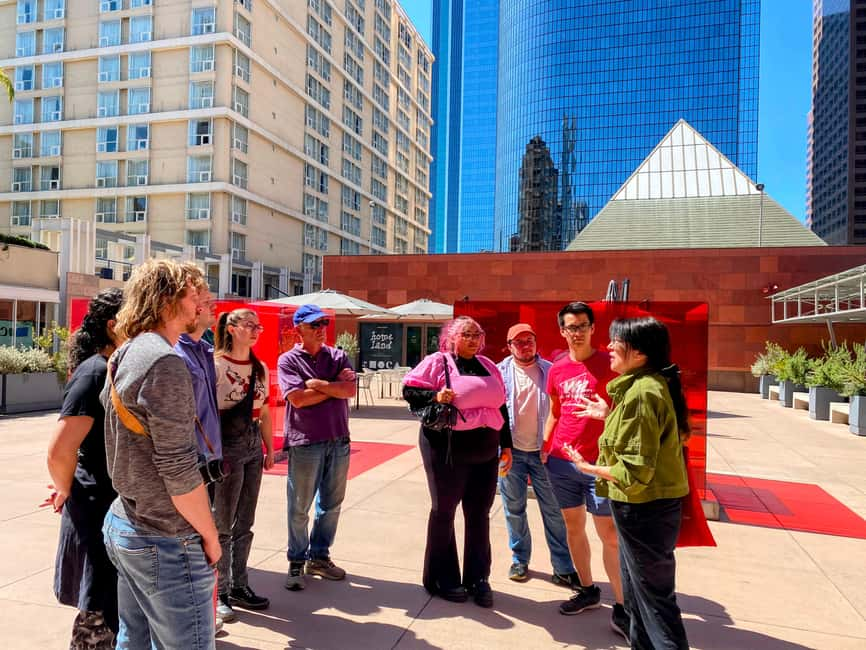
The guide is the main variable in a tour like this. The people leading recent sessions have included Matt, Chris, and Angelica. Their approach may differ, but the consistent theme is clear: the guide’s role is to explain architecture, history, and art in an accessible way.
Matt has been praised for his passion for Los Angeles history and for explaining the Disney Concert Hall, MOCA, and The Broad. Chris has led sessions with a particularly strong focus on Bunker Hill architecture and the architects who shaped the area. Angelica has been described as helpful and accommodating when a special request came up.
That range is worth noting. If you book this tour expecting a standard art lecture, you might be surprised by the amount of attention given to architecture and neighborhood development. One participant specifically found the architectural focus stronger than expected, while still considering the museum visits excellent.
I see that as a strength for most first-time visitors. The buildings and streets give the art museums a setting, and the museums give the architecture a cultural purpose. Still, if your only goal is gallery time, a self-guided museum visit may suit you better.
Is $44 a fair price?
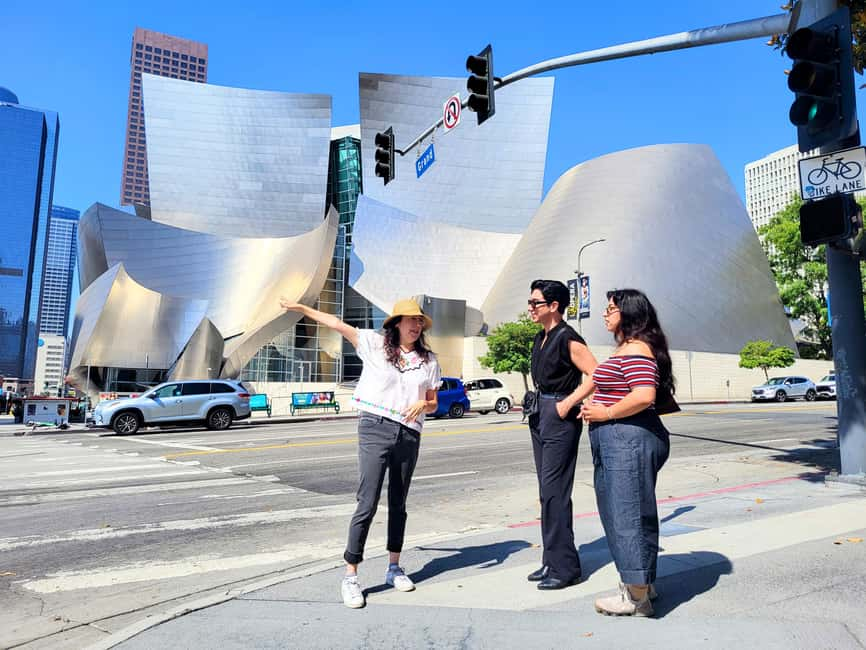
At $44 per person, this tour offers a solid value if you want both guidance and museum admission. The price includes the Bunker Hill walk, MOCA entry and highlights tour, and The Broad entry with the Infinity Mirror Rooms.
The value is not simply the number of places covered. You are paying for a local guide who connects them. That can be worthwhile in DTLA, where the story of a building often makes the view more interesting and a contemporary artwork can benefit from a bit of explanation.
The price is less compelling if you plan to spend several hours inside each museum. You may prefer to buy admission separately and explore at leisure. This tour is designed for orientation, selected highlights, and a clear introduction.
Food, drinks, and transportation cost extra. Your guide can suggest places nearby, but you’ll need to choose and pay for your own meal. Build that into your budget if you plan to eat immediately afterward.
Who should book this DTLA art walk?
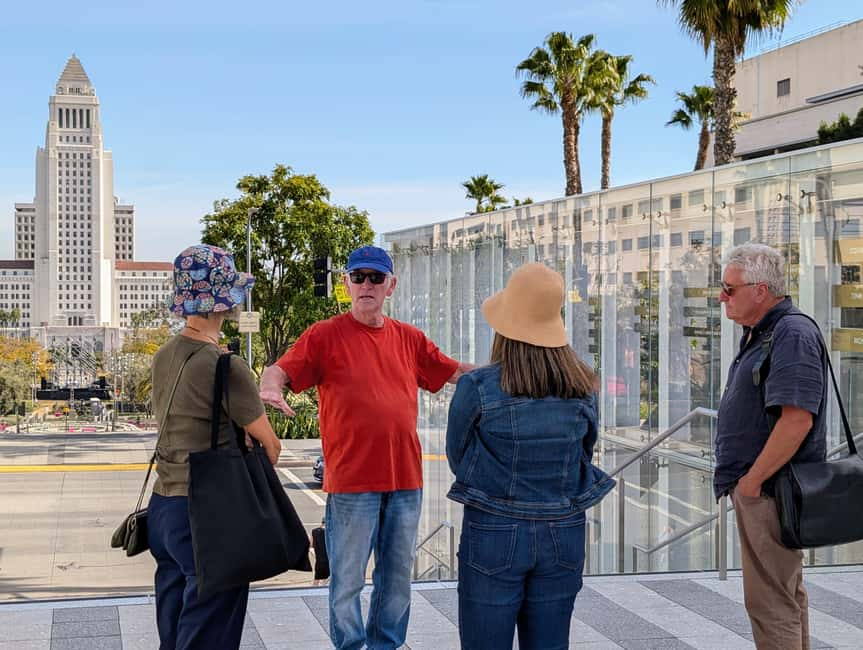
I would choose this experience if you want a compact first look at Downtown Los Angeles culture. It suits you especially well if you enjoy architecture, live music venues, public spaces, and modern art in equal measure.
It is also a good fit if you are unsure how to approach MOCA or The Broad. The guide gives you a starting point, explains major themes, and helps you use limited museum time well. You can then remain at The Broad to keep exploring.
Local residents may find it worthwhile, too. The route covers familiar city landmarks but adds background on the architects, philanthropists, and cultural uses of Bunker Hill. One past participant specifically recommended it for locals as well as people visiting from elsewhere.
You may want a different plan if you dislike walking, want a full day of art, or prefer to avoid any fixed pace. The tour is wheelchair accessible, but the route includes outdoor movement and stairs at the meeting point, so check the setup when booking if you have particular mobility needs.
Booking details worth knowing
The tour lasts about two hours and is conducted in English. It is a small-group experience limited to eight people, with morning and afternoon availability usually offered.
You meet the guide at the top of the stairs at Jerry Moss Plaza. Comfortable shoes are important, and weather-appropriate clothing will make the outdoor portions easier. Cameras are useful, but museum photography rules still apply.
You can cancel up to 24 hours before the start for a full refund, and the reserve-now, pay-later option keeps your plans flexible. The activity also offers skip-the-ticket-line access, which helps protect the short schedule.
Should you book it?
Book this tour if you want a clear, art-led introduction to Bunker Hill rather than a broad bus tour of Los Angeles. The strongest reasons are the artist guide, the eight-person limit, the architectural context, and included visits to both MOCA and The Broad.
I would be more cautious if you want to inspect every gallery or take your time with Kusama’s installations. In that case, use the tour as your orientation, then stay at The Broad afterward, or plan separate museum visits.
For $44, the mix is persuasive. You get the city story outside, selected art inside, and enough guidance to make sense of both. It is a practical choice for a first DTLA visit, with the small group and post-tour museum time helping it deliver more than a rushed checklist.
FAQ
How long does the Downtown LA Arts Tour last?
The tour lasts two hours. Some sessions may run closer to two and a half hours, but you should plan for a compact walking and museum experience.
What museums are included?
Entry to the Museum of Contemporary Art, or MOCA, and The Broad is included. You receive a guided highlights tour at MOCA and a guided visit at The Broad.
Are Yayoi Kusama’s Infinity Mirror Rooms included?
Yes. The experience includes access to The Broad’s Infinity Mirror Rooms by Yayoi Kusama.
Where does the tour meet?
Meet your guide at the top of the stairs at Jerry Moss Plaza.
Is transportation included?
No. Transportation is not included, so you must make your own way to the meeting point and tour area.
Is the tour suitable for wheelchair users?
The activity is listed as wheelchair accessible. Since the tour includes outdoor walking and begins at stairs, check the exact meeting arrangements if you have specific mobility needs.
Can I stay at The Broad after the tour?
Yes. You may remain inside The Broad after the guided tour ends, until the museum closes.
Just added around Los Angeles
- Los Angeles: Speakeasy Bar Hopping Tour with Drink★ 4.7 · 3 reviews
- Private Surf Lesson in Venice Beach, CA★ 5.0 · 3 reviews
- LA: Expo Park Space & Dinosaurs Tour with Cal Science Center★ 5.0 · 3 reviews
- Private Photo Tour of the Best Instagram Spots in Los Angeles★ 5.0 · 3 reviews
- Santa Monica Superhero Exploration Game and Tour★ 5.0 · 3 reviews
- Private Hollywood Sign Hiking Tour with Select Hotel Pickup★ 5.0 · 3 reviews
- Private 5-Hour Limo Tour of Los Angeles and Beach Cities★ 3.5 · 3 reviews
- Hooray for Hollywood: 35-Minute Helicopter Tour★ 4.7 · 3 reviews
Getty & Art Museums, compared.
Private Getty Center to Griffith Observatory Guided Tour
Read our review →
Private Getty Center to Griffith Observatory Guided Tour
Read our review →
Downtown LA Arts Tour with MOCA, The Broad, and Infinity Room
Read our review →Browse the lists this tour appears in