
Reviewed · HISTORICAL TOURS
Los Angeles: Downtown History & Architecture Walking Tour
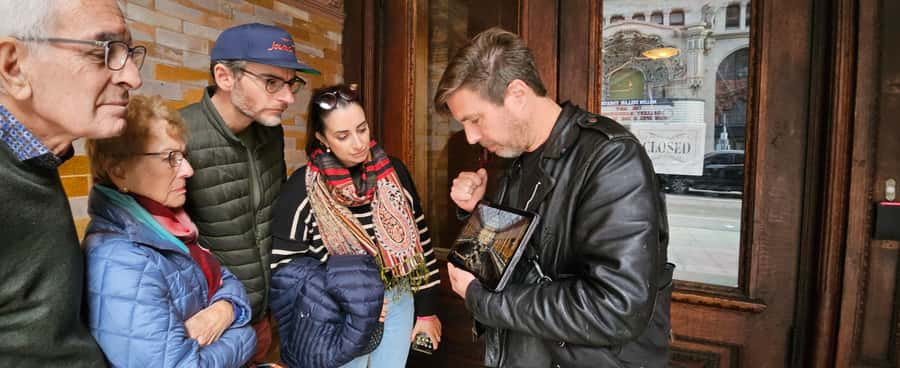
Downtown Los Angeles makes more sense when you look up. This 150-minute walk links movie palaces, old department-store facades, Beaux-Arts landmarks, Art Deco details, and modern city planning into one clear story about how Los Angeles keeps changing. The guide, Mark, brings a Belgian viewpoint and years of life in DTLA to the route.
I like the conversational format, which lets you ask about politics, public spaces, architecture, and city life instead of sitting through a fixed speech. I also like the strong movie connection, from the Broadway Theater District to the Bradbury Building and the famous people associated with downtown, including Charlie Chaplin, JFK, Michael Jackson, Taylor Swift, and Jisoo.
The main drawback is physical: you will walk on city streets for two and a half hours, and the tour is not suitable for children under six, wheelchair users, or people with mobility impairments. Bring water, sunscreen, and good shoes, and dress for the forecast.
In This Review
- Key points at a glance
- Why this DTLA walk feels different
- Starting near the Central Library or Grand Central Market
- Bunker Hill, Angels Flight, and the city’s changing shape
- Grand Central Market and downtown street life
- Broadway’s movie palaces and commercial past
- The Bradbury Building in 20 minutes
- The Last Bookstore and the revived Historic Core
- What the guide’s style adds
- Time, walking effort, and practical value
- Who should book this Downtown Los Angeles tour?
- Is the $30 price worth it?
- Should you book it?
- FAQ
- How long does the Downtown Los Angeles walking tour last?
- How much does the tour cost?
- Where does the tour begin?
- Where does the tour finish?
- Which languages are available?
- Is the tour suitable for children and wheelchair users?
- What should I bring?
Key points at a glance
- A 150-minute walk through DTLA: The route connects Bunker Hill, Angels Flight, Broadway, Grand Central Market, the Bradbury Building, and the Last Bookstore.
- Architecture with social context: You learn how Art Deco, Beaux-Arts, and Modernist design reflect money, politics, transport, and changing ideas about city life.
- Movie history without a studio tour: The Theater District and Bradbury Building help explain why downtown has appeared in so many films and celebrity stories.
- A guide with two viewpoints: Mark combines a Belgian background with long-term experience living in Downtown Los Angeles.
- A useful arrival point: The Central Library is next to the 7th Street Metro station, while another start option is the Grand Central Market Parking Garage.
- A small-group feel is possible: Private groups are available, and the guide can shape the conversation around your interests.
Why this DTLA walk feels different
Many city tours move from landmark to landmark, giving you a date, a name, and a photo stop. This one uses the buildings as evidence. You look at a theater facade, a railway, a library, or an old commercial block, then discuss what that place says about Los Angeles at the time it was built.
That approach suits you if you want more than a quick introduction. Mark’s European background gives him a useful side-by-side way of discussing American cities, and his connection to DTLA adds local detail. He has also hosted a podcast focused on the area, so the tour is built around stories, questions, and observations rather than a memorized script.
The tone is friendly and interactive. You can ask why a building was designed in a certain style, how public space affects city life, or what downtown may look like in the future. An architect in the group found the discussion of social forces and city design especially useful, while even Los Angeles residents found the route showed them parts of their own city they had overlooked.
The emphasis is not only on grand buildings. You also consider the people, businesses, film culture, and planning choices that shaped DTLA. That gives the walk a wider purpose: it helps you understand why Los Angeles feels less like one unified city and more like many eras placed side by side.
A few more Los Angeles trips worth weighing up
- Palm Springs Modernism Architecture & History Bike Tour
★ 5.0 · 359 reviews - Spooky Solvang Ghost Hunting & History Tour
★ 5.0 · 310 reviews - 45-Minute Private Guided Historic Walking Tour in Lititz
★ 5.0 · 143 reviews
Starting near the Central Library or Grand Central Market
You have two possible starting points: the Los Angeles Central Library or the Grand Central Market Parking Garage. Check your booking details carefully, since the meeting point depends on the option you choose.
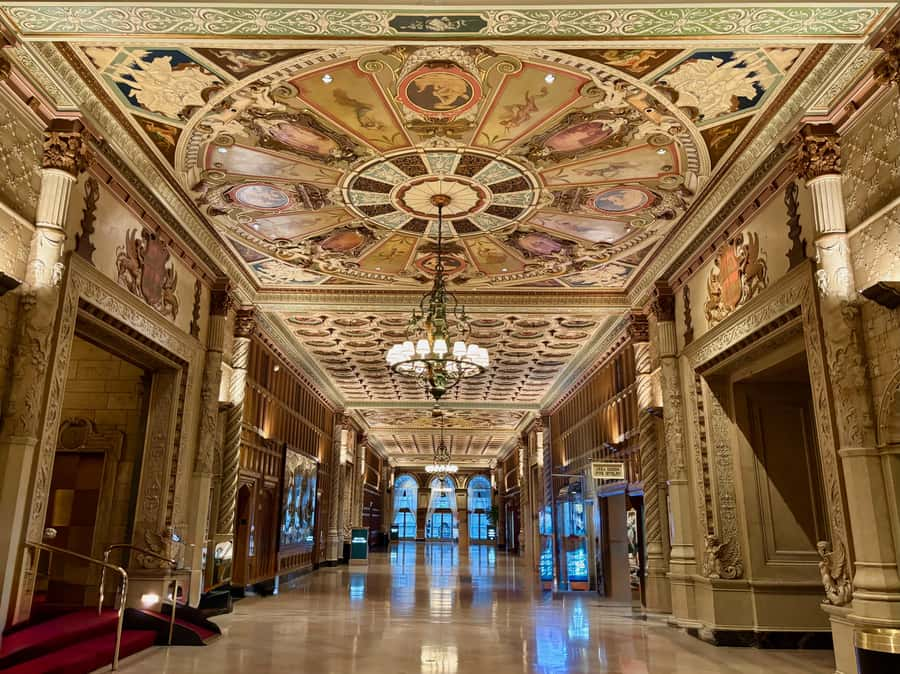
The Central Library is especially convenient if you arrive by public transport. It sits next to the 7th Street Metro station, so you do not need to arrange a car ride just to reach the tour. Starting near the library also puts you beside one of DTLA’s important civic buildings and its mix of Art Deco and Beaux-Arts design.
The Grand Central Market Parking Garage makes sense if you are already in the historic core or driving downtown. Parking in central Los Angeles requires planning, so allow extra time if you choose this option. The market itself is also part of the route, giving you a useful place to grab food before or after the walk.
I would arrive early rather than cutting it close. Downtown blocks can take longer to cross than they look on a map, and the starting point may not be the same one shown in a general tour description.
Bunker Hill, Angels Flight, and the city’s changing shape
The walk introduces Bunker Hill as a place where several versions of Los Angeles meet. It was once an affluent residential district, then became part of a major urban redevelopment effort. Today, its older stories sit beside newer offices, cultural buildings, and public spaces.
This is one of the most useful parts of the tour because it shows that a city’s appearance is not accidental. Streets, towers, plazas, rail lines, and demolition all reflect choices about who a city serves and how it should grow. The conversation may turn toward politics and planning, but the guide keeps those subjects tied to what you can see around you.
Angels Flight adds a memorable physical marker to that story. The short railway is one of downtown’s most recognizable features, and its steep route helps you picture the original challenge of moving between the lower commercial streets and Bunker Hill. The stop works well for photos, but its greater value is the way it makes downtown’s topography easy to understand.
Do not expect an extended ride or a full transport-history presentation. The tour treats Angels Flight as one stop within a wider walking route. Its purpose is to connect the streets below with the elevated district above.
Grand Central Market and downtown street life
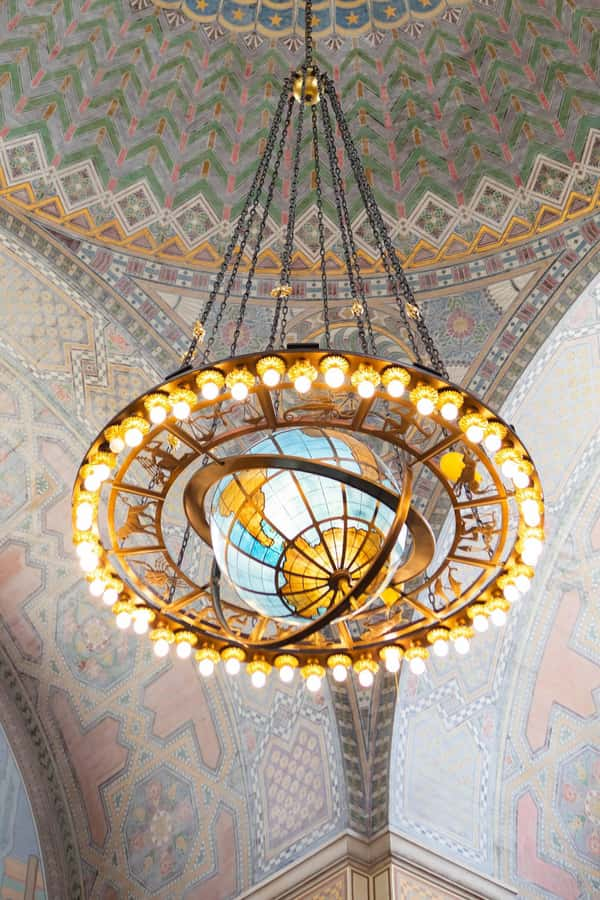
Grand Central Market brings a change of pace. After looking at civic and commercial architecture, you get a short walk through a public food hall with a different kind of energy. The stop lasts about 10 minutes in the supplied route, so this is more of an orientation and sightseeing visit than a scheduled meal.
I would not plan to eat a full lunch during the tour. You may want to return afterward when you have time to browse at your own speed. If you are hungry before the walk, the market can be a practical place to eat, but keep your meeting time in mind.
This stop also helps show how old downtown buildings can take on new uses. The tour looks at the historic core as an area where older commercial spaces are being brought back into daily life. That does not mean every block has been transformed, and the walk does not pretend downtown has no problems. Instead, you see the tension between preservation, new business, housing, public space, and the realities of a large American city.
That honest tone is a strength. You get room to discuss what works, what does not, and how city plans affect ordinary life.
A different kind of day out, same stretch of Southern California:
- Full-Day Iconic Sights of LA, Hollywood, Beverly Hills, Beaches and More
★ 5.0 · 6,147 reviews - Warner Bros. Studio Tour Hollywood
★ 4.5 · 5,246 reviews - Hollywood, Beverly Hills & Celebrity Homes Tour by Open Air Bus
★ 5.0 · 2,557 reviews - Hollywood Sign 2.5-Hour Tour with Comedians and Their Dogs
★ 5.0 · 2,496 reviews
Broadway’s movie palaces and commercial past
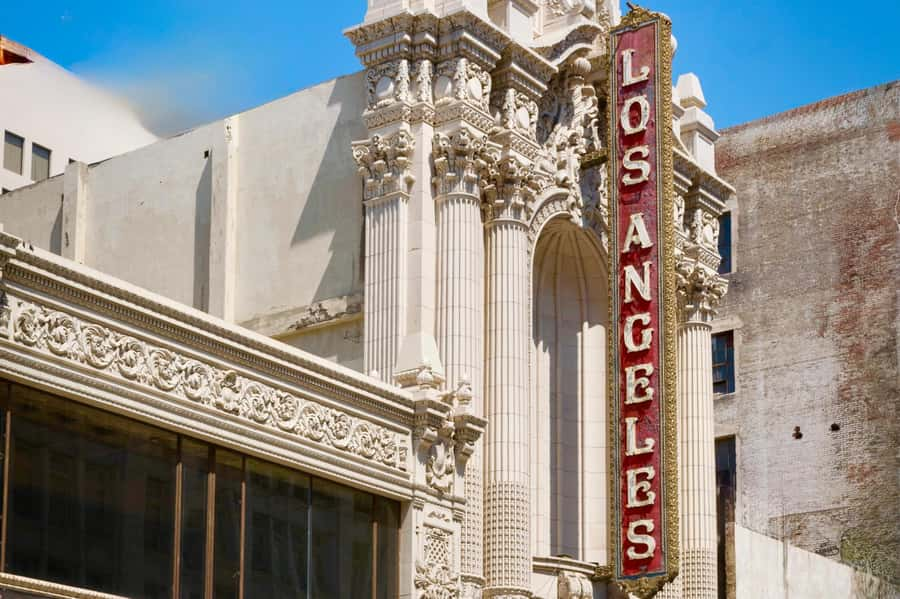
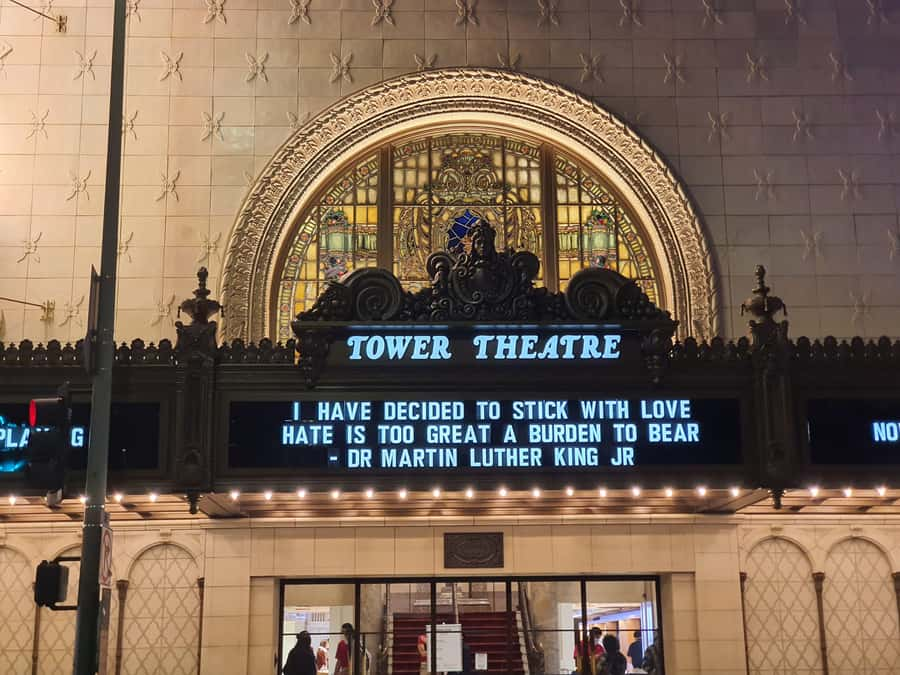
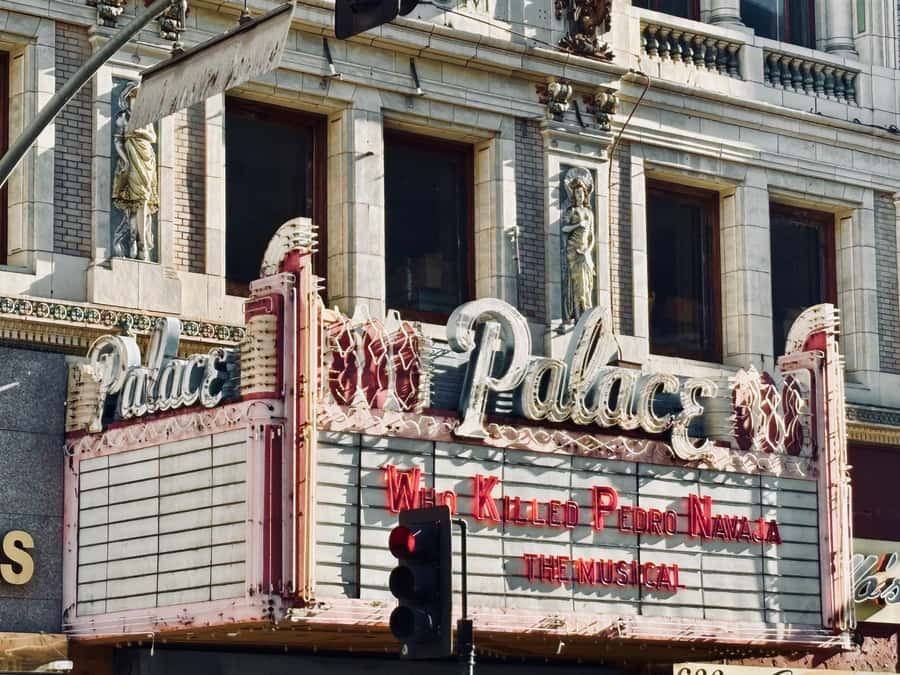
Broadway is the heart of the tour’s film connection. Downtown’s Theater District contains one of the world’s highest concentrations of movie palaces, and the facades still reveal the glamour of an earlier era.
The buildings are not simply backdrops for photographs. They show how entertainment once shaped downtown commerce. Theaters drew crowds, shops, restaurants, and public attention, making Broadway a major business corridor during the 1920s. As you walk, you can connect the ornate exteriors with the social world that supported them.
The guide also uses these streets to explain the relationship between Los Angeles and the movies. You may hear stories connected to Charlie Chaplin and other figures from the city’s film past, along with more recent celebrity and production links. The experience is not a studio visit, so you will not get backstage access or a catalog of film locations. What you get instead is a street-level look at how movie culture became part of downtown’s identity.
I like this balance. The movie stories make the architecture memorable, while the buildings keep the film history grounded in actual places. If you know little about old Hollywood, the theaters give you a visual way into the subject. If you already follow architecture, you can focus on materials, decoration, scale, and preservation.
The Bradbury Building in 20 minutes
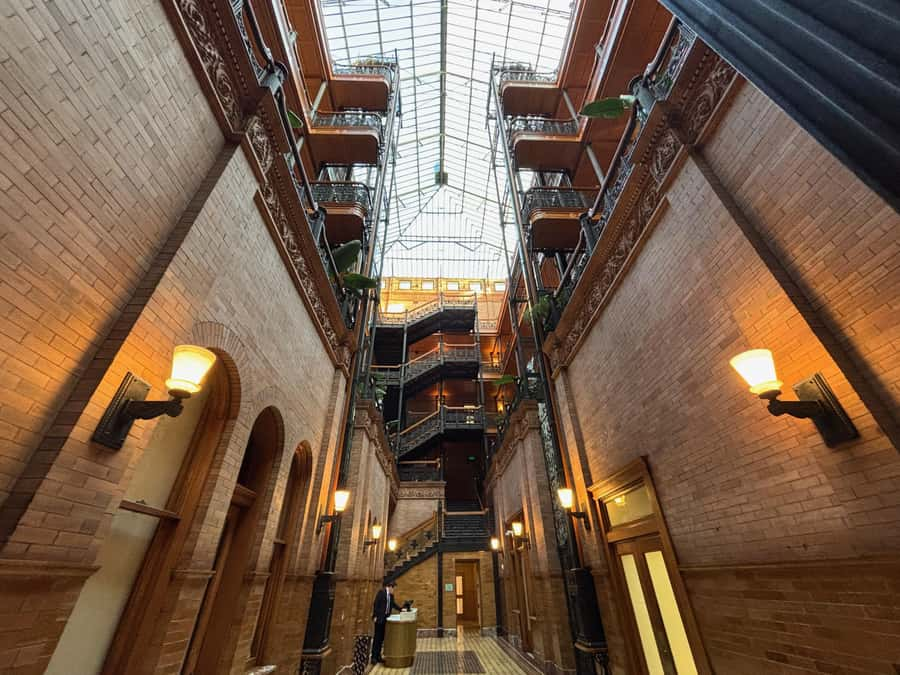
The Bradbury Building is likely the visual centerpiece. The tour allows about 20 minutes here, enough time to look closely rather than simply pause for a quick exterior photo.
Its interior is known for an open central space, dramatic staircases, ironwork, patterned surfaces, and a strong sense of light. The building photographs well, but a guide adds something a camera cannot. You can discuss how the design creates mood, why the space became so useful to filmmakers, and how the building fits into the larger architectural story of DTLA.
Bring your camera, but also look up and around before reaching for it. Small details can disappear when you focus only on the famous view. Mark’s movie stories help connect the building to the screen, while the architecture discussion keeps the stop from becoming a simple photo opportunity.
Access inside can sometimes depend on building conditions or operating rules, so treat the interior visit as part of the planned experience but follow the guide’s instructions. The supplied route includes a guided visit, and the stop is clearly intended to be more than an outside glance.
The Last Bookstore and the revived Historic Core
The Last Bookstore provides a lively contrast to the formal architecture earlier in the walk. Its unusual design and book-focused setting make it one of the best stops for photographs, with about 20 minutes included for a guided visit.
This is also where the tour’s theme of reuse becomes especially clear. An older downtown space has become a popular cultural destination, showing how the Historic Core can support new creative uses while keeping its older character. The stop is quirky without being disconnected from the city-planning conversation.
You will have some time to look around, but do not expect a long shopping break. If you want to browse books at leisure, return later. During the tour, listen for how the guide links the shop to downtown’s wider shift from an older commercial center to a district with restaurants, culture, offices, housing, and creative businesses.
The Last Bookstore is a good stop for mixed groups. Architecture fans get another example of adaptive use, book lovers get a memorable interior, and anyone interested in Los Angeles culture gets a place that feels different from a standard monument.
What the guide’s style adds
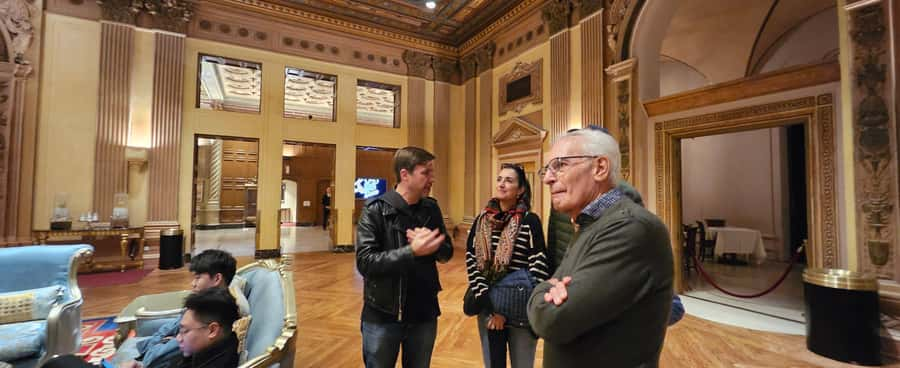
Mark’s biggest contribution is not simply the number of facts he can provide. It is the way he connects facts. A building may lead to a discussion of migration, a theater may lead to film culture, and a railway may lead to a talk about topography and redevelopment.
The conversation can adjust to the group. Couples interested in architecture can spend more time on design, while first-time visitors can ask basic questions about downtown’s past and future. This flexibility is especially helpful if you are traveling with people who have different interests.
The strongest praise focuses on his warmth, enthusiasm, and ability to explain difficult subjects in plain terms. He has also tailored walks to individual interests, including a private experience for two Los Angeles natives. That suggests the private-group option may be worth considering if you want a more focused discussion.
The tour is offered in English and French. If you prefer French, confirm the language option when booking. The description identifies the guide as Belgian, but Mark is the only guide name provided in the tour information, so do not assume every departure will have the same host.
Time, walking effort, and practical value
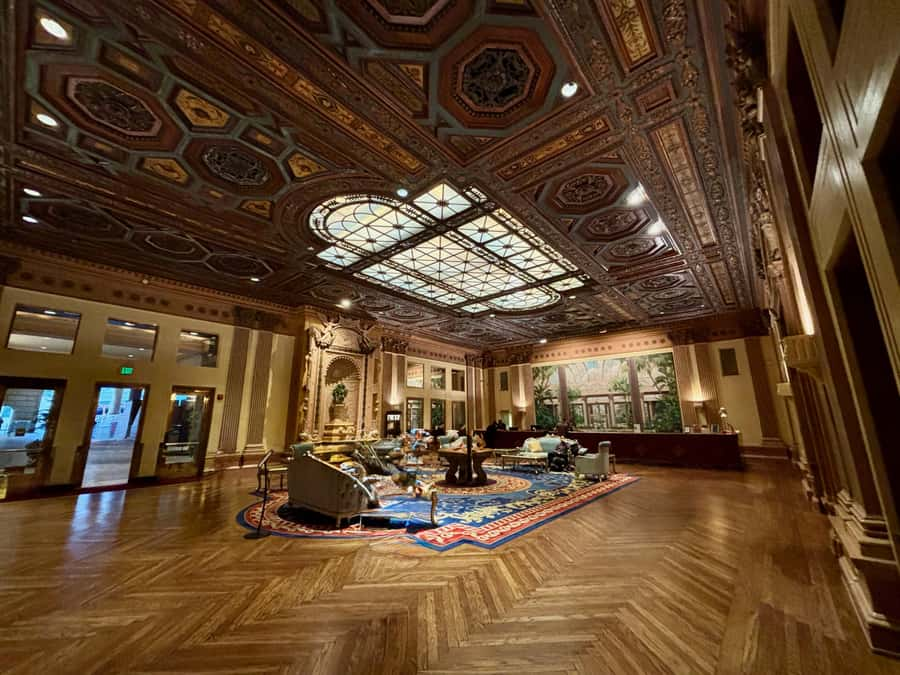
At $30 per person, the tour offers solid value if you want context rather than a simple route between attractions. You are paying for two and a half hours of guided interpretation, access to several important downtown sights, and the chance to ask questions as you go. The price is particularly reasonable for visitors who would otherwise pass these buildings without understanding their purpose.
One practical wrinkle is timing. A previous walk ran longer than the advertised duration, which worked well for that group but may matter if you have a dinner reservation, museum ticket, or train to catch. Keep some flexibility after the scheduled finish.
The route ends at either the Central Library or Hotel Per La, Autograph Collection. That gives you a useful choice depending on where you are headed next, but confirm the exact drop-off arrangement in advance.
Wear supportive shoes. You will be on your feet for 150 minutes, with stops inside buildings and walks between them. A hat, sunscreen, water, and a camera are sensible. Check the weather before leaving, since the experience takes place outdoors for much of its duration.
The tour is not suitable for wheelchair users or people with mobility impairments, and children under six cannot join. The information does not give a detailed step-free route, so anyone with limited mobility should contact the provider before booking rather than rely on the general description.
Who should book this Downtown Los Angeles tour?
I would choose this walk if you like architecture, old movie culture, city planning, or local stories that go beyond the standard sightseeing list. It is also a good choice early in a Los Angeles visit because the guide can help you understand how several downtown districts fit together.
It suits first-time visitors, but it is not only for them. Los Angeles residents and repeat visitors can get plenty from the discussion of redevelopment, public space, and the forces that shaped the city. The interactive style means you do not need a background in architecture.
You may want a different experience if you dislike conversation, need a very predictable finish time, or want long periods for shopping and eating. This is a walking discussion with sightseeing stops, not a hop-on, hop-off tour or a formal museum program.
Free cancellation up to 24 hours before the start and the reserve-now, pay-later option make the booking fairly flexible. Availability and start times vary, so check those details before you commit.
Is the $30 price worth it?
For a two-and-a-half-hour private or small-group-style walk with a strong local focus, $30 is a fair price. The value comes from the connections between the stops: Bunker Hill explains the city’s physical changes, Broadway explains its movie and commercial past, and the Bradbury Building and Last Bookstore show how downtown’s spaces continue to be used.
You should not book it expecting entry to every landmark, a meal at Grand Central Market, or a full tour of each theater. The route gives you a well-chosen sample, then uses those places to explain larger ideas. That makes it more useful than a checklist tour, but less suitable if you want extended time at each attraction.
Should you book it?
Book this tour if you want DTLA to feel understandable, not just photogenic. Mark’s local connection, Belgian perspective, movie stories, and open discussion give the walk a human scale, while the Bradbury Building, Angels Flight, Broadway theaters, Grand Central Market, and Last Bookstore provide plenty to see.
Skip it if long walks are difficult or if your schedule cannot absorb a possible overrun. For most visitors who can walk comfortably and enjoy asking questions, this is a thoughtful way to meet downtown before exploring it on your own.
FAQ
How long does the Downtown Los Angeles walking tour last?
The scheduled duration is 150 minutes, or two and a half hours. One reported walk lasted longer than advertised, so leave some extra time afterward.
How much does the tour cost?
The price is $30 per person.
Where does the tour begin?
There are two possible starting points: the Grand Central Market Parking Garage and the Los Angeles Central Library. The meeting point depends on the option booked.
Where does the tour finish?
The two possible drop-off locations are the Central Library and Hotel Per La, Autograph Collection.
Which languages are available?
The live guide options are English and French.
Is the tour suitable for children and wheelchair users?
Children under six are not permitted. The tour is also not suitable for wheelchair users or people with mobility impairments.
What should I bring?
Wear comfortable shoes and dress for the weather. Bring water, sunscreen, a hat, and a camera. The nearby Metro station makes public transport access convenient.
Just added around Los Angeles
- Private Surf Lesson in Venice Beach, CA★ 5.0 · 3 reviews
- Los Angeles: Speakeasy Bar Hopping Tour with Drink★ 4.7 · 3 reviews
- LA: Expo Park Space & Dinosaurs Tour with Cal Science Center★ 5.0 · 3 reviews
- Private Photo Tour of the Best Instagram Spots in Los Angeles★ 5.0 · 3 reviews
- Santa Monica Superhero Exploration Game and Tour★ 5.0 · 3 reviews
- Private Hollywood Sign Hiking Tour with Select Hotel Pickup★ 5.0 · 3 reviews
- Private 5-Hour Limo Tour of Los Angeles and Beach Cities★ 3.5 · 3 reviews
- Hooray for Hollywood: 35-Minute Helicopter Tour★ 4.7 · 3 reviews
Historical Tours, compared.

Palm Springs Modernism Architecture & History Bike Tour
Read our review →
45-Minute Private Guided Historic Walking Tour in Lititz
Read our review →
Natural History Museum of Los Angeles County Admission
Read our review →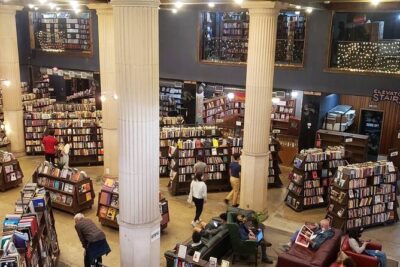
The History and Architecture of Downtown Los Angeles
Read our review →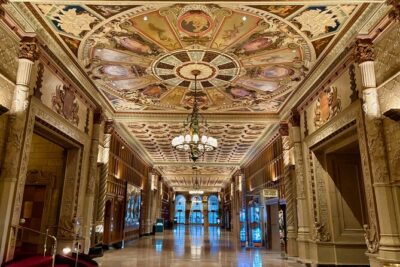
Downtown Los Angeles History and Architecture Walking Tour
Read our review →
The History and Architecture of Downtown Los Angeles
Read our review →Browse the lists this tour appears in