
Reviewed · MUSEUMS
Museum Row Tour: The Fast & The Fossilized on Wilshire Blvd
The most surprising part of this Museum Row walking tour is how quickly Los Angeles shifts from Ice Age fossils to fine art, vintage cars, street lamps, and Hollywood history. In about 90 minutes, you follow Wilshire Boulevard through a compact cultural district that can feel confusing when explored on your own.
I like the way the guide connects the institutions instead of treating them as unrelated stops. I also like the efficient format: you get a useful first look at several major attractions for $34, with guides such as Chris and Paul adding local stories and practical direction.
The main catch is simple: this is primarily an outdoor guided tour, not a full museum visit. Museum admission is not generally included, and the quick timing means you will need extra hours and separate tickets if you want to see the indoor collections.
In This Review
- Key points to know before booking
- Why Museum Row works best as a guided walk
- La Brea Tar Pits: an unusual start in prehistoric Los Angeles
- LACMA and Urban Light: art without an indoor museum visit
- Petersen Automotive Museum: a quick look at the car culture of LA
- The Academy Museum: finish with Hollywood history
- What the guides add to the route
- Is $34 a good value?
- Timing, transport, and practical details
- Who should book the Museum Row tour?
- Should you book it?
- FAQ
- How long does the Museum Row tour last?
- Where does the tour begin?
- Where does the tour end?
- Is museum admission included?
- What language is the tour offered in?
- How many people can join the tour?
- Can I cancel for a full refund?
Key points to know before booking
- La Brea Tar Pits begins the tour with Ice Age fossils and active-looking asphalt seeps, giving the route an unusual natural-history opening.
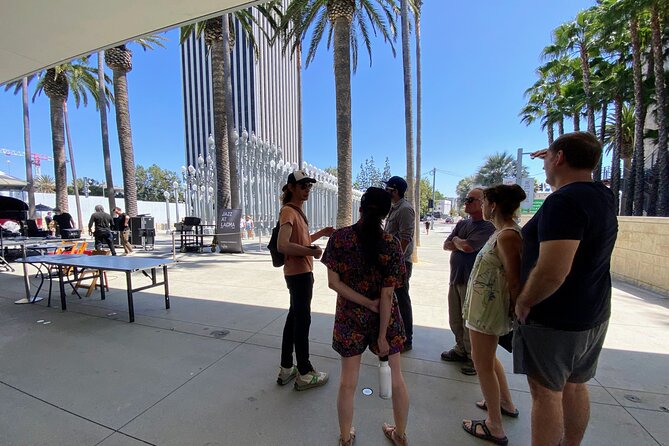
- LACMA and Urban Light are covered mainly from outside, with time for context and photographs rather than a full art museum visit.
- Petersen Automotive Museum gets a short exterior introduction, so car fans should budget extra time and admission money for the galleries.
- The Academy Museum is the final stop, a useful finish for movie fans, but you should verify exactly what indoor access your booking includes.
- Chris and Paul are named guides praised for lively storytelling, local facts, and the ability to answer offbeat questions.
- The group is capped at 15 people, making it easier to hear the guide than on a large city sightseeing outing.
Why Museum Row works best as a guided walk
Los Angeles is often sold as a city of separate attractions spread across long distances. Museum Row is one of the exceptions. Along this stretch of Wilshire Boulevard, you can move from the La Brea Tar Pits to LACMA, Petersen, and the Academy Museum without arranging several rides.
That compact setting is the real value of the tour. You are not simply being shown four buildings. You are given a basic map of how the district fits together, along with enough background to decide where you want to spend the rest of your day.
The tour lasts about 1 hour 30 minutes and is offered in English. It begins near Wilshire and Curson and ends outside the Academy Museum at 6067 Wilshire Boulevard. Since the route is a walk, wear comfortable shoes and allow time before or after the tour for parking, museum entry, food, or a longer visit inside one of the institutions.
The maximum group size is 15. That is small enough for a guide to respond to questions, take photos, and keep the group together without the feel of a large bus excursion. It is still a group outing, so the pace will not be tailored entirely to your interests.
A few more Los Angeles trips worth weighing up
- Los Angeles: Petersen Automotive Museum Entry & Vault Access
★ 4.8 · 264 reviews - Los Angeles: Battleship Iowa Museum Ticket
★ 4.6 · 249 reviews - La Brea Tar Pits and Museum Admission Ticket with Excavator Tour
★ 4.5 · 193 reviews
La Brea Tar Pits: an unusual start in prehistoric Los Angeles
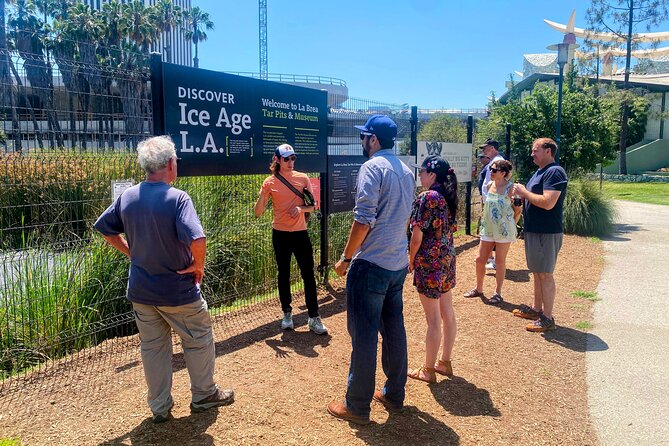
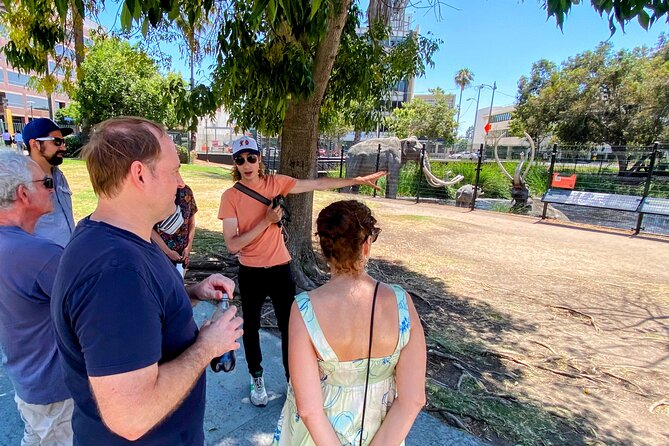
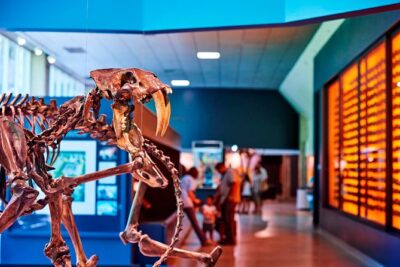
The first stop, La Brea Tar Pits and Museum, gives the tour its most distinctive opening. Natural asphalt has seeped from the ground for tens of thousands of years, trapping and preserving Ice Age animals. Saber-toothed cats, mammoths, dire wolves, and other creatures are part of the story here.
This is not the standard polished museum district introduction. You begin with sticky ground, fossil beds, and the strange fact that prehistoric animals once moved through the same general part of Los Angeles. The guide helps explain why the pits mattered and how the fossils connect to the museum nearby.
About 30 minutes is assigned to the stop, and admission to the guided outdoor portion is listed as free. That timing is enough for an overview and a look at the site, but not a full museum visit. If natural history is a priority, plan a return visit or add the indoor admission separately.
A guide can also make this stop easier to appreciate. Without context, the tar pits can look like dark pools in a city park. With an explanation of preservation and the animals found there, the place becomes much more than a curiosity.
Families should find this section especially appealing. One child described the outing as fun and said the guide even saved the group from tar, a playful detail that captures the hands-on feel of this part of the walk. Still, keep in mind that the activity requires good weather, so outdoor conditions matter.
LACMA and Urban Light: art without an indoor museum visit
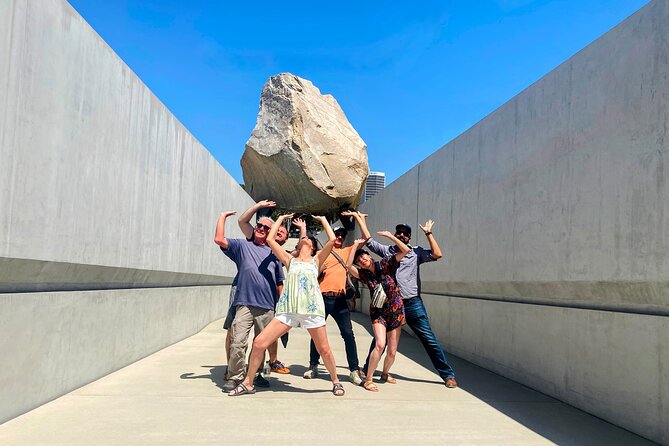
From La Brea, the walk continues to the Los Angeles County Museum of Art, usually called LACMA. It is the largest art museum in the western United States, with collections reaching from ancient works to current art, including painting, sculpture, photography, textiles, decorative arts, and installations.
The tour does not take you through the galleries. Instead, the guide discusses the outside art and gives you a sense of the institution’s scale and role in Los Angeles. This is helpful if you are trying to choose between several museums and have limited time, but it is not a substitute for an LACMA ticket.
The exterior portion lasts about 20 minutes. That is enough for a concise introduction, not enough to examine a large installation in detail or visit the collection. If you already know you want to see the galleries, treat this stop as an orientation and return later.
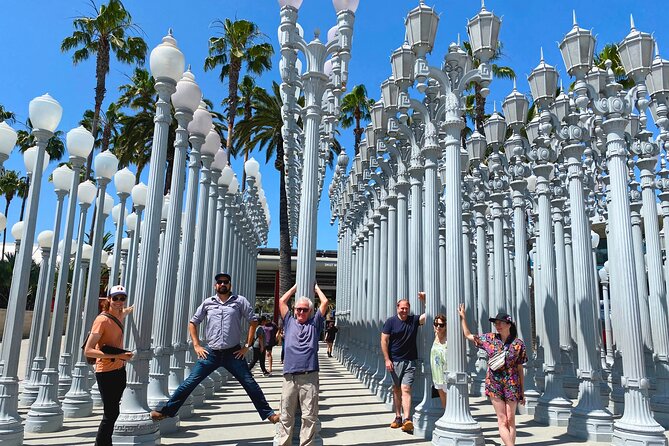
The next stop is Urban Light, the famous arrangement of 202 restored vintage street lamps. The tour allows about 10 minutes here, which is mainly photo time and a quick explanation of why the installation has become one of Los Angeles’s most recognizable public artworks.
You will likely want your phone ready. The lamp rows create an easy photo opportunity, and the guide may take pictures for the group. One useful part of the experience is that the guide can position the stop within the wider museum district instead of treating it as an isolated photo checkpoint.
The short visit has a tradeoff. Ten minutes is efficient, but it can feel rushed if you want several photos or the area is busy. Think of Urban Light as a memorable pause between museums, not a separate attraction requiring a long stay.
Petersen Automotive Museum: a quick look at the car culture of LA
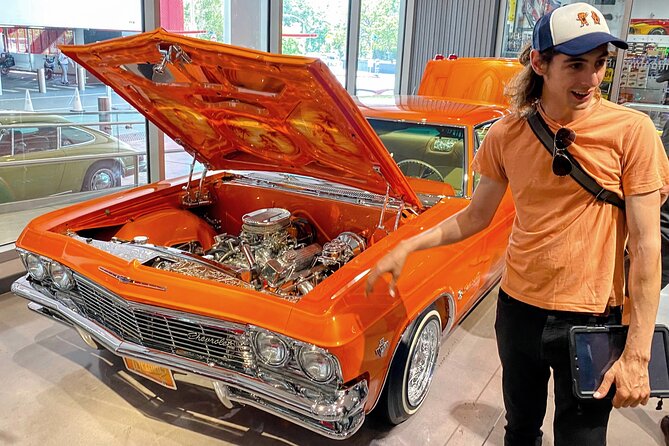
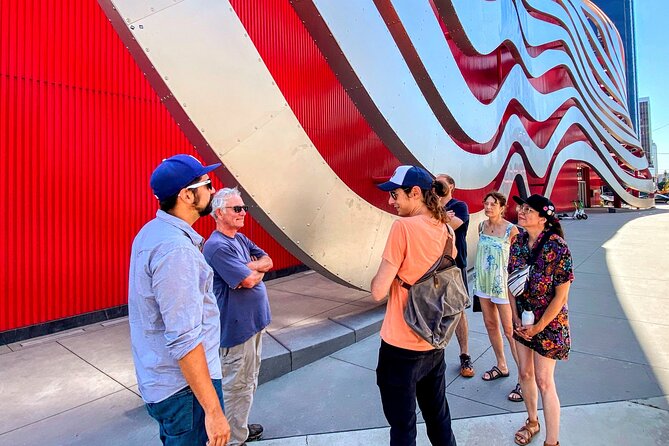
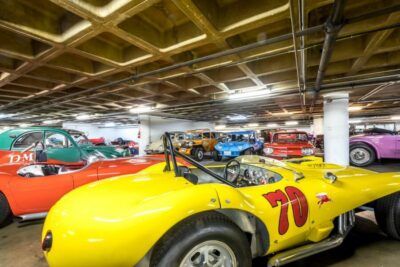
The Petersen Automotive Museum changes the subject again. Its focus is the development of transportation and its effect on society, with classic, vintage, and modern cars, motorcycles, and other vehicles.
The tour gives you about 30 minutes around this stop, but the published inclusions specify guided outdoor museum areas and do not include museum admission. That means you should not assume the $34 tour price gets you into the full collection.
This distinction matters most to car enthusiasts. The Petersen is not a place you will want to rush through if you enjoy design, racing, engineering, or automotive history. The tour can show you where the museum fits in the route and provide an introduction, but the indoor exhibits require additional planning and payment.
A café is available at the museum, which may help if you decide to extend your visit. The tour itself is not designed as a lunch break, so you will need to arrange food before or after the walk rather than count on a relaxed meal during the 90-minute schedule.
The Petersen also adds a useful Los Angeles angle. Cars are not just objects here. They connect to the city’s transportation story and daily life. Even if you are not an automotive enthusiast, the stop gives the route a local subject that differs from the fossils and art nearby.
A different kind of day out, same stretch of Southern California:
- Full-Day Iconic Sights of LA, Hollywood, Beverly Hills, Beaches and More
★ 5.0 · 6,147 reviews - Warner Bros. Studio Tour Hollywood
★ 4.5 · 5,246 reviews - Hollywood, Beverly Hills & Celebrity Homes Tour by Open Air Bus
★ 5.0 · 2,557 reviews - Hollywood Sign 2.5-Hour Tour with Comedians and Their Dogs
★ 5.0 · 2,496 reviews
The Academy Museum: finish with Hollywood history
The final destination is the Academy Museum of Motion Pictures, operated by the organization behind the Oscars. The museum opened in 2021 and explores the art, history, and science of filmmaking through exhibitions, film artifacts, costumes, props, and interactive displays.
The building itself is part of the appeal. It was designed by Renzo Piano and includes the glass-domed David Geffen Theater. The museum also offers film screenings and special programs, though those are separate from the walking tour unless specifically included with your booking.
Ending here makes sense. After prehistoric animals, public art, and cars, the route finishes with the subject most closely tied to Los Angeles’s global identity. If you enjoy movies or awards-season history, this may be the stop that makes you want to stay longer.
The supplied tour details list museum admission tickets as not included, with the tour focused on outdoor areas. One detailed account describes having time at the Academy Museum and reaching the top of the sphere for views over Los Angeles and the tar pits, but access can depend on the booking arrangement. I would confirm Academy entry before paying, especially if indoor admission is the main reason you are considering this tour.
Even without a full indoor visit, the guide’s overview can help you decide how to use the museum later. If you do go inside, allow much more time than the guided route provides. The Academy has enough material for a separate half-day visit, especially if you stop to read displays or attend a program.
What the guides add to the route
The strongest part of this experience is the guide-led storytelling. Chris is repeatedly praised for being enthusiastic, friendly, and full of local facts. He has guided for years and has even taught other guides, according to the information provided about his background.
Paul is also praised for his clear explanations, particularly at La Brea. His approach helped connect the asphalt pits with the natural-history story before the group moved on to art and museums.
The most useful guide skill here is connection. A person can walk past LACMA, Petersen, or the Academy Museum and see impressive buildings without understanding why they are together. A good guide supplies the links, points out less obvious details, and answers questions that do not fit neatly into a printed museum label.
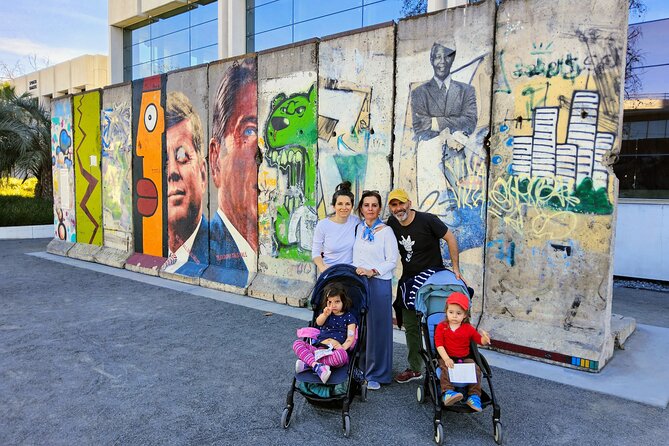
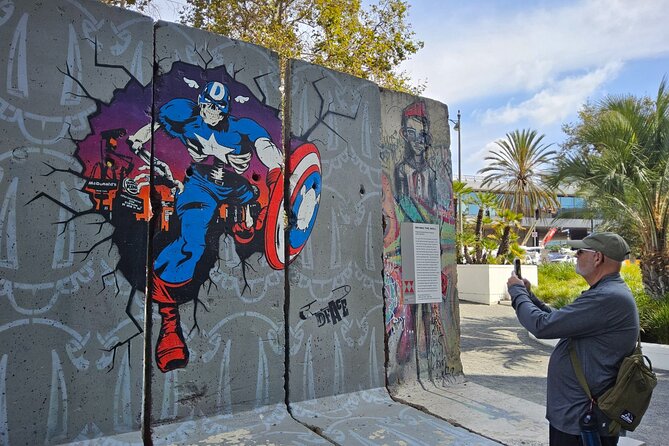
You may also get small discoveries along the way. One account describes seeing a section of the Berlin Wall in Los Angeles, a detail that would be easy to miss while walking between the better-known sights. These unexpected facts are part of the reason to choose a guided introduction instead of simply following a map.
Guide quality can vary from one date to another, so I would not book on the assumption that a particular person will lead every departure. Chris and Paul are the named examples associated with the experience, and the strongest praise focuses on guides who are engaged rather than simply reciting information.
Is $34 a good value?
At $34 per person, the tour is reasonably priced if you want orientation, local background, and a planned route through Museum Row. You are paying for an English-speaking guide, a small group capped at 15, and a compact introduction to several major attractions.
The value is weaker if you expect four complete museum visits. Indoor admission is listed separately, and most of the route is outside. Once you add tickets for LACMA, Petersen, or the Academy Museum, your total day’s spending will be much higher.
I see the tour as a planning tool. It helps you identify the places worth revisiting and prevents you from wasting your limited Los Angeles time figuring out the district’s layout. For a first visit, that can be worth more than a longer, unfocused museum day.
Group discounts may be available, and the ticket is mobile, which keeps the booking simple. The experience is often reserved about 21 days ahead, suggesting that you should not leave it until the last minute if your schedule is fixed.
Timing, transport, and practical details
The meeting point is at Wilshire and Curson in Los Angeles. The finish is outside the Academy Museum at 6067 Wilshire Boulevard, so you should plan your return trip from a different point than where you started.
The area is near public transportation, but parking is not included. If you are driving, allow time to find and pay for parking before the start. If you use public transportation, check your route to the Wilshire and Curson meeting point and remember that the tour will end farther east or west along the boulevard, depending on the exact walking route.
The activity requires good weather. That is worth taking seriously because the route is built around outdoor museum areas, sidewalks, and public installations. If poor weather forces cancellation, you can be offered another date or a full refund.
Free cancellation is available up to 24 hours before the start time. Changes or cancellations made within 24 hours are not refunded, and the experience also requires a minimum number of participants. Confirmation arrives at booking, and service animals are allowed.
Most people can participate, but this is still a 90-minute walking outing. If you need a slower pace or frequent rest stops, ask the provider before booking. The maximum group size is modest, but the tour is not presented as a private or fully customized experience.
Who should book the Museum Row tour?
I would recommend it to first-time visitors who want a quick introduction to several major cultural sites. It also suits people with one free morning or afternoon who would rather let a guide handle the route and give them a short list of places to revisit.
Families may appreciate the mix of fossils, cars, street lamps, and movies. The subjects change often enough to keep the walk from feeling like one long art lecture, and the guide can make the La Brea material accessible to children.
It is also a good fit for returning Angelenos who want context they missed before. One participant had previously lived in the Los Angeles area and still found the local stories useful. That is a fair measure of the tour’s purpose: it is not only for first-time sightseers.
I would skip it if you want a quiet, unhurried day inside one museum. Art specialists, car fans, and film buffs may get more from buying direct admission and spending several hours at their favorite institution. The guided walk gives you breadth, not depth.
Should you book it?
Book this tour if you want a fast, guided introduction to Museum Row and understand that the main experience is outdoors. The combination of La Brea’s fossils, LACMA’s public art, Urban Light, Petersen’s car culture, and the Academy Museum creates a varied route that is hard to assemble efficiently on your own.
Before booking, confirm which indoor admissions are included, especially at the Academy Museum. If you treat the tour as your complete museum day, $34 will not tell the whole cost. If you treat it as a smart orientation followed by one or two carefully chosen museum visits, it offers solid value and a clear sense of how this part of Los Angeles fits together.
FAQ
How long does the Museum Row tour last?
The tour lasts approximately 1 hour 30 minutes.
Where does the tour begin?
It begins at Wilshire Boulevard and Curson in Los Angeles, California.
Where does the tour end?
The tour ends outside the Academy Museum of Motion Pictures at 6067 Wilshire Boulevard.
Is museum admission included?
The listed inclusions cover an English-speaking guide and guided outdoor museum areas. Museum admission tickets are listed as not included and may need to be purchased separately.
What language is the tour offered in?
The tour is offered in English.
How many people can join the tour?
The group has a maximum of 15 participants.
Can I cancel for a full refund?
Yes. You can cancel at least 24 hours before the experience starts for a full refund. Cancellations or changes made less than 24 hours before the start time are not refunded or accepted.
Just added around Los Angeles
- Los Angeles: Speakeasy Bar Hopping Tour with Drink★ 4.7 · 3 reviews
- Private Surf Lesson in Venice Beach, CA★ 5.0 · 3 reviews
- LA: Expo Park Space & Dinosaurs Tour with Cal Science Center★ 5.0 · 3 reviews
- Private Photo Tour of the Best Instagram Spots in Los Angeles★ 5.0 · 3 reviews
- Santa Monica Superhero Exploration Game and Tour★ 5.0 · 3 reviews
- Private Hollywood Sign Hiking Tour with Select Hotel Pickup★ 5.0 · 3 reviews
- Private 5-Hour Limo Tour of Los Angeles and Beach Cities★ 3.5 · 3 reviews
- Hooray for Hollywood: 35-Minute Helicopter Tour★ 4.7 · 3 reviews
Museums, compared.
Petersen Automotive Museum Entry & Vault Access
Read our review →
La Brea Tar Pits and Museum Admission Ticket with Excavator Tour
Read our review →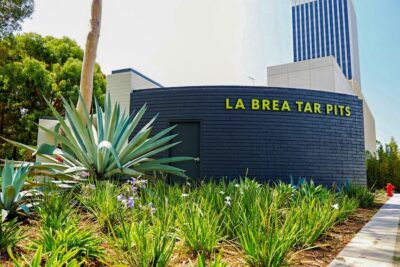
Hollywood Medieval Torture Museum Ticket with Ghost Hunting
Read our review →
Natural History Museum of Los Angeles County Admission
Read our review →
Browse the lists this tour appears in