
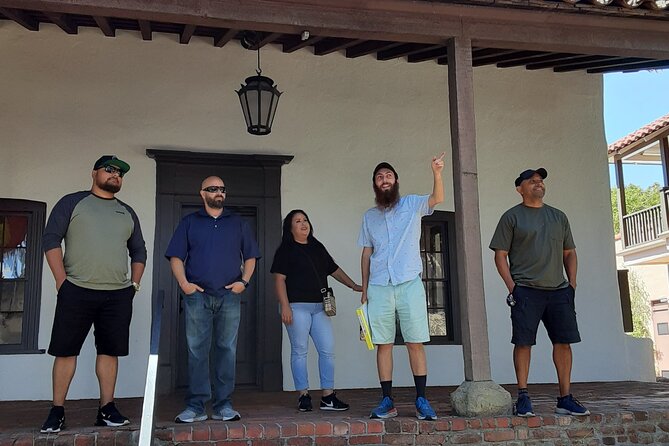
Reviewed · HISTORICAL TOURS
Private Santa Barbara History and Architecture Walking Tour
Santa Barbara’s story is easiest to grasp on foot, where an 18th-century adobe can sit beside a 1920s Spanish Colonial Revival building. This private tour connects the Presidio, old family homes, ornate courtyards, theaters, gardens, and civic buildings into one clear walk through the city’s past.
I like the way Sullivan Israel uses old photographs and historical images to make buildings feel personal, not just pretty. I also like the flexible pace: you can ask about architecture, local families, food, or modern Santa Barbara and shape the outing around your interests.
The main consideration is time. Two to three hours covers a lot of ground, but several stops are viewed from outside or briefly. The Historical Museum has an admission fee, parking is not included, and the walking tour needs good weather.
In This Review
- Key points at a glance
- Why this walk gives Santa Barbara more context
- El Presidio: Santa Barbara begins with adobe
- Adobes, courtyards, and old family homes
- City Hall and Casa de la Guerra
- El Paseo and La Arcada turn walking into discovery
- The County Courthouse is the architectural centerpiece
- The theaters and parks provide a change of pace
- Alice Keck Park adds shade, water, and turtles
- The Post Office and El Cuartel close the historical loop
- Who gets the most value from this private tour
- Should you book the Santa Barbara History and Architecture Walking Tour?
- FAQ
- How long does the Santa Barbara walking tour last?
- Where does the tour begin and end?
- Is this a private tour?
- Is admission to the Santa Barbara Historical Museum included?
- Is the County Courthouse interior always available?
- What happens if the weather is poor?
Key points at a glance
- A private route through old Santa Barbara: Only your group takes part, so the guide can adjust the pace and focus.
- Presidio and El Cuartel: See some of the city’s oldest surviving structures, including an adobe built in 1788.
- Architecture beyond the obvious: Look for George Washington Smith designs, old adobes, tiled passageways, theaters, and Streamline Moderne details.
- The courthouse is the major interior highlight: Hand-painted tiles, carved details, a mural room, and a clock tower viewpoint may be available.
- A useful first-day orientation: You finish near the starting point, close to restaurants, shops, and other downtown sights.
- Strong for families and curious locals: The stories work well for adults and older children, and the pace can be adjusted.
Why this walk gives Santa Barbara more context
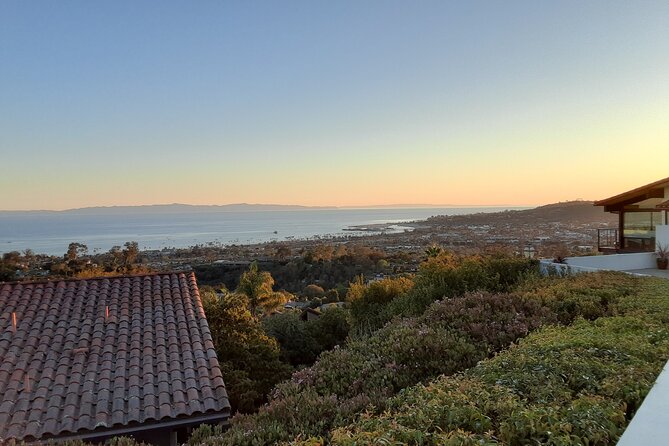
Santa Barbara can look like a polished seaside town at first glance. The tour helps you see the layers underneath: Spanish military settlement, Mexican-era adobe homes, American civic buildings, earthquake rebuilding, and the city’s deliberate turn toward a Spanish-style identity.
That last part matters. The Spanish Colonial Revival look was not simply an old style preserved by accident. Much of downtown changed after the 1925 earthquake, and buildings such as the County Courthouse, City Hall, El Paseo, and the Arlington Theatre helped create the unified appearance Santa Barbara is known for today.
You begin at El Presidio de Santa Bárbara State Historic Park at 123 East Canon Perdido Street. The listed tour hours are Monday through Friday from 10 a.m. to 3 p.m. The activity lasts about two to three hours, though the private format allows some room for questions and adjustments.
Sullivan’s approach is especially useful if you want more than dates and construction details. He draws on historical photographs and old images, and his background in engineering adds another angle to the way buildings were made. The focus is not only on famous landmarks. You also look for small clues in courtyards, salvaged adobe walls, street patterns, and decorative details that are easy to miss alone.
A few more Santa Barbara trips worth weighing up
- Spooky Solvang Ghost Hunting & History Tour
★ 5.0 · 310 reviews - Santa Barbara Ghost Tours “Dead of the Night” History, Mystery!
★ 5.0 · 39 reviews - Historic Santa Barbara Food Tasting Tour
★ 5.0 · 26 reviews
El Presidio: Santa Barbara begins with adobe
The first stop is El Presidio de Santa Bárbara State Historic Park, where you spend about 20 minutes. Built in 1782, the Presidio is one of California’s oldest structures and offers a direct introduction to the city’s Spanish military past.
The complex includes original rooms, soldiers’ gardens, a chapel, and recreated objects from everyday life in the 18th century. You learn how the buildings were made from materials found in the surrounding countryside. That detail helps you picture the practical limits of life at the far edge of the Spanish Empire.
This is not a grand fortress in the European sense. Its importance comes from survival and setting. The adobe walls, simple rooms, and garden spaces show how a working military outpost functioned. If you arrive with only a general idea of Santa Barbara’s origins, this stop gives the rest of the walk a useful starting point.
You then pass the Rochin Adobe, built in 1856 by a descendant of Captain Francisco Ortega, the Presidio’s first comandante. Its adobe bricks were salvaged from the nearly ruined fort. Around 1900, the building received its wooden clapboard covering, which remains today. It is a good example of how Santa Barbara’s buildings changed over time rather than fitting neatly into one period.
Adobes, courtyards, and old family homes
At the Santa Barbara Historical Museum, you spend about 20 minutes. The museum itself was built in 1964 in an early California adobe style and contains exhibits on local history, paintings, and etchings.
Admission is not included, so decide ahead of time if you want to enter. The courtyard may be enough for some people, especially if you are concentrating on architecture. It contains two adobe structures dating from 1817 and provides a pleasant place for photographs.
The next short stop, at 112 East De la Guerra Street, brings together two very different pieces of Santa Barbara. The Meridian Studios were designed by George Washington Smith and completed in 1925. Their pastel stucco walls and large glass windows reflect the architectural shift that shaped downtown in the early 20th century.
Behind them is the Lugo Adobe, built by a retired Presidio soldier in the early 19th century. The adobe has been preserved and remodeled, but its tucked-away position means you might pass through the area without noticing it on your own. This is the sort of stop that makes a private walk worthwhile: the guide directs your attention to a place that is easy to overlook.
At 802 Anacapa Street, the building incorporates two original Mexican-period adobes and the former 1906 Nardi Hotel, despite the larger structure being built in 1945. Behind it are a courtyard, a garden, and Presidio Street, technically one of Santa Barbara’s earliest city streets.
You also pass adobes along East De la Guerra Street built in 1849 by José de la Guerra, the fifth comandante of the Presidio. They are examples of Mexican-Californio architecture and were later sold to Gaspar Orena. The fact that descendants of the Orena family still own the buildings gives these homes a connection to living local history, not just museum history.
City Hall and Casa de la Guerra
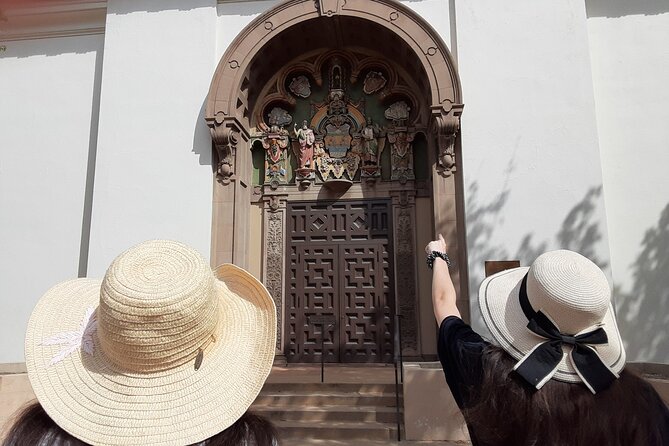
Santa Barbara City Hall takes only about five minutes, but it is worth stopping for. Built in 1923, before the 1925 earthquake, it is an early example of the Spanish Colonial Revival movement.
Look for the hand-painted tiles and the arches stretching over the sidewalk. In front, a large California pepper tree is treated as a city landmark. City Hall faces Plaza de la Guerra with Casa de la Guerra and the News-Press Building, making the plaza an important civic space.
Casa de la Guerra receives about 10 minutes. Built in 1819 by José de la Guerra as both a family home and business center, it served as a place for political and cultural activity when Santa Barbara consisted of a small group of adobes around the Presidio.
The building remains a major part of city life and hosts summer Fiesta celebrations. It is open to visitors on weekends, so the timing of your tour matters if you hope to see the interior. Even from the outside, its role in the city’s early social life gives the building unusual weight.
A different kind of day out, same stretch of Southern California:
- Santa Barbara Trolley Tour
★ 4.5 · 787 reviews - Santa Barbara Electric Bike Tour
★ 5.0 · 557 reviews - The ORIGINAL Downtown Santa Barbara Walking Food & Drink Tour
★ 5.0 · 551 reviews - Kayak Tour of Santa Barbara with Experienced Guide
★ 5.0 · 431 reviews
El Paseo and La Arcada turn walking into discovery
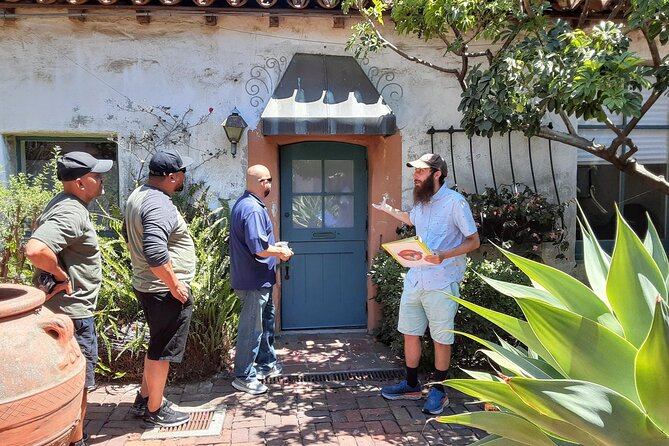
El Paseo marks a key change in Santa Barbara’s architectural story. Built between 1922 and 1929, it helped move downtown away from a conventional Eastern American main street and toward a Hispanic pueblo design.
The tour takes you through its passageways and romantic courtyard, then along the Street in Spain before emerging onto State Street. This section is highly visual, with tiled surfaces, intimate spaces, and photo-friendly corners.
As you continue along State Street, you enter the La Arcada courtyard. The tiled paseo runs through the middle of the block, past shops and restaurants, and leads toward the County Courthouse.
The details here reward a slow pace. You may notice bronze statues, second-story arch bridges, and a fountain with live turtles. La Arcada is also practical: if you want to continue exploring after the tour, you are already near places to eat and browse.
The County Courthouse is the architectural centerpiece
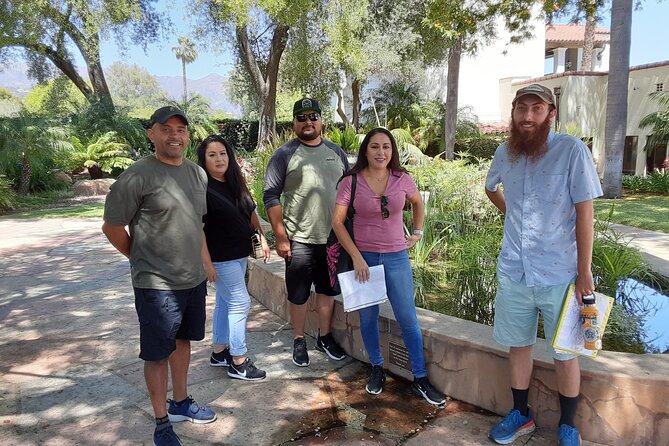
Plan on about 30 minutes at the Santa Barbara County Courthouse. This is the largest single architectural stop on the route and, for many people, the visual high point of the walk.
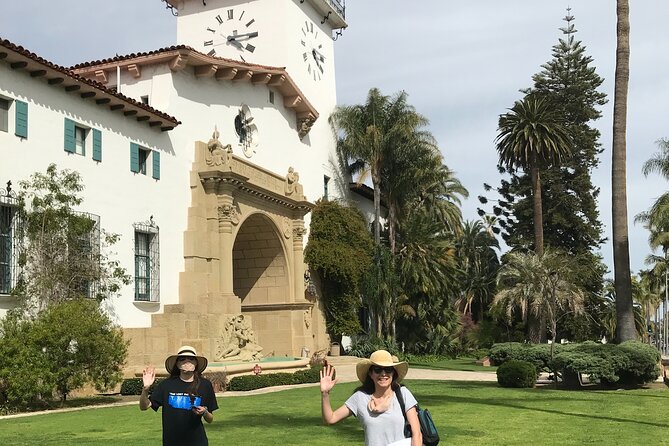
The courthouse is a major public expression of Spanish Colonial Revival design. Its front facade includes a Roman triumphal arch flanked by stone statues. Inside, you can look for hand-carved column capitals and painted tiles throughout the building.
When access allows, the tour may include the mural room and the clock tower. You can climb the stairs or take the elevator for a 360-degree view of Santa Barbara. That viewpoint gives you a useful reading of the city: low-rise buildings, tiled roofs, surrounding hills, and the carefully controlled downtown height.
Access can change, so treat the interior features as possible rather than guaranteed. A Sunday visit may be quieter inside the courthouse, but the tour’s listed operating hours are Monday through Friday. Confirm the current schedule when booking.
Across from the courthouse, the Santa Barbara Public Library adds another architectural layer. Sections of the building date from 1917, 1925, and 1930. As you walk down Anapamu Street, notice the stone sculptures around the main doorways.
The Granada Theatre is another nearby landmark. Built in 1924, it is the tallest building in Santa Barbara because it predates the city’s 60-foot height ordinance. Its upper floors are decorated with glazed terra cotta. Interior access may not be available, but the exterior helps explain how height restrictions shaped the city’s appearance.
The theaters and parks provide a change of pace
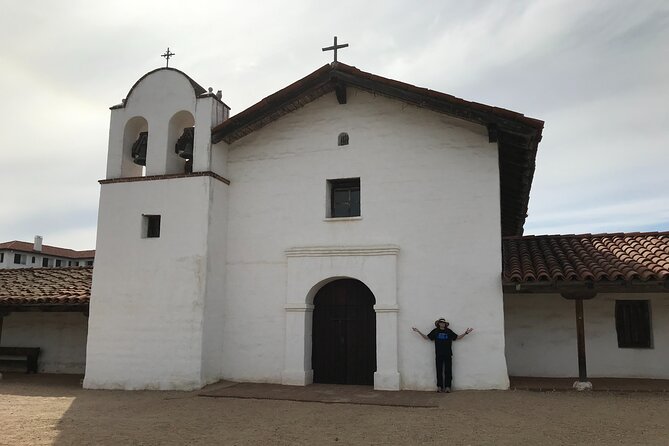
The Arlington Theatre takes about seven minutes. Its tower rises above the nearby buildings, while an arched paseo at street level offers a shaded place to pause.
The interior, when accessible, was designed to feel like a Spanish village square. Fake three-dimensional building facades line the theater space, and the vaulted ceiling is painted with stars. This is a different kind of architecture from the courthouse or adobes, but it follows the same effort to make Santa Barbara feel connected to Spanish and Mexican traditions.
Alameda Park gives you about 20 minutes outdoors. The park was laid out in 1850 as public space and remains part of downtown life, with events such as Summer Solstice and Earth Day celebrations.
The two main blocks contain a mix of trees brought from other parts of the world, including redwoods and East African fern pines. One block has a bandstand from the 1880s. The other contains Kids’ World, an extensive playground, which can be useful if you are walking with children.
Alice Keck Park adds shade, water, and turtles
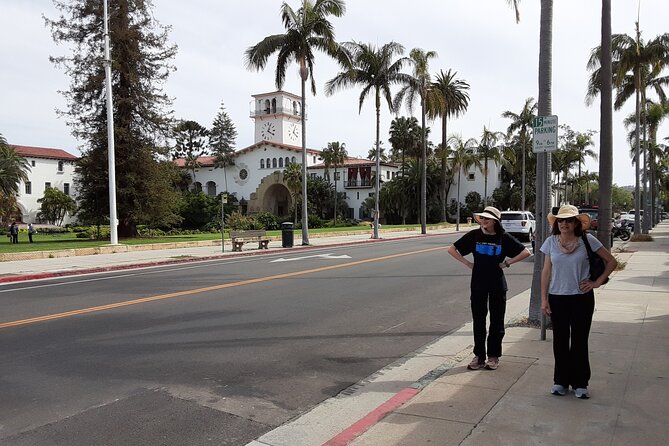
The third block of the former Alameda park area is now Alice Keck Park Memorial Gardens. The space once held the El Mirasol Hotel, which was badly damaged in a 1966 fire.
Today, the square block includes a botanical garden, duck pond, running creek, stepping stones, and a butterfly meadow that attracts monarchs. A large Australian fig tree provides shade near the pond, where live turtles add a small bit of fun to the stop.
This section breaks up the building-heavy route. If you have children, the water, trees, and stepping stones may hold their attention better than another facade. It also gives you a chance to slow down before the final stops.
The Post Office and El Cuartel close the historical loop
The Santa Barbara Main Post Office takes about five minutes. Its design mixes Streamline Moderne with Spanish elements, and sculptures appear inside and outside the building.
It is a short stop, but it helps show that Santa Barbara’s design language was used for ordinary public services as well as grand civic projects. The city’s Spanish influence is not limited to old adobe homes or tourist courtyards.
The walk ends at El Cuartel at 122 East Canon Perdido Street, across from the starting area. Built in 1788, this small building was part of the Presidio complex and is considered the oldest building in town.
You can wander through its rooms and back garden, seeing an 18th-century structure that has changed relatively little. Ending here brings the route back to its beginning and gives you one last chance to picture daily life during the Presidio period.
The nearby Lobero Theatre adds one more historical note. Built in 1924 by George Washington Smith, it occupies a site used for theater since 1873, when Italian immigrant José Lobero opened Southern California’s first opera house there. If access is available, the painted vaulted ceiling is worth seeing.
Who gets the most value from this private tour
I would choose this tour if you want Santa Barbara’s architecture explained rather than simply photographed. It suits first-time visitors who want a downtown orientation, architecture fans, families with older children, and local residents who want to notice familiar streets in a new way.
The private format is the real value. You are not tied to the interests or walking speed of a large group. Sullivan can respond to questions, spend more time on the Presidio or courthouse, or adjust the route when your schedule is tight.
The tour also works well as an early activity during a stay. You finish where you began, near the Presidio and downtown, with suggestions for restaurants and other places to see available from the guide. Lunch is not included, and parking fees are extra, so plan those costs separately.
Bring water and a small snack, especially if children are joining. The route is described as accessible to most participants, service animals are allowed, and the meeting point is near public transportation. The activity is offered in English.
No tour price is provided here, so I cannot judge the exact cost against similar outings. Still, the private guide time, custom route, historical images, and access to less obvious buildings can make the fee worthwhile for a couple, family, or small group that would otherwise book several separate attractions.
Should you book the Santa Barbara History and Architecture Walking Tour?
Book it if you care about the stories behind buildings and want a guide who can connect military adobe, family homes, theaters, parks, and civic architecture in one walk. Sullivan Israel’s strongest quality is his passion for Santa Barbara, paired with an ability to explain both the broad story and small local details.
Skip it if you want a short, purely scenic stroll or a tour centered on colorful facades alone. The route is history-heavy, and some stops are brief exterior views. For everyone else, this is a strong way to get oriented, find places you might miss alone, and understand why Santa Barbara looks the way it does.
Free cancellation is available up to 24 hours before the start time. Inside that window, changes and refunds are not accepted. Poor weather or failure to meet the minimum number of participants can lead to a different date or a full refund.
FAQ
How long does the Santa Barbara walking tour last?
The tour lasts approximately two to three hours.
Where does the tour begin and end?
It begins at El Presidio de Santa Bárbara State Historic Park, 123 East Canon Perdido Street. The activity ends back at the meeting point.
Is this a private tour?
Yes. Only your group participates, and the guide can customize the itinerary to fit your interests.
Is admission to the Santa Barbara Historical Museum included?
No. Admission to the Santa Barbara Historical Museum is not included. The Presidio admission ticket is included.
Is the County Courthouse interior always available?
Interior access can depend on restrictions and current conditions. When access is allowed, the tour may include the mural room and the clock tower viewpoint.
What happens if the weather is poor?
The experience requires good weather. If it is canceled because of poor weather, you can receive a full refund or choose a different date.
Just added around Santa Barbara
- Gaviota Coast Near Santa Barbara: Kayak Tour (3.5 Hours)★ 5.0 · 3 reviews
- Guided Hiking, Biking and Tennis★ 5.0 · 3 reviews
- Downtown Santa Barbara Food and Drinks Tour★ 4.5 · 3 reviews
- 3-Winery Santa Ynez Tour with Picnic Lunch from Santa Barbara★ 5.0 · 3 reviews
- Santa Barbara Sunset Cruise on Yacht with Full Bar★ 4.5 · 3 reviews
- Santa Barbara Scavenger Hunt Adventure★ 4.0 · 3 reviews
- Santa Barbara Historical and Architectural Private Tour★ 4.5 · 3 reviews
- Private Wine Tour from the Santa Ynez Valley★ 5.0 · 3 reviews
Historical Tours, compared.
Palm Springs Modernism Architecture & History Bike Tour
Read our review →
45-Minute Private Guided Historic Walking Tour in Lititz
Read our review →
Natural History Museum of Los Angeles County Admission
Read our review →
The History and Architecture of Downtown Los Angeles
Read our review →
Downtown Los Angeles History and Architecture Walking Tour
Read our review →
The History and Architecture of Downtown Los Angeles
Read our review →Browse the lists this tour appears in